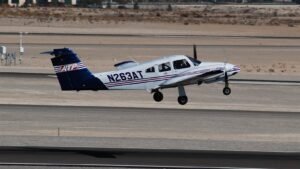
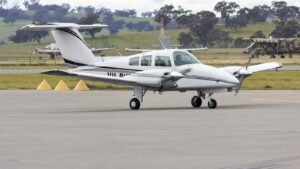
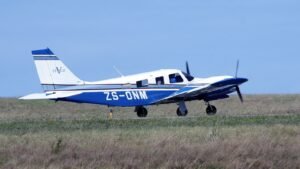
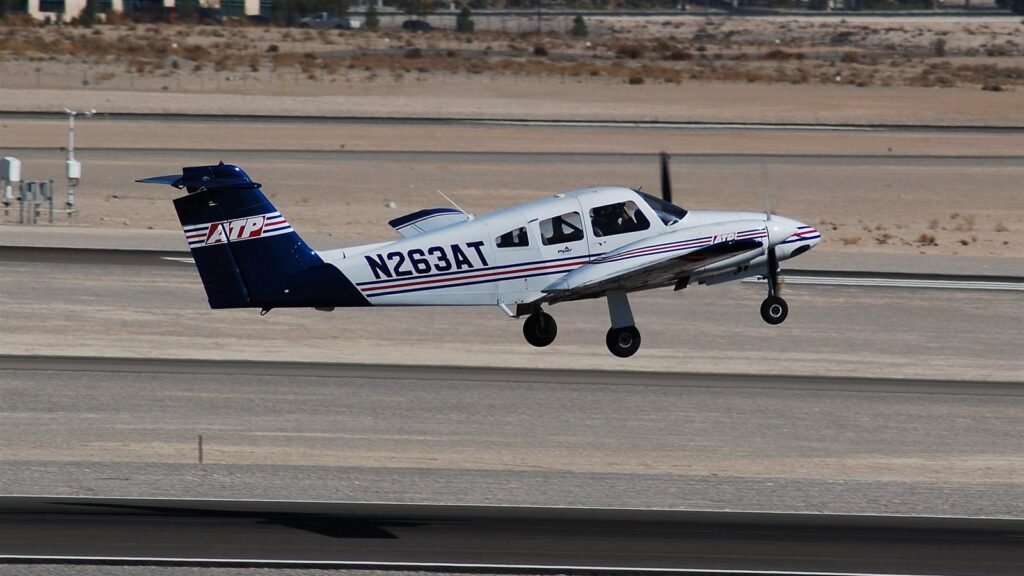
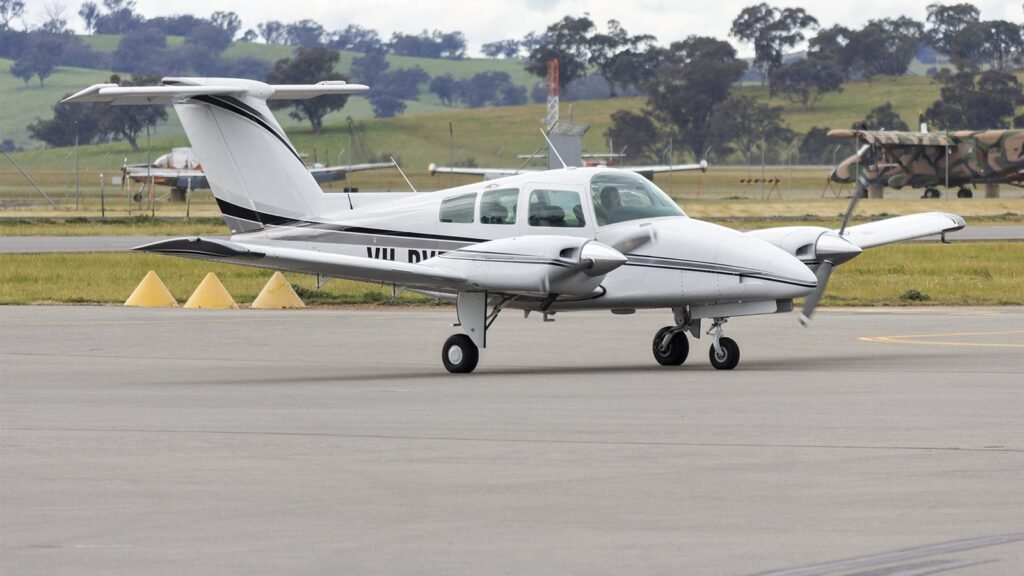
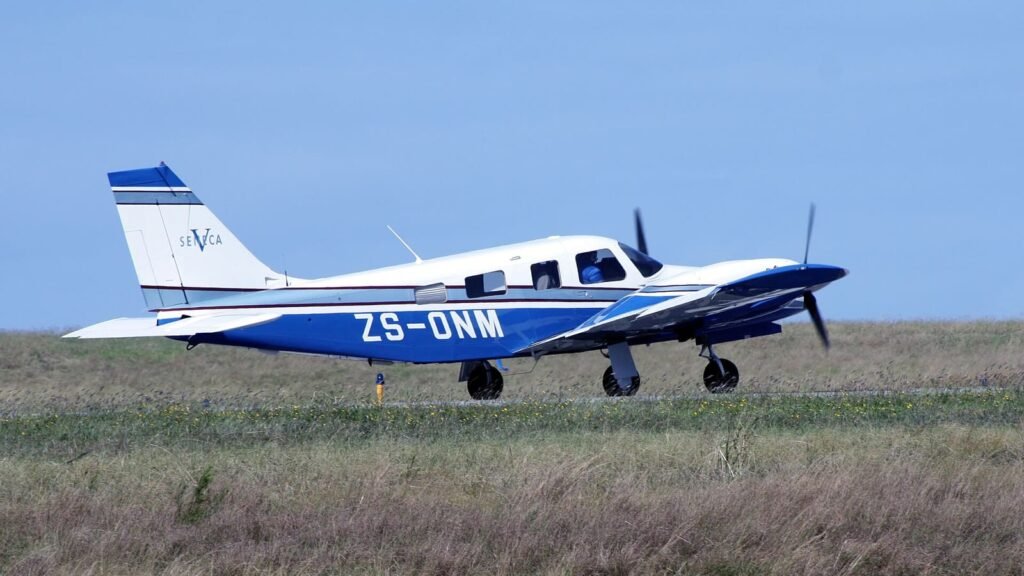
Step from a simple single into a light twin and the cockpit suddenly has more levers, more switches and more circuit breakers. Most of that equipment exists for one reason: to keep the airplane flying and controllable when something fails. This guide walks through eight twin engine aircraft systems you will meet in almost every multi-engine checkout, explains how each one works in plain terms, and lists what a pilot should actually know and check.
The Eight Systems at a Glance
| System | What it does | Why it matters in a twin |
|---|---|---|
| Propeller governor | Keeps engine RPM constant by changing blade pitch | Also controls feathering of a failed engine’s propeller |
| Squat (weight-on-wheels) switch | Tells systems whether the airplane is on the ground | Prevents gear retraction on the ground, drives warnings |
| Unfeathering accumulator | Stores pressurised oil to unfeather a propeller | Makes an in-flight restart much easier |
| Combustion heater | Heats the cabin by burning fuel | Bigger cabins need more heat than an exhaust muff gives |
| Hydraulic system | Moves landing gear (and on bigger types, flaps or brakes) | Gear extension and emergency procedures depend on it |
| Synchrophaser | Matches the propellers’ speed and phase | Reduces noise and vibration on long flights |
| Fuel crossfeed | Lets an engine draw fuel from the opposite side | Gives access to all fuel after an engine failure |
| Ice protection | Removes or prevents ice on wings, tail, props, windshield | Keeps twins usable in winter IFR, within limits |
1) Propeller Governors
A constant-speed propeller lets the pilot select an RPM with the blue propeller lever; the governor then holds that RPM by adjusting blade angle as power and airspeed change. Inside, spinning flyweights balance against a spring. If the engine speeds up, the flyweights move outward and the governor changes the oil flow to the propeller hub so the blades take a bigger bite; if it slows down, the opposite happens.
On most light twins the propellers are designed so that oil pressure drives the blades toward fine pitch, while springs, a nitrogen charge and counterweights push them toward feather. That is why pulling the lever into the feather position, or losing oil pressure, moves the blades toward feather. Many propellers also have pins that stop them feathering once RPM has fallen very low, so feathering must be done promptly. More on this in propeller governor diagnostics and propeller feathering explained.
Pilot checks: exercise the propellers during the run-up as the checklist directs, and know the feathering procedure and its time limits for your type.
2) Squat Switches
A squat switch senses whether the landing gear is compressed by the airplane’s weight. Systems use that signal to behave differently on the ground and in the air. Typical uses include blocking gear retraction while on the ground, controlling the gear warning horn, starting a flight-hour meter only in flight and, on more complex aircraft, managing pressurization or stall warning heat.
Pilot checks: know which systems on your airplane are tied to the squat switch, and what fails if the switch sticks; for example, a gear handle that will not move after takeoff may be a squat-switch problem rather than a hydraulic one.
3) Unfeathering Accumulators
A feathered propeller does not turn, so the engine cannot supply oil pressure to unfeather it. Many training twins solve this with an accumulator: a small cylinder that stores oil under pressure during normal operation. When the pilot moves the propeller lever out of feather, the stored oil is released to the hub, the blades move toward fine pitch and the propeller starts to windmill, helping the engine to restart.
Pilot checks: learn whether your aircraft has accumulators and follow the manufacturer’s restart procedure; without them a restart may require diving to gain airspeed or using the starter.
4) Combustion Heaters
Many piston twins heat the cabin with a separate combustion heater, often from Janitrol or a similar manufacturer, instead of the exhaust shroud used in most singles. It burns a small amount of fuel in a sealed chamber and passes cabin air around the outside of that chamber. It works well at altitude and in cold weather, but it is a burner inside the airframe, so it has overheat protection and needs regular inspection.
Pilot checks: follow the start-up and shut-down sequence (usually the fan must run after the heater is switched off), know where the overheat reset is, and carry a carbon monoxide detector.
5) Hydraulic Systems
In many light twins the landing gear is moved by hydraulic pressure from either engine-driven pumps or an electric “power pack”. Larger aircraft extend hydraulics to flaps, brakes or even flight controls. Each system has an alternate way to lower the gear if pressure is lost, such as a free-fall valve, a hand pump or a stored-pressure bottle.
Pilot checks: know the emergency gear extension procedure by heart and remember to slow down first; check gear indications and the pump’s behaviour after retraction.
6) Synchrophasers
When two propellers turn at slightly different speeds, the sound waves beat against each other and passengers hear a rhythmic “wah-wah”. A synchrophaser takes one propeller as the reference and makes small corrections to the other so both turn at the same speed and blade position. The result is a quieter cabin and less vibration.
Pilot checks: most manuals require the synchrophaser to be off for takeoff and landing and the propellers to be roughly synchronised by hand before switching it on.
7) Fuel Crossfeed
Normally each engine draws from tanks on its own side. Crossfeed lets an engine draw from the opposite side, which becomes important after an engine failure, when the fuel on the dead engine’s side would otherwise be unusable. Crossfeed is not used for takeoff or landing, and procedures differ between types, so a careless selector change is a classic cause of fuel starvation. See our guides on the twin engine fuel system and fuel mismanagement in twins.
Pilot checks: know the selector positions, when crossfeed is permitted and the limits on fuel imbalance for your aircraft.
8) Ice Protection
Twins are often equipped for winter instrument flying. Common equipment includes pneumatic de-ice boots that inflate to crack ice off leading edges, fluid systems that “weep” anti-icing fluid through tiny holes, electrically heated propeller blades and heated windshield panels. Having the equipment does not automatically mean the aircraft is approved for flight into known icing; that depends on its certification.
Pilot checks: confirm whether your airplane is certified for known icing, test the equipment before flight, and treat any ice as a reason to change altitude or route.
Key Takeaways
- Most twin systems exist to keep the airplane controllable and usable after a single failure.
- The propeller governor and feathering system are the most important to understand before your first engine-out lesson.
- Emergency gear extension, crossfeed and heater procedures are common oral-exam topics; know them for your exact model.
- Equipment such as ice protection extends capability, but only within the limits stated in the aircraft’s manual.
Conclusion
Learning these twin engine aircraft systems turns a confusing cockpit into a set of familiar tools. Take each system in turn with the pilot’s operating handbook of your aircraft, ask your instructor to demonstrate the abnormal procedures, and you will be far better prepared for the multi-engine checkride and for real flying.
If you’d like to learn more about handling in-flight issues and common malfunctions, read also about Twin-Engine Troubles.