
Every light twin has a number in its handbook that quietly decides how much the second engine is really worth: the single-engine service ceiling. It tells you how high the airplane can still climb, slowly, after one engine has failed. Above that altitude the twin can no longer climb in any useful way on one engine, and a little higher, at the single-engine absolute ceiling, it cannot climb at all. Many pilots learn this number for the checkride and then forget it.
Yet it is one of the few figures in the handbook that can tell you, before you even start the engines, whether an engine failure on today’s flight would be an inconvenience or a genuine emergency. This article explains what the single-engine ceilings mean, how they are measured, why the book values are optimistic and how experienced twin pilots use them when they plan a departure, a cross-country flight and an arrival.
Key Takeaways
- The single-engine service ceiling is the highest density altitude at which a twin can still climb at 50 feet per minute with one engine inoperative and its propeller feathered.
- The single-engine absolute ceiling is the altitude at which the climb rate on one engine falls to zero; at that point Vxse and Vyse become the same speed.
- Book figures come from new airplanes flown by test pilots at an exact weight, configuration and airspeed, so real-world performance is usually worse.
- Many light piston twins were certified without any requirement to climb on one engine at all.
- Comparing the day’s density altitude with the single-engine ceiling before every flight is one of the simplest and most valuable habits a twin pilot can develop.
Two Ceilings, Two Very Different Meanings
Pilots often use the word “ceiling” loosely, but aircraft performance charts use precise definitions, and the difference between them matters. With both engines operating, the service ceiling of an airplane is the highest density altitude at which it can still climb at 100 feet per minute. That is the figure you usually see in brochures, and for a light twin it is often impressive: many normally aspirated training twins have two-engine service ceilings in the high teens, and turbocharged models go considerably higher.
The single-engine figures are a different story. The single-engine service ceiling is the highest density altitude at which the airplane can still climb at 50 feet per minute with one engine inoperative, its propeller feathered and the airplane in the clean configuration.
The single-engine absolute ceiling is the altitude at which the climb rate on one engine reaches zero, so the airplane can only just hold altitude. Because the climb rate is already very small at the service ceiling, the gap between the two single-engine ceilings is usually only a few hundred feet.
It is worth thinking about what 50 feet per minute really means. At that rate, a twin needs twenty minutes to climb 1,000 feet. A little turbulence, a slightly imperfect bank angle or a few knots of airspeed error will remove that climb completely.
In practical terms, the single-engine service ceiling is not a level at which the airplane performs well on one engine. It is the level at which the airplane stops performing at all, with only a token margin left. Many instructors therefore describe the single-engine service ceiling as a limit to stay well below, rather than a number to plan right up to.
Why One Engine Gives So Little Climb
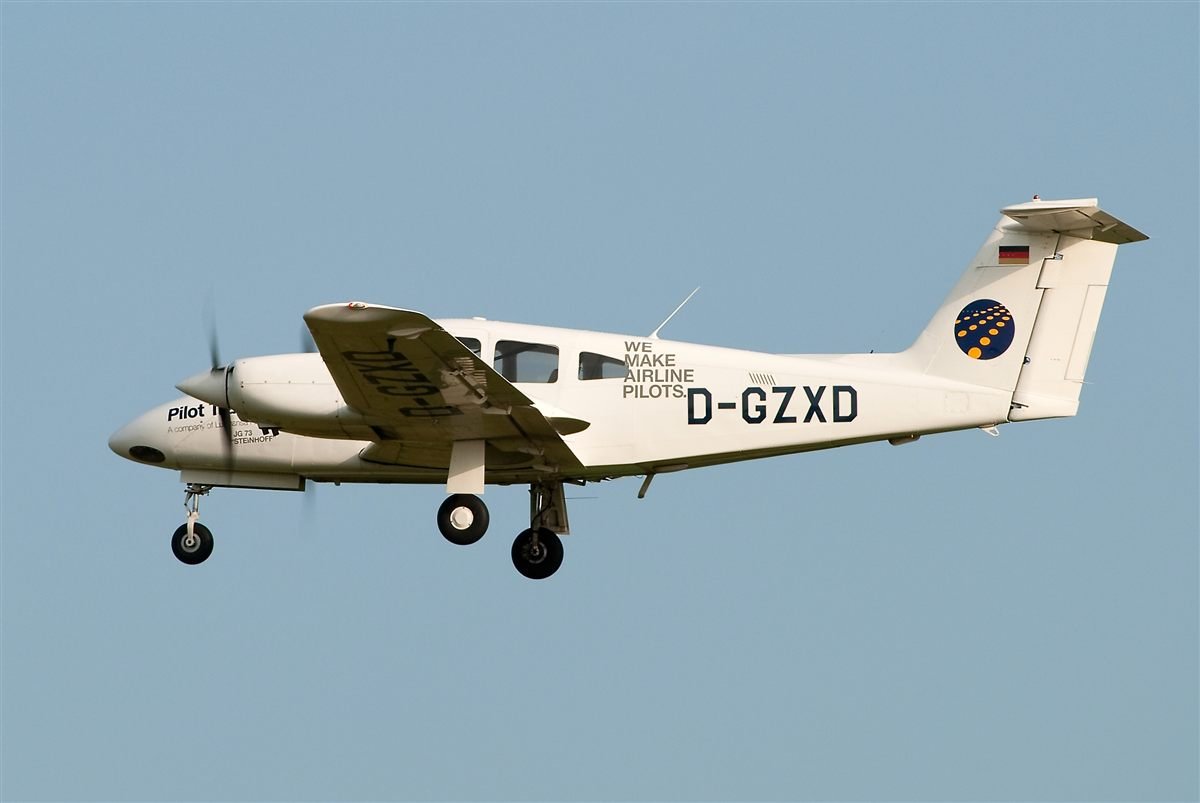
When a twin loses one engine, it loses half of its power. It is natural to assume that it also loses half of its climb performance, but this is far from the truth. Climb does not depend on total power; it depends on excess power, the power left over after the airplane has been kept in level flight.
Imagine a light twin cruising with both engines at a comfortable power setting. A large part of the available power is used simply to overcome drag and keep the airplane in the air. Only the remainder, the excess, is available to climb.
When one engine fails, the remaining engine must now provide all of the power required for level flight on its own. At the same time, the airplane’s drag increases. The rudder must be deflected to counter the yaw from asymmetric thrust, the ailerons are no longer neutral, and the airplane may be flying with some sideslip.
Until the propeller of the dead engine is feathered, it windmills and produces a large amount of drag of its own. All of this extra drag consumes power that would otherwise have been available for climb.
The result is that light twins commonly lose around 80 percent or more of their climb performance when one engine fails. A twin that climbs at 1,200 or 1,300 feet per minute with both engines running may manage only 200 to 300 feet per minute on one engine at sea level, and nothing at all a few thousand feet higher.
Our article “Lose One Engine, Lose Half the Power” explains this effect in detail, and it is the key to understanding why the single-engine ceiling of a light twin is so low compared with its two-engine ceiling.
How Climb Performance Fades With Altitude
Normally aspirated piston engines lose power as the air becomes thinner. A typical engine produces roughly three percent less power for every thousand feet of density altitude, so by 7,000 feet it is delivering only around three-quarters of its sea-level power even at full throttle. Meanwhile, the power required to fly at the best single-engine rate-of-climb speed increases slightly with altitude, because the airplane must fly at a higher true airspeed to produce the same lift in thinner air.
These two trends move toward each other. As the airplane climbs, the power available from the operating engine falls while the power required rises, and the excess power between them shrinks. The single-engine climb rate therefore decreases steadily with altitude until it reaches 50 feet per minute, the service ceiling, and then zero, the absolute ceiling. At the absolute ceiling the power available exactly equals the power required at one particular airspeed, and there is no excess left at all.
This also explains a classic exam question: why are Vxse and Vyse the same at the absolute ceiling? At sea level, the best single-engine angle-of-climb speed (Vxse) is lower than the best rate-of-climb speed (Vyse), because the airplane can trade a little rate for a steeper path.
As altitude increases, the two speeds converge. At the absolute ceiling there is only one speed at which the airplane can hold altitude. Fly faster or slower and it will descend. Both the best angle and the best rate of climb are zero, so the two speeds meet in a single value.
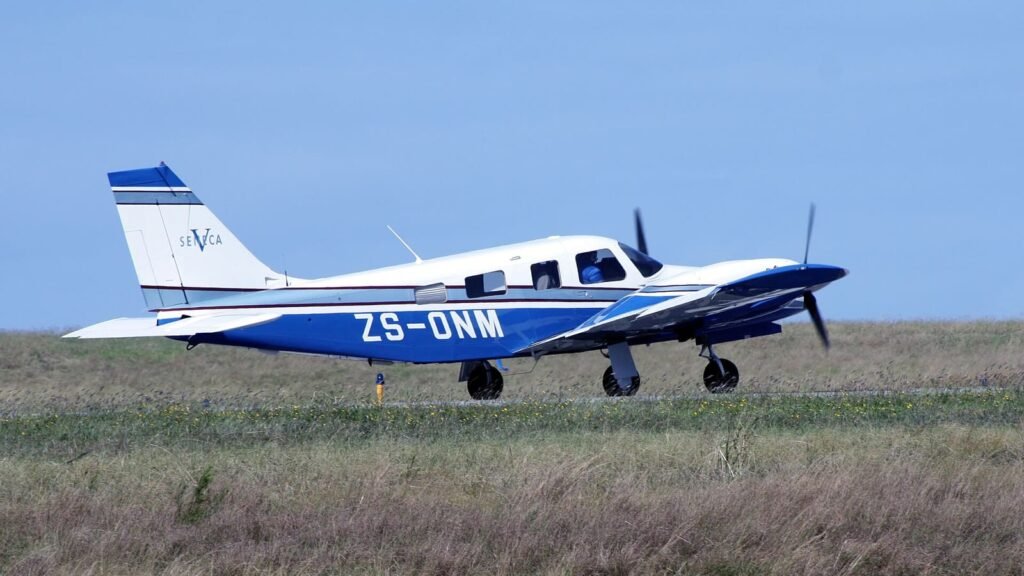
Turbocharged twins behave differently up to a point. Their turbochargers maintain sea-level manifold pressure up to a critical altitude, so their single-engine performance does not begin to fade until much higher. This is why turbocharged twins such as the Piper Seneca II and later models usually have much higher single-engine ceilings than normally aspirated trainers. Once the turbocharger can no longer hold full manifold pressure, however, the same principle applies: power falls, the excess disappears and the airplane eventually reaches its single-engine ceiling.
What the Book Number Really Assumes
The FAA’s Airplane Flying Handbook, which every multi-engine student should read alongside the pilot’s operating handbook, explains these performance terms in its chapter on transitioning to multiengine airplanes. It is a useful reminder that the published figures are tied to very specific conditions.
Single-engine ceiling and climb charts are produced by test pilots flying new airplanes under carefully controlled conditions. Reading the small print on these charts is an education in itself. The figures assume that the inoperative engine’s propeller is fully feathered, that the landing gear and flaps are retracted, that the cowl flaps are set as specified and that the operating engine is producing maximum continuous power.
They assume the airplane is being flown at exactly the published Vyse in smooth air, with a small bank toward the operating engine as described in the handbook to reduce sideslip and drag. They also assume a specific weight, which is very often the maximum takeoff weight.
In everyday flying, few of these conditions are met perfectly. Engines and propellers lose a little performance with age, even when they are well maintained. Paint, antennas, dents, worn seals and small rigging errors all add drag. The pilot who has just experienced a real engine failure is surprised, busy and perhaps not holding the airspeed within a knot or two. The air is rarely perfectly smooth, especially on the hot afternoons when single-engine performance matters most.
None of this means the charts are wrong. They show what the airplane is capable of under ideal conditions, and that is valuable information. But the wise way to read the single-engine ceiling chart is as the best the airplane can ever do, not as what it will do for you on a particular day.
Many experienced twin pilots mentally subtract a margin from the book figures, and they treat any flight where the planned density altitude comes close to the single-engine service ceiling as a flight with very little real engine-out capability.
Density Altitude Is the Number That Matters
Single-engine ceilings are given in terms of density altitude, or as pressure altitude and temperature, not as the altitude printed on a chart or shown on the altimeter. This is because the engine, the propeller and the wing all respond to air density.
On a cold winter day, a twin may perform better than its standard-day figures suggest. On a hot summer day, the density altitude at an airfield can be thousands of feet higher than its elevation, and that can place the airport above the airplane’s single-engine ceiling before the wheels even leave the ground.
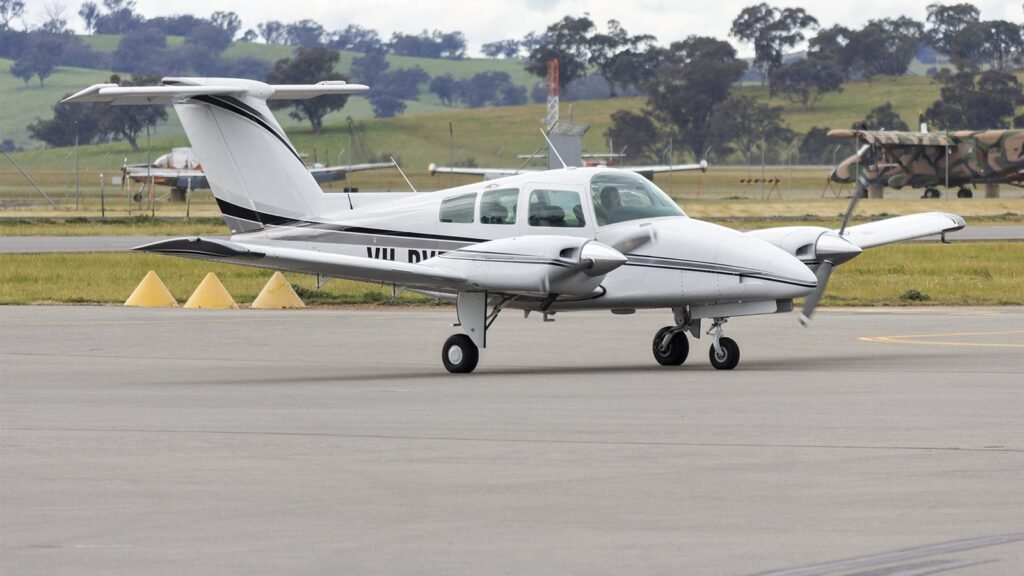
A simple example shows how quickly this happens. The Beechcraft Duchess, a popular training twin, has a book single-engine service ceiling of 6,170 feet at its maximum weight of 3,900 pounds. Consider an airport at 4,000 feet elevation on a day when the temperature is 30°C.
The standard temperature at 4,000 feet is about 7°C, so the air is roughly 23 degrees warmer than standard. Using the common rule of thumb of about 120 feet of density altitude for each degree above standard, the density altitude is approximately 4,000 + (23 × 120), or about 6,760 feet.
In other words, a fully loaded Duchess departing that airport would already be above its single-engine service ceiling while it is still rolling down the runway. If an engine failed after liftoff, the airplane could not climb on the remaining engine.
With perfect technique it might hold altitude for a while or descend slowly; with imperfect technique it would descend more quickly. The second engine would still be valuable, because it would give the pilot more time and more choice of landing area than a single-engine airplane, but it would not provide the climb that many pilots instinctively expect from a twin.
Density altitude is easy to underestimate because the airport looks the same on a hot day as on a cool one. For a deeper look at how to calculate it and why it matters, read Density Altitude: What It Is, And How It Affects Your Performance and Critical Density Altitude, What Is It and What It Means to You.
The Certification Gap: Twins That Were Never Required to Climb
One of the most surprising facts for many new multi-engine pilots is that a large number of light twins were never required to climb on one engine at all. Under the older Part 23 certification rules, a twin with a maximum weight of 6,000 pounds or less and a stall speed in the landing configuration (Vso) of 61 knots or less only had to determine its single-engine rate of climb or descent at 5,000 feet.
The manufacturer measured the figure and published it in the handbook, but the result could be a descent. There was no requirement to show a positive single-engine climb at that altitude or at any other altitude.
Heavier or faster twins had to meet stricter single-engine climb requirements, which is one reason larger cabin-class and turbine twins generally have more robust engine-out performance. Most training twins and many owner-flown piston twins, however, fall into the lighter group. Whatever single-engine performance they have comes from the design itself rather than from a certification minimum.
That is not a criticism of these airplanes, many of which perform respectably on one engine, but it does mean that the pilot must never assume a light twin will climb after an engine failure simply because it has two engines. The handbook figure for the specific airplane, weight and conditions is the only reliable guide. Our article on FAR Part 23 twin-engine aircraft explains how these rules developed and how they have changed.
Planning a Departure Around the Single-Engine Ceiling
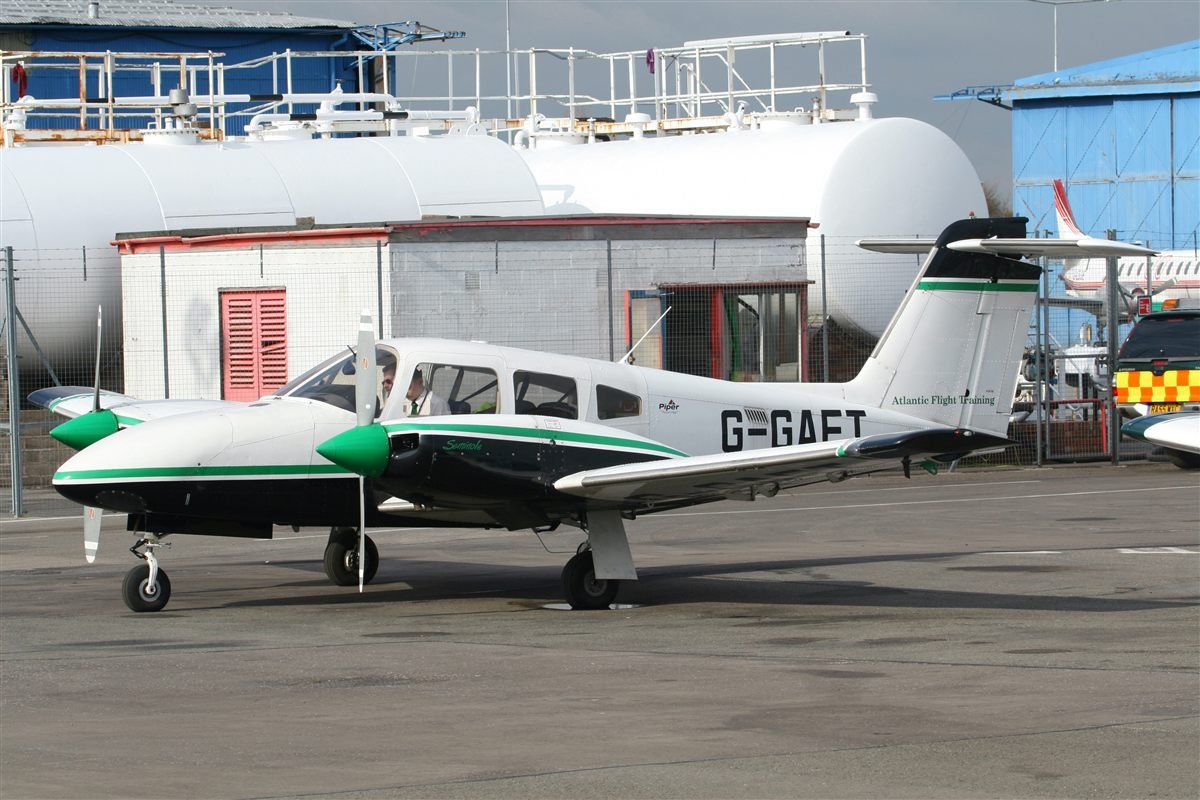
The takeoff is the phase of flight where the single-engine ceiling matters most, because the airplane is close to the ground, heavy, slow and often at full power, with little time for the pilot to react. Before every departure, it is worth comparing the airport’s density altitude with the single-engine ceiling for the airplane’s actual weight, and then asking an honest question: if an engine failed just after the gear came up, would this airplane climb?
If the answer is clearly yes, the takeoff briefing can follow the familiar pattern. Below a certain speed or with runway remaining, the pilot will close both throttles and stop. Once airborne and climbing at blue line with the gear up, the pilot will maintain control, identify and feather the failed engine and continue the climb to a safe altitude before returning to land.
The accelerate-stop distance and the stop-or-go decision still need to be considered, but there is a realistic path to continue the flight.
If the airport is close to or above the single-engine ceiling, the briefing must change. There may be a period after liftoff during which the airplane cannot climb on one engine at all, and the pilot’s plan for that period must be based on landing rather than climbing. That may mean landing straight ahead on the remaining runway or a suitable field, or accepting a controlled descent rather than trying to hold altitude and losing control.
Better still, the pilot can change the conditions: reduce weight by carrying less fuel or fewer passengers, wait for the cooler air of the early morning or evening, or choose a longer runway that leaves more room to stop. Our guide to how elevation and weight affect takeoff performance shows how quickly the margins shrink as these factors combine.
The value of this kind of planning is that it removes surprise. A pilot who has already accepted that a climb on one engine will not be possible will not waste precious seconds trying to make the airplane do something it cannot do. Instead, he or she will fly the airplane at the correct speed toward the best available landing area, which is exactly the behaviour that keeps engine failures survivable.
En Route: Driftdown and Minimum Altitudes
Most light twins cruise comfortably above their single-engine ceiling. That is perfectly normal, but it has an important consequence. If an engine fails in cruise above the single-engine ceiling, the airplane will not be able to maintain its altitude. With the dead engine feathered and the remaining engine at maximum continuous power, the airplane will slowly descend until it reaches an altitude where the operating engine can hold it level. This process is known as driftdown.
Over flat terrain at low elevation, driftdown is usually manageable. The descent is gradual, there is time to talk to air traffic control, choose a diversion airport and run the checklists. Over mountains, or on an instrument route with a high minimum en-route altitude, driftdown can be much more serious. If the terrain or the minimum altitude along the route is above the airplane’s single-engine ceiling for the day, an engine failure may leave the pilot with no legal or safe altitude to descend to.
For this reason, careful twin pilots compare their route with the single-engine ceiling during flight planning. They look at the highest terrain along the route, the minimum en-route and obstacle-clearance altitudes and the density altitude expected at those levels.
If the margins are poor, they consider a different route that follows lower terrain or valleys, a lower takeoff weight, or a time of day with cooler air. On longer flights over high ground, they also identify diversion airports in advance, so that if driftdown begins they already know where to go.
Arrival and the Single-Engine Approach
The single-engine ceiling also matters at the end of the flight, especially at high or hot destinations. A single-engine approach and landing is normally straightforward if the pilot keeps the airplane at blue line until the landing is assured and delays extending the gear and full flaps until reaching the runway is certain.
A single-engine go-around, on the other hand, can be very difficult or even impossible in a light twin. The pilot must add full power on the remaining engine, retract the flaps and gear and accelerate to blue line, all while controlling the yaw and losing very little altitude.
At an airport above or near the single-engine ceiling, there may be no realistic go-around option at all. The pilot should know this before arrival and plan the approach accordingly: a stable approach at the correct speed, a clear decision point after which the airplane is committed to landing, and an early decision to divert if the weather or the runway makes a successful landing uncertain. Our guide on flying and landing a twin on one engine covers this technique in more detail.
Flying Technique Near the Single-Engine Ceiling
The closer the airplane is to its single-engine ceiling, the more each small error costs. At sea level, a few knots of airspeed error or a slightly unfeathered propeller may reduce the climb rate but still leave the airplane climbing. Near the ceiling, the same errors can turn a slow climb into a steady descent. The difference between book performance and real performance therefore depends heavily on how precisely the pilot flies.
The most important single action is feathering the propeller of the failed engine quickly and correctly. A windmilling propeller produces a large amount of drag, and in many light twins it is the difference between climbing and descending. This is why the memory items for engine failure focus on identifying and verifying the dead engine before pulling its propeller control to feather.
Feathering the wrong engine is a disaster, but delaying the feather on the correct one also costs performance that the airplane may not be able to spare. Our article on propeller feathering explains the mechanics.
The second action is to clean up the airplane. The landing gear and flaps produce considerable drag, and the handbook procedure will usually call for them to be retracted as soon as it is safe. Cowl flaps on the operating engine may need to be opened to keep it cool at high power, while the cowl flaps on the dead engine can be closed to reduce drag.
The third, and perhaps the most demanding, is airspeed control. The best single-engine rate of climb is achieved at exactly Vyse, the blue line on the airspeed indicator. A few knots faster or slower and the climb rate falls. Near the absolute ceiling, the band of speeds at which the airplane can even hold altitude becomes very narrow.
Holding blue line precisely while the airplane is yawing, the workload is high and the pilot is under stress is a skill that needs regular practice. Read more in Understanding the “Blueline”.
Bank angle is the fourth factor. With wings level and the ball centred, a twin flying on one engine is actually in a sideslip, which adds drag. Banking a few degrees toward the operating engine, with the ball about half out toward that engine, allows the airplane to fly with minimum sideslip and therefore minimum drag.
The exact recommended bank angle is given in the handbook, and the single-engine climb charts assume that the pilot uses it. Turns cost climb as well. A gentle turn may be necessary to reach an airport or avoid terrain, but steep turns, particularly toward the dead engine, reduce the available lift and may cause the airplane to descend even when it was climbing in straight flight.
Finally, the pilot must be ready to accept a descent. When the airplane cannot climb, the worst possible response is to try to hold altitude by pulling the nose up. That reduces airspeed toward Vmc and the stall, and in a twin with one engine at full power it can quickly lead to loss of directional control. It is far better to fly the best available speed, accept a slow descent and use the time to reach the best possible landing area.
Hidden Factors That Lower Real-World Performance
Some factors that reduce single-engine performance are easy to overlook because they are not shown on the chart. Airframe ice is one of the most serious. Even a thin layer of ice on the wings, tail and propellers increases drag and reduces lift, and a twin that would climb slowly on one engine in clean conditions may not be able to hold altitude with a small amount of ice.
Pilots who fly light twins in icing conditions, even with approved de-icing equipment, should consider single-engine performance as part of the decision to go.
Turbulence and downdrafts matter too, especially in mountainous areas. On the lee side of a ridge, descending air can easily exceed the airplane’s single-engine climb rate, so an airplane that is technically below its single-engine ceiling may still be pushed down toward the terrain.
Heavy rain, open doors or windows, damaged fairings and even a sticky cowl flap can all add drag. Engine condition is another hidden variable: an engine that is producing slightly less than rated power because of wear, poor fuel mixture setting or carburettor ice will reduce performance below the book values.
The common thread is that the single-engine ceiling chart shows a clean, ideal airplane. The pilot must think about all of the things that make today’s airplane less than ideal and adjust expectations accordingly.
How Weight Changes the Picture
Weight is the factor over which the pilot has the most direct control, and it has a powerful effect on single-engine performance. A lighter airplane requires less lift and therefore less power to fly, which leaves more excess power available for climbing. As a result, the single-engine ceiling rises as weight decreases. In many light twins, removing a few hundred pounds can raise the single-engine ceiling by a thousand feet or more and noticeably increase the climb rate at lower altitudes.
This is why weight and balance calculations are more than a paperwork exercise in a twin. On a hot day at a high airport, carrying only the fuel needed for the flight plus reserves, rather than full tanks, may make the difference between a twin that can climb after an engine failure and one that cannot. The same applies to passengers and baggage.
If you are planning a demanding departure, it is worth checking the single-engine performance at several different weights to see what can be gained. Our article on multiengine weight and balance computations shows how to work through these figures.
Real Numbers From Training Twins
Single-engine ceilings for light, normally aspirated twins are typically somewhere between about 4,000 and 7,000 feet at maximum weight, depending on the type and the conditions specified in the handbook.
The Beechcraft Duchess, for example, has a book single-engine climb rate of about 235 feet per minute at sea level and a single-engine service ceiling of 6,170 feet at its maximum weight. These figures are typical for the class and help explain why instructors spend so much time on density altitude and weight in multi-engine training.
Turbocharged twins generally have much higher single-engine ceilings, sometimes well into the teens, because their engines keep their power to higher altitudes. Larger twins certified under stricter climb requirements, and especially turbine twins, are designed to provide positive single-engine climb under a wider range of conditions.
But even in these airplanes, the single-engine performance on a hot, high, heavy day is far below what the airplane can do with both engines running. Whatever you fly, always use the chart for your specific airplane, weight and conditions rather than general figures.
Making the Single-Engine Ceiling Part of Every Flight
The best way to use the single-engine ceiling is to make it part of a routine rather than something you think about only on unusually hot days. Before each flight, take a moment to find the single-engine ceiling chart in the handbook, note the conditions it assumes and look up the figure for your planned takeoff weight.
Then calculate the density altitude at the departure airport, along the route and at the destination, and compare those figures with the ceiling. If the margins are comfortable, you can brief the takeoff with confidence. If they are small, you can change the weight, the route or the time of day before you commit.
Include the single-engine ceiling in your takeoff briefing in plain language. Say what you will do if an engine fails before the airplane can climb on one engine and what you will do once it can. Say where you would land if a climb is not possible. A briefing like this takes less than a minute, but it means that if an engine does fail, your first reaction will follow a plan rather than a guess.
Finally, practise the skills that make book performance achievable. Regular training in feathering, cleaning up the airplane, holding blue line and using the correct bank angle is what allows a pilot to get close to the chart figures when it really matters.
Many accidents involving engine failures in light twins are not caused by the failure itself but by a loss of control or a loss of performance that followed it. Pilots who understand their single-engine ceiling, and who can fly the airplane precisely on one engine, give themselves the best chance of turning an engine failure into a manageable event.
Frequently Asked Questions
What is the difference between single-engine service ceiling and absolute ceiling?
The single-engine service ceiling is the highest density altitude at which a twin can still climb at 50 feet per minute on one engine with the dead engine’s propeller feathered. The single-engine absolute ceiling is the altitude at which it can only hold altitude, with a climb rate of zero. The two are usually only a few hundred feet apart.
Can a light twin always climb after an engine failure?
No. Many light twins were certified without any requirement to show a positive climb on one engine. At high density altitudes, heavy weights or with imperfect technique, a twin may not be able to climb at all after an engine failure, and the pilot must be prepared to fly a controlled descent to a landing.
What happens if an engine fails above the single-engine ceiling?
The airplane will descend slowly in a driftdown until it reaches an altitude where the operating engine can hold it level, provided the pilot flies the correct speed, bank and configuration. The terrain and minimum altitudes along the route must allow that descent, which is why the single-engine ceiling should be part of route planning.
Why are Vxse and Vyse the same at the absolute ceiling?
At the absolute ceiling there is only one speed at which the remaining power equals the power required for level flight. Both the best angle and the best rate of climb are zero, so the two speeds meet at that single value.
How does weight affect the single-engine ceiling?
A lighter airplane needs less power to stay in the air, so its single-engine ceiling rises as weight decreases. Removing fuel, passengers or baggage can noticeably improve single-engine performance on a hot day or at a high airport.
Conclusion
The single-engine service ceiling is one of the most important, and most misunderstood, numbers in a twin’s handbook. It shows how little performance remains when one engine fails, and how quickly density altitude, weight, ice and imperfect technique can take away what is left.
A second engine provides real safety only when the pilot knows where the single-engine ceiling lies for the day, plans departures, routes and arrivals around it, and can fly the airplane precisely enough to achieve the book performance when it is needed. Treat the ceiling as part of every flight, not just the hot ones, and the second engine will be the asset it is meant to be.
To see how these limits shape the critical seconds after an engine failure on departure, continue with Twin Takeoffs, which explains how to plan and fly the takeoff so that an engine failure is a manageable event rather than a surprise.
Header photo: Eddie Maloney, CC BY-SA 2.0, via Wikimedia Commons (cropped).

One Response