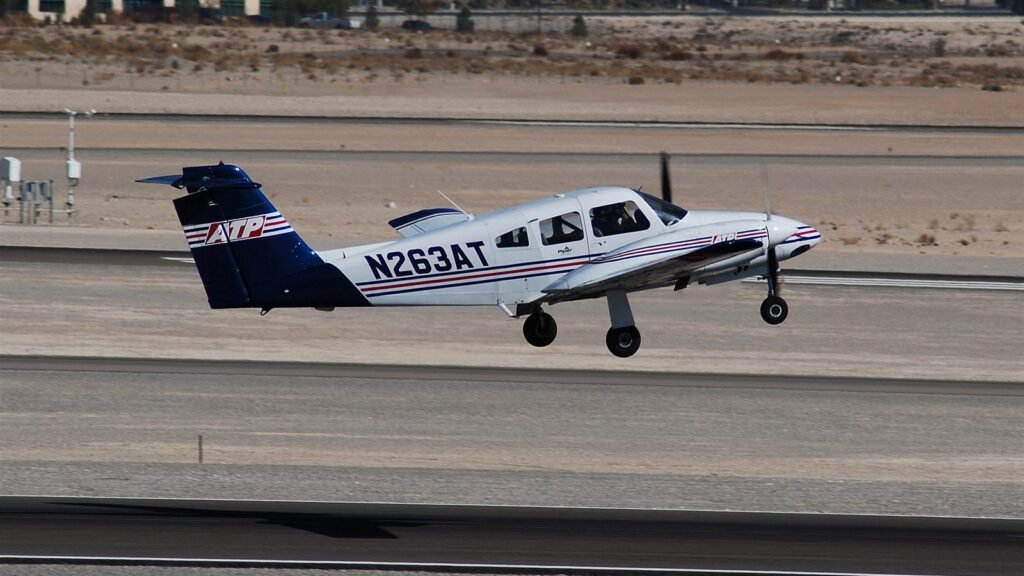
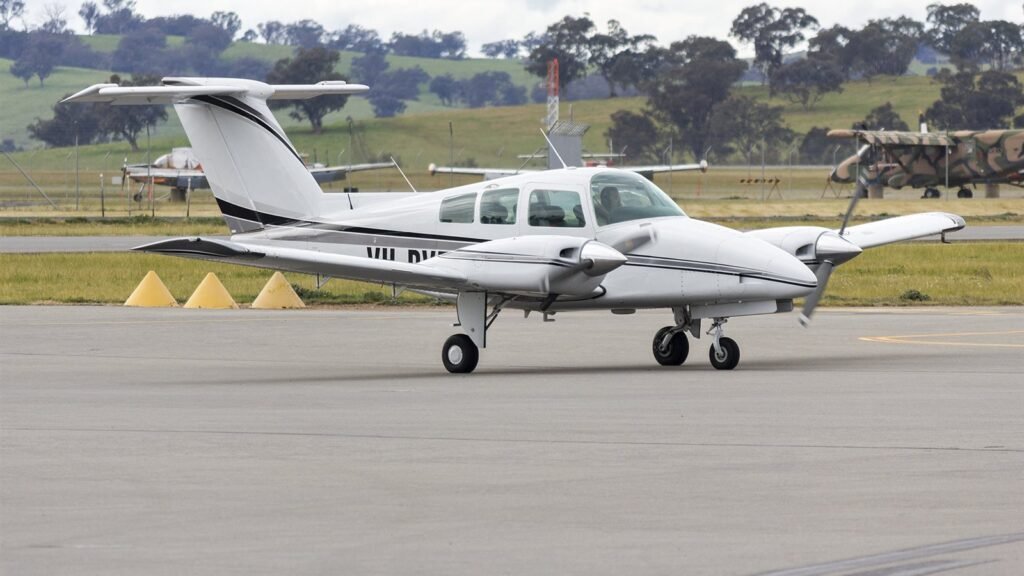
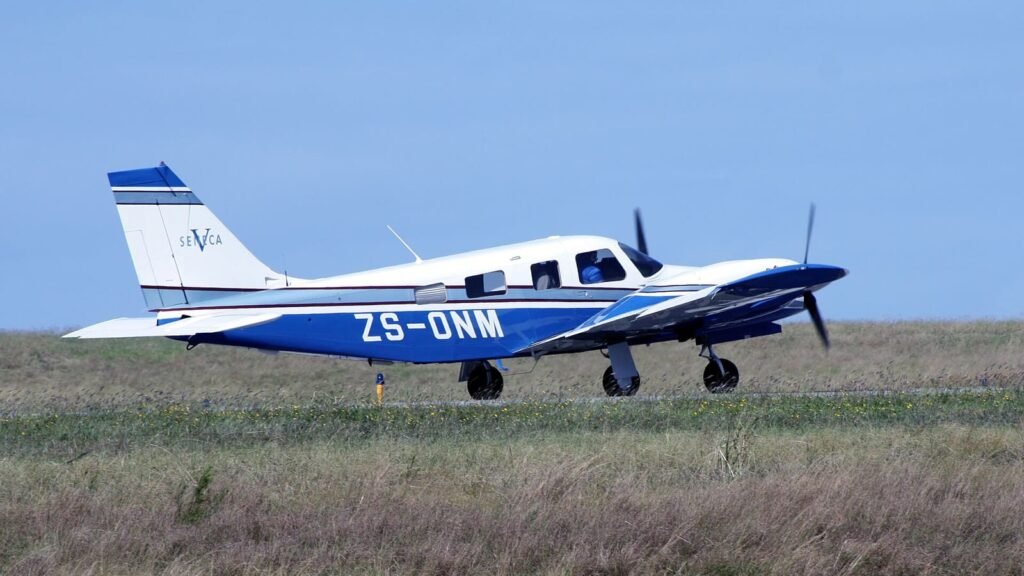
FAR Part 23 Twin Engine Aircraft are frequently selected for business transportation because they combine useful speed, operational flexibility, and access to airports that scheduled airlines and larger business aircraft cannot serve.
The United States has thousands of public-use airports without scheduled airline service. A privately operated piston twin or twin engine turboprop can therefore bring passengers closer to factories, regional offices, construction projects, energy facilities, and remote communities.
This access can reduce ground transportation, eliminate airline connections, and make same-day business trips possible. However, airport suitability depends on more than whether the aircraft can physically become airborne from the available runway.
Pilots must also consider what will happen if one engine fails during the most critical phase of takeoff. A published takeoff distance may show that the aircraft can clear an obstacle with both engines operating, but it does not necessarily prove that the runway is long enough to reject the takeoff or continue safely with one engine inoperative.
Understanding FAR Part 23 Twin Engine Aircraft Certification
Federal Aviation Regulations establish different airworthiness standards for different aircraft categories.
Part 23 contains the certification standards for normal-category airplanes, while Part 25 applies to transport-category airplanes. Current Part 23 standards generally cover aircraft with 19 or fewer passenger seats and a maximum takeoff weight of 19,000 pounds or less.
The widely quoted 12,500-pound dividing line comes from earlier certification structures and remains relevant to many legacy FAR Part 23 Twin Engine Aircraft, but it does not fully describe the modern scope of Part 23.
This distinction matters because many piston twins and twin engine turboprops currently in service were approved under older amendments. Their Aircraft Flight Manuals reflect the performance standards and certification assumptions that applied when those aircraft were originally approved.
Part 25 includes more demanding takeoff-performance requirements, particularly in relation to an engine failure during takeoff. This does not mean every Part 25 aircraft is automatically safer than every Part 23 aircraft. It means their published runway figures may be based on different assumptions and safety margins.
Why FAR Part 23 Twin Engine Aircraft Runway Figures Can Be Misleading
A smaller twin engine turboprop may publish a much shorter takeoff distance than a business jet. At first glance, this can make the turboprop appear better suited to short-runway operations.
With both engines producing full power, that may be true. The aircraft may accelerate at a lower speed, lift off earlier, and clear the required obstacle within a relatively short distance.
The comparison changes when an engine failure is introduced.
A FAR Part 23 Twin Engine Aircraft may legally begin a takeoff based primarily on all-engines-operating performance. Depending on its certification basis, the published runway requirement may not provide enough distance to stop after an engine failure near rotation speed or continue the takeoff with an equivalent engine-out safety margin.
A Part 25 business jet normally publishes a runway requirement that already accounts for this critical decision. Its required runway may appear longer, but the figure reflects a more complete engine-failure scenario.
For this reason, comparing aircraft only by the shortest number shown in a performance chart can lead to an inaccurate conclusion.
Balanced Field Length for FAR Part 23 Twin Engine Aircraft
Balanced field length, commonly abbreviated as BFL, is the runway length at which the accelerate-stop distance and accelerate-go distance are approximately equal.
The accelerate-stop distance includes the distance required to accelerate toward takeoff speed, experience a critical event such as an engine failure, reject the takeoff, and bring the aircraft to a complete stop.
The accelerate-go distance includes the distance required to accelerate with both engines operating, lose one engine at the applicable decision point, continue the takeoff, become airborne, and achieve the required obstacle clearance with one engine inoperative.
When these two distances are approximately equal, the runway is considered balanced.
Balanced field length is particularly important for FAR Part 23 Twin Engine Aircraft because the pilot may have two possible responses to an engine failure during takeoff: stop on the remaining runway or continue into the air using the operating engine.
A suitable runway must provide a realistic safety margin for whichever option is appropriate at the moment of failure.
Accelerate-Stop Performance
Accelerate-stop performance is affected by more than the aircraft’s normal takeoff distance.
During a rejected takeoff, the aircraft has already consumed a substantial portion of the runway while accelerating. The pilot must recognize the problem, reduce power, apply braking, and maintain directional control.
Propeller thrust, aerodynamic drag, braking efficiency, runway slope, surface condition, wind, and pilot reaction time all influence the stopping distance.
In a piston or turboprop twin, an engine failure may also create strong yaw toward the failed engine. The pilot must maintain directional control while simultaneously rejecting the takeoff. At high speed, this can increase workload considerably.
A runway that is long enough for a normal departure may therefore be too short for a safe accelerate-stop manoeuvre.
One-Engine-Inoperative Takeoff Performance
Continuing after an engine failure presents a different set of challenges.
When one engine fails, the aircraft loses approximately half of its available power, but it does not lose only half of its performance. The remaining engine must overcome the drag of the entire aircraft, including the failed engine and its propeller.
Unless the failed propeller is feathered, its blades may produce substantial aerodynamic drag. The asymmetric thrust from the operating engine also causes yaw and roll, requiring rudder input and creating additional drag.
The aircraft must accelerate to an appropriate engine-out climb speed, retract unnecessary drag-producing equipment, and maintain directional control. Even after these actions, the available climb rate may be limited.
High aircraft weight, high temperature, elevated airports, obstacles, tailwinds, and contaminated runways can reduce the single-engine safety margin even further.
For this reason, the runway required to continue a takeoff after engine failure may be much longer than the ordinary all-engines-operating takeoff distance.
A Part 23 Twin Engine Turboprop Example
Consider a hypothetical six-passenger FAR Part 23 twin engine turboprop operating at maximum gross weight on a standard atmospheric day at sea level. The runway is paved, level, and dry.
Its published normal takeoff distance may permit departure from a runway approximately 2,600 feet long.
However, this number assumes a normal takeoff with both engines producing power.
Suppose the aircraft loses an engine near its published rotation speed of approximately 94 knots. If the pilot rejects the takeoff, the aircraft may require around 3,400 feet to accelerate and stop—approximately 800 feet more than the normal published takeoff distance.
If the pilot continues the takeoff with one engine inoperative, the required distance may increase to approximately 4,750 feet.
The comparison would therefore look like this:
- Normal published takeoff distance: 2,600 feet
- Approximate accelerate-stop distance: 3,400 feet
- Approximate engine-out continuation distance: 4,750 feet
- Practical balanced-field reference: approximately 4,750 feet
The aircraft may be legally capable of departing from 2,600 feet under the assumptions used in its approved performance data. Nevertheless, a runway of that length would not provide the same engine-failure margin as the longer distance.
This difference between legal capability and operational safety margin is the central issue.
Comparing a Part 23 Turboprop with a Part 25 Jet
Now consider a six-passenger light business jet certified under Part 25 and operating under equivalent conditions.
Its published balanced field length may be approximately 4,500 feet.
At first glance, the turboprop appears to be the stronger short-runway aircraft because its published normal takeoff distance is only 2,600 feet. However, its engine-out continuation distance in this example is approximately 4,750 feet.
The comparison therefore changes:
- Part 23 turboprop normal takeoff distance: 2,600 feet
- Part 23 turboprop engine-out reference distance: 4,750 feet
- Part 25 light jet balanced field length: 4,500 feet
When comparable engine-failure margins are considered, the Part 25 jet may require 250 feet less runway than the twin engine turboprop.
This does not mean that jets generally outperform turboprops on short runways. Aircraft design, weight, thrust, wing loading, braking systems, runway conditions, altitude, and temperature all affect the result.
It demonstrates that performance numbers developed under different certification standards should not be compared without understanding what each figure represents.
Why a Twin Engine Aircraft May Struggle After an Engine Failure
The presence of two engines provides redundancy, but it also creates a significant asymmetric-control problem when one engine fails.
During normal flight, both engines produce approximately equal thrust. When one stops producing power, the operating engine continues pulling from one side of the aircraft’s centreline.
This creates a yawing moment toward the failed engine. The pilot must use rudder to oppose the yaw and may need a small bank toward the operating engine to improve control.
At the same time, several factors reduce performance:
- Half of the installed engines are no longer producing power.
- The failed propeller may create substantial drag.
- Rudder and bank inputs increase aerodynamic drag.
- The aircraft may still be at maximum takeoff weight.
- Landing gear or flaps may not yet be fully retracted.
- Airspeed may be close to minimum control speed.
The result is that a light twin may have little or no positive climb capability under demanding conditions. The second engine may allow the pilot to maintain control and reach a suitable landing area, but it should not be assumed to provide the performance of a normal two-engine climb.
Minimum Control Speed and Runway Planning
Engine-out performance is not the only concern. The aircraft must also remain controllable.
Minimum control speed, commonly identified as VMC, is the minimum speed at which directional control can be maintained under specified certification conditions after the critical engine becomes inoperative.
Below this speed, the operating engine may produce more yaw than the rudder can counteract. Applying full power on the operating engine while flying too slowly can therefore make the aircraft harder to control rather than safer.
Pilots must understand the relationship between:
- Rotation speed;
- Minimum control speed;
- Best single-engine climb speed;
- Available runway;
- Aircraft weight;
- Density altitude;
- Obstacle clearance.
A safe departure plan must consider the aircraft’s ability to stop, continue, climb, and remain controllable—not merely its ability to leave the ground.
Legal Minimums Versus Operational Safety Margins
Regulations establish minimum standards, but operators may choose more conservative procedures.
A flight department operating a Part 23 twin engine aircraft may adopt a balanced-field policy even when the aircraft’s original certification basis does not require the same calculation used for a Part 25 transport-category airplane.
The operator may require enough runway to:
- Reject the takeoff after an engine failure;
- Continue safely with one engine inoperative;
- Clear nearby obstacles;
- Account for temperature, elevation, wind, and runway condition;
- Include an additional company safety margin.
This approach may prevent the aircraft from using every runway that is technically legal according to the shortest published figure. However, it produces a more realistic risk assessment.
A short runway is useful only when the aircraft can operate from it with an acceptable safety margin.
Aircraft Flight Manual Performance Data
The approved Aircraft Flight Manual or Pilot’s Operating Handbook remains the primary source for aircraft-specific performance calculations.
Generic comparisons cannot replace the actual charts for a particular aircraft, weight, engine configuration, and environmental condition.
Before departure, pilots should determine:
- Takeoff distance with all engines operating;
- Accelerate-stop distance, when available;
- One-engine-inoperative performance;
- Expected climb gradient;
- Obstacle-clearance requirements;
- Density-altitude effects;
- Runway slope and surface corrections;
- Wind and temperature corrections;
- Effects of anti-ice systems or other performance penalties.
The results should then be compared with the available takeoff run and takeoff distance available for the runway.
Performance figures should never be transferred casually from one aircraft model to another, even when both are similar twin engine turboprops.
Choosing Between Part 23 and Part 25 Aircraft
Aircraft selection should not be based solely on cabin size, purchase price, speed, or the shortest advertised runway figure.
A Part 23 twin engine aircraft may be the ideal business tool when the mission involves smaller airports, short regional flights, moderate passenger loads, and lower operating costs.
A Part 25 jet may provide greater speed, higher-altitude capability, more standardized engine-out performance, and stronger transport-category certification margins.
The correct choice depends on the entire mission:
- Typical runway lengths;
- Passenger and baggage requirements;
- Average flight distance;
- Airport elevation;
- Seasonal temperatures;
- Obstacle environment;
- Required dispatch reliability;
- Single-engine performance;
- Operating and maintenance costs.
A realistic comparison must use equivalent safety assumptions. Comparing a Part 23 all-engines-operating takeoff distance with a Part 25 balanced field length is not an equal comparison.
Conclusion
FAR Part 23 twin engine aircraft offer substantial advantages for business aviation. They can provide access to smaller airports, reduce ground transportation, and complete regional missions more efficiently than scheduled airlines or larger aircraft.
However, the shortest published takeoff distance does not always represent the runway needed for a safe engine-failure scenario.
A twin engine turboprop may legally depart from a relatively short runway under its approved performance rules, yet require significantly more distance to reject the takeoff or continue with one engine inoperative. A Part 25 business jet may publish a longer runway requirement because its figure already incorporates a more demanding engine-failure margin.
Pilots and operators must therefore look beyond the legal minimum. Accelerate-stop distance, one-engine-inoperative performance, balanced field length, obstacle clearance, density altitude, aircraft weight, and runway condition should all be considered before departure.
Two engines provide valuable redundancy, but they do not guarantee that an aircraft can climb effectively after losing one engine. To understand what happens after a powerplant failure, continue with our guide explaining whether planes can fly with one engine.