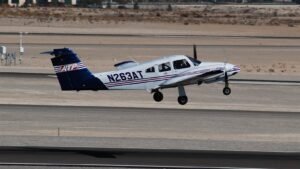
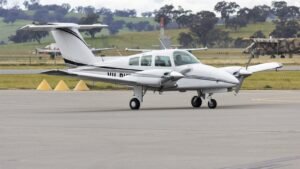
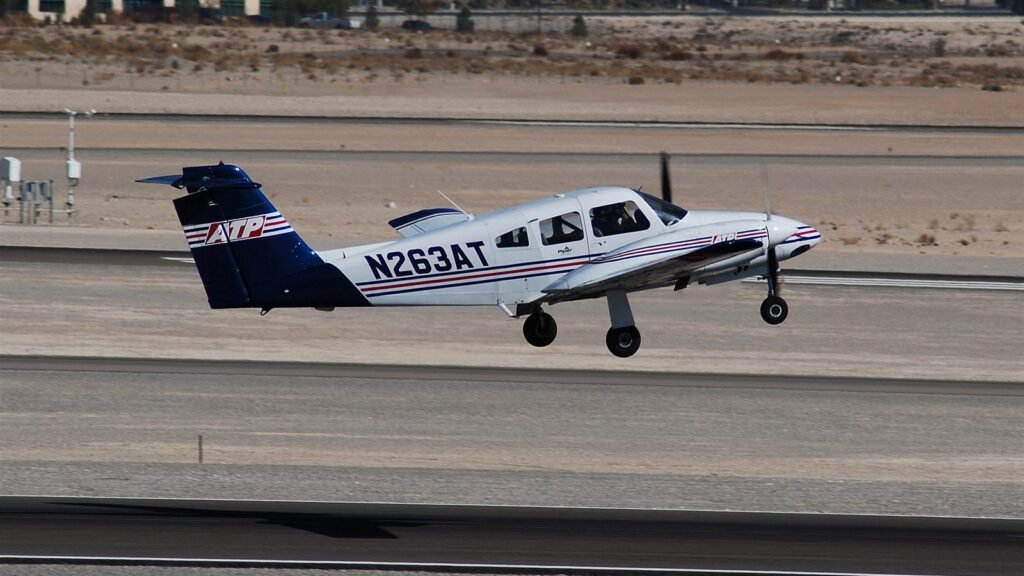
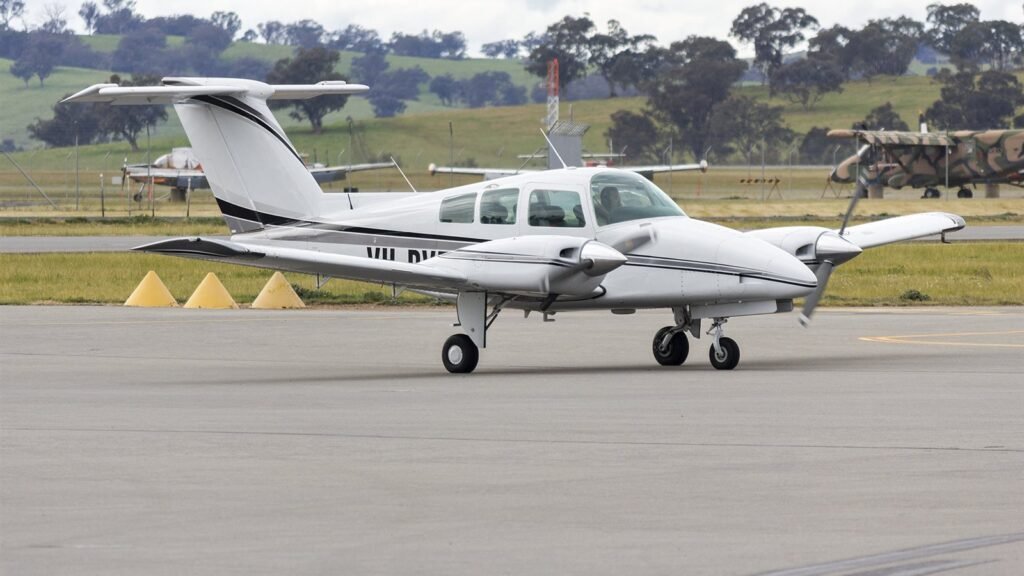
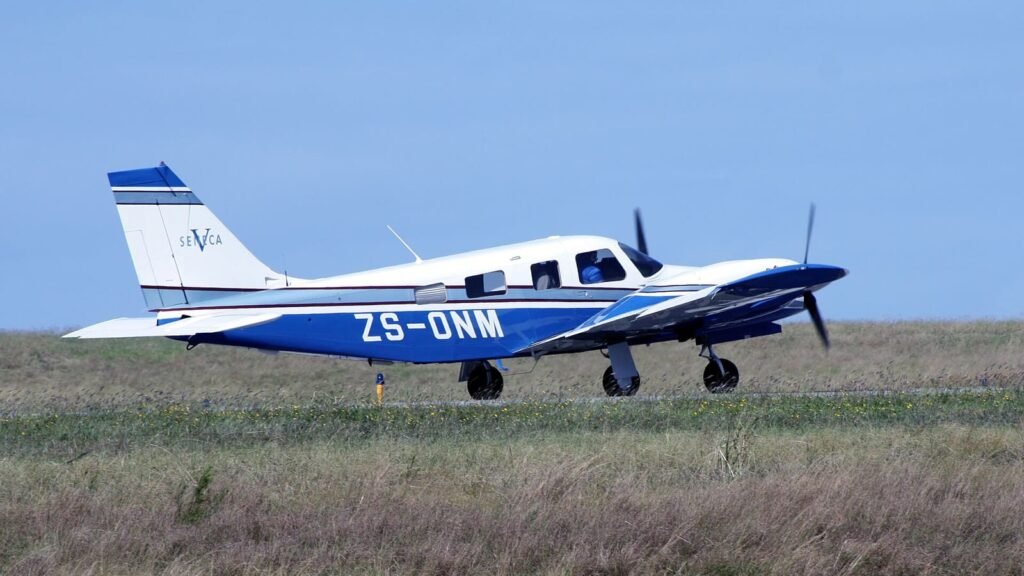
A twin engine fuel system demands far more attention than simply checking the total quantity before departure. In many twin engine accidents, the aircraft may still contain usable fuel, yet one or both engines stop producing power because the pilot selected the wrong tank, failed to configure a fuel pump correctly, overlooked an imbalance, or continued toward the destination with insufficient reserves.
When a fuel-management problem causes an engine failure, the situation can develop very quickly. The pilot is no longer dealing only with fuel. The loss of power immediately creates asymmetric thrust, increased drag, reduced climb performance, and a possible loss of directional control as airspeed approaches VMC.
This is what makes fuel-related events in twin engine aircraft particularly dangerous. A seemingly simple fuel problem can rapidly become an aerodynamic emergency, especially during takeoff, approach, or low-altitude maneuvering.
Why Twin Engine Fuel System Knowledge Matters
A pilot operating a twin engine aircraft must understand exactly how fuel moves from the tanks to each engine. Depending on the aircraft, the system may include main tanks, auxiliary tanks, engine-driven pumps, electric boost pumps, fuel selectors, crossfeed valves, transfer pumps, pressure indicators, and warning systems.
The layout may appear straightforward during normal operations, but an incorrect selection can interrupt fuel flow to an otherwise healthy engine. A pilot may therefore experience a complete power loss even though fuel remains somewhere on board.
Fuel-system knowledge is especially important because the symptoms of fuel starvation can resemble other engine problems. The engine may surge, lose power, run roughly, or stop entirely. If the pilot immediately assumes a mechanical failure and secures the engine without checking the fuel configuration, a recoverable event may become permanent.
During any unexplained loss of power, the pilot should follow the aircraft-specific checklist and consider whether fuel selection, fuel pressure, boost-pump configuration, crossfeed position, or tank quantity may be contributing to the problem.
Fuel Exhaustion and Fuel Starvation Are Not the Same
Fuel exhaustion and fuel starvation are often discussed together, but they describe different events.
Fuel exhaustion occurs when the aircraft has no usable fuel remaining. The pilot may have miscalculated consumption, encountered stronger winds than expected, failed to refuel properly, or continued the flight beyond a safe reserve.
Fuel starvation occurs when usable fuel is available but does not reach the engine. This can result from:
- selecting an empty or inappropriate tank;
- incorrect crossfeed use;
- failure of a transfer system;
- a blocked fuel line or vent;
- improper boost-pump operation;
- fuel contamination;
- an unrecognized tank imbalance;
- misunderstanding the aircraft’s fuel limitations.
In a twin engine aircraft, one engine may continue operating normally while the other loses power because the engines are being supplied from different tanks or because the fuel system has been configured incorrectly.
This distinction matters because fuel starvation may be reversible. Correcting the tank selection or activating the appropriate pump may restore power, but only if the pilot maintains control and performs the correct procedure before the aircraft reaches a critical airspeed or altitude.
How Twin Engine Fuel Systems Increase Pilot Workload
Twin engine aircraft typically require more active fuel management than basic single-engine trainers. The pilot must monitor not only total fuel remaining but also which tank is feeding each engine, whether the fuel load is balanced, and whether the system configuration is appropriate for the current phase of flight.
Fuel Tank Selection
Some twins allow each engine to draw from a dedicated tank on the same side of the aircraft. Others include main and auxiliary tanks, interconnected systems, or fuel-transfer arrangements.
The pilot must know which tank positions are permitted for takeoff, climb, cruise, approach, and landing. An auxiliary tank may be suitable for cruise but prohibited during takeoff or landing because of fuel-flow reliability or system design.
A selector positioned incorrectly can cause an engine to lose power even while the fuel gauges show a substantial quantity remaining.
Crossfeed Operations
Crossfeed allows one engine to receive fuel from a tank on the opposite side of the aircraft. It can be useful after an engine failure, during fuel imbalance correction, or when a tank or fuel line becomes unavailable.
However, crossfeed systems are highly aircraft-specific. In some airplanes, crossfeed is intended only for emergency use. In others, it may be part of normal fuel balancing.
Incorrect crossfeed use can create confusion, feed both engines from one tank, or interrupt fuel flow entirely. For that reason, pilots must follow the published procedure rather than rely on general knowledge from another aircraft type.
Fuel Pumps and Engine Supply
Twin engine aircraft may use engine-driven pumps, electric auxiliary pumps, or both. The correct pump configuration may change during startup, takeoff, landing, tank changes, or engine failure procedures.
A pump left off, left on unnecessarily, or used in the wrong sequence can affect fuel pressure and engine operation. Pilots should therefore understand not only when a pump is required but also what indications confirm that fuel pressure has been restored.
Fuel Imbalance
Uneven fuel consumption can create a lateral imbalance, increasing control forces and reducing efficiency. In some aircraft, the imbalance may also complicate engine-out handling because the heavier wing can affect bank tendency and control requirements.
Fuel imbalance should be corrected early and in accordance with the aircraft manual. Waiting until the imbalance becomes significant increases workload and can create additional complications during an emergency.
What Happens When One Engine Loses Power?
When one engine stops producing thrust, the twin engine aircraft immediately becomes aerodynamically unbalanced. The operating engine continues pulling on one side of the fuselage, producing yaw toward the failed engine and often a rolling tendency in the same direction.
The pilot must respond with rudder toward the operating engine and, where recommended, a small bank toward that engine. The bank helps create a horizontal lift component that reduces the amount of rudder required and improves directional control.
At the same time, the aircraft experiences a major loss of performance. The inoperative propeller may create substantial drag, especially if it is not feathered. The landing gear, flaps, and an incorrect sideslip can further reduce climb capability.
A twin engine aircraft does not automatically retain half of its climb performance after losing one engine. In many light twins, single-engine climb performance may be poor, and under unfavorable conditions the aircraft may be unable to maintain altitude.
Why the Critical Engine Matters
On many conventional twin engine aircraft, both propellers rotate clockwise as viewed from the cockpit. Because of P-factor, the descending blade on each propeller produces more effective thrust than the ascending blade when the aircraft is at a high angle of attack.
On the right engine, the descending blade is farther from the aircraft centerline. This places the right engine’s effective thrust line farther outboard and creates a larger yawing moment.
As a result, the left engine is considered the critical engine on many conventional twins. Its failure leaves the right engine operating, which generally creates the most unfavorable condition for directional control.
The term “critical engine” does not mean that the engine is more likely to fail or that it is always more important to keep running. It means that the failure of that engine has the most adverse effect on aircraft performance and handling under the defined conditions.
Some twin engine aircraft use counter-rotating propellers, which can reduce or eliminate the traditional critical-engine effect. Pilots must therefore understand the design of the specific aircraft they are operating.
Aerodynamic Effects of Single-Engine Flight
Several aerodynamic factors combine after an engine failure. Individually they may appear manageable, but together they can rapidly exceed the pilot’s available control authority as airspeed decreases.
Asymmetric Thrust
The operating engine produces thrust on only one side of the aircraft. This creates yaw toward the failed engine. The amount of yaw increases with greater power and with a larger distance between the engine’s thrust line and the aircraft centerline.
Maximum power on the operating engine may be necessary for performance, but it also creates the greatest asymmetric force. This is why directional control becomes increasingly difficult at low speed.
P-Factor
At a high angle of attack, the descending propeller blade develops more thrust than the ascending blade. This shifts the effective thrust line sideways.
When the right engine remains operating on a conventional twin, this effect increases the yawing moment because the descending blade is farther from the fuselage centerline.
As the aircraft slows, angle of attack usually increases. More power may then be required to maintain altitude, increasing P-factor and asymmetric thrust at the same time.
Propeller Slipstream
The operating propeller produces a spiraling slipstream that flows around the fuselage and tail. The slipstream can influence the vertical stabilizer and rudder differently depending on which engine remains operating.
This effect contributes to the difference between losing the critical and noncritical engine. It also changes with power setting, airspeed, angle of attack, and aircraft design.
Accelerated Flow Over the Wing
The operating propeller increases airflow over part of the wing behind it. The wing on the operating side may therefore produce more lift than the wing behind the failed engine, creating an additional rolling tendency toward the inoperative side.
The exact effect varies with aircraft configuration, but it contributes to the pilot’s need for coordinated rudder and bank input.
Rudder and Bank Requirements
The rudder opposes the yaw created by the operating engine. At lower airspeeds, rudder effectiveness decreases because less airflow passes over the vertical tail.
A small bank toward the operating engine reduces the rudder force required and helps establish a more efficient zero-sideslip condition. The exact recommended bank angle depends on the aircraft and should come from the POH or AFM.
If the aircraft slows too far, the pilot may reach the limit of available rudder authority. Beyond that point, full rudder may no longer be enough to prevent yaw and roll toward the failed engine.
VMC and Loss of Directional Control
VMC is the minimum control speed with the critical engine inoperative under a defined set of certification conditions. It is not simply a target speed for normal operation, nor is it a guarantee that the aircraft will remain controllable in every real-world situation.
Actual directional-control capability can be affected by:
- aircraft weight;
- center-of-gravity position;
- density altitude;
- power on the operating engine;
- propeller condition;
- landing gear and flap position;
- bank angle;
- turbulence;
- pilot technique.
As airspeed decreases toward VMC, the rudder becomes less effective while asymmetric thrust remains strong. If the pilot continues applying high power and allows speed to decay, the aircraft may yaw and roll rapidly toward the inoperative engine.
This loss of control can appear dramatic to witnesses, sometimes resembling an intentional steep roll or aerobatic maneuver. In reality, the aircraft may have entered an uncontrolled VMC rollover at low altitude.
The proper response is not always to add more power. If directional control cannot be maintained, reducing power on the operating engine may be necessary to reduce the asymmetric yawing moment. This sacrifices performance but can preserve control.
Maintaining control is always more important than maintaining altitude.
Piston Twin and Turboprop Engine-Out Handling
Modern turboprops often include systems that help the pilot manage an engine failure. These may include autofeather, rudder boost, automatic yaw compensation, power-loss detection, and more capable remaining-engine performance.
A King Air, for example, may provide greater automation and stronger single-engine performance than a light piston twin such as a Piper Chieftain. However, the basic aerodynamics remain the same.
The aircraft still experiences asymmetric thrust, increased drag, reduced performance, and a need for careful airspeed control. Automation can reduce pilot workload and shorten the time required to achieve the correct configuration, but it does not eliminate the possibility of losing control.
Autofeather
Autofeather systems are designed to reduce drag automatically by moving the failed engine’s propeller blades toward the feathered position.
This can significantly improve performance after an engine failure. However, the pilot must still verify system operation and follow the aircraft-specific checklist. A malfunctioning or incorrectly armed autofeather system can leave the propeller producing excessive drag.
Rudder Boost and Yaw Compensation
Rudder boost or yaw-compensation systems detect asymmetric power and apply corrective rudder pressure. These systems can help the pilot maintain control during the first moments after a failure.
They do not replace proper rudder input, airspeed management, or pilot recognition. If the system fails or the pilot is unprepared, the aircraft may still approach VMC very quickly.
Remaining-Engine Performance
Turboprops frequently have better single-engine climb capability than light piston twins, but performance is still affected by weight, altitude, temperature, configuration, and terrain.
A twin turboprop near maximum weight at a high-density-altitude airport may still have limited climb capability after an engine failure. Published performance calculations remain essential.
Engine Failure Immediately After Liftoff
An engine failure just after liftoff is one of the most demanding situations in twin engine flying. The aircraft is low, slow, heavily loaded, and often operating at maximum power.
If the failure occurs near minimum control speed, even a small decrease in airspeed can produce a rapid loss of directional control. The pilot may have only seconds to apply rudder, establish the correct bank, reduce drag, and decide whether continued flight is possible.
If directional control cannot be maintained, reducing power on the operating engine and landing ahead may be the only survivable option. Attempting to climb while the aircraft is rolling and yawing out of control is not a viable strategy.
This is why takeoff briefings are essential. Before applying power, the pilot should know:
- which failures require a rejected takeoff;
- what actions apply after liftoff;
- whether the aircraft can climb on one engine;
- what terrain and obstacles exist ahead;
- where an emergency landing could be made;
- which airspeeds must be protected.
The decision must be based on the aircraft manual and actual performance, not on the assumption that two engines guarantee continued flight.
Single-Engine Approach and Landing
The landing phase creates another high-risk period because the aircraft is intentionally slowed and configured close to the ground. Extending landing gear and flaps increases drag, while reducing airspeed decreases rudder effectiveness.
Some pilots argue that a single-engine approach should be flown much faster than normal and that configuration should be delayed until very short final. The underlying concern is valid: the pilot must preserve energy and avoid entering the low-speed VMC region.
However, a fixed speed such as 150 knots is not appropriate as a universal procedure. The safe approach profile depends on the aircraft, runway length, weather, weight, operating manual, and published single-engine procedures.
A more reliable strategy is to:
- maintain the published single-engine approach speed;
- preserve an appropriate margin above VMC;
- delay high-drag configuration until landing is assured, when recommended;
- use gear and flaps according to the POH or AFM;
- avoid steep turns and abrupt maneuvering;
- stabilize the aircraft before landing;
- recognize that a single-engine go-around may offer little or no climb performance.
The pilot should not attempt to make the emergency approach look identical to a normal two-engine approach. At the same time, the pilot should not improvise an extreme high-speed approach without considering runway requirements and aircraft limitations.
Energy management is essential, but it must remain within an aircraft-specific and stabilized plan.
Why a Single-Engine Go-Around May Be Dangerous
A go-around on one engine can create a sudden increase in asymmetric thrust at low speed. The pilot may also need to retract flaps and landing gear, adjust trim, manage yaw, and establish the correct climb speed while close to the ground.
In some light twin engine aircraft, the resulting climb performance may be minimal or negative. A poorly executed single-engine go-around can therefore be more dangerous than continuing a stable landing.
Pilots should plan the approach with a clear understanding of the available options. If performance calculations, aircraft procedures, or runway conditions indicate that a go-around is unlikely to succeed, the landing should be treated as a committed operation once the aircraft reaches the appropriate point.
That decision should be made deliberately and early rather than improvised during the final seconds of the approach.
Common Twin Engine Fuel Management Mistakes
Fuel-related engine failures are often preventable. Common errors include:
- relying only on fuel gauges;
- failing to visually confirm fuel quantity;
- miscalculating consumption;
- neglecting reserve requirements;
- selecting the wrong tank;
- forgetting to return selectors after crossfeed;
- failing to monitor fuel pressure;
- allowing a large imbalance to develop;
- continuing toward the destination after fuel uncertainty appears;
- assuming that fuel in the aircraft is automatically available to both engines.
A disciplined pilot regularly compares planned fuel burn with actual fuel remaining. Any unexplained discrepancy should be treated seriously.
If fuel quantity, flow, or system configuration becomes uncertain, landing before the situation becomes critical is usually the safest decision.
Practical Engine-Out Priorities
When one engine loses power, the pilot must avoid becoming so focused on troubleshooting that aircraft control is neglected.
Maintain Control
Apply the required rudder and bank input immediately. Keep the aircraft upright and prevent the yaw from developing into a roll.
Protect Airspeed
Establish the published engine-out speed. Do not allow the aircraft to slow toward VMC while attempting to identify the problem.
Identify and Verify
Use the aircraft’s approved method to identify the failed engine, then verify before moving a fuel control, mixture lever, or propeller control to a shutdown position.
Configure the Aircraft
Reduce drag according to the checklist. This may include retracting landing gear and flaps, feathering the propeller, and establishing the recommended bank.
Check the Fuel System
Confirm selectors, fuel quantity, boost pumps, crossfeed position, and fuel pressure. A fuel-starvation event may be recoverable if the correct source is selected promptly.
Assess Performance
Determine whether the aircraft can climb, maintain altitude, or only descend. Consider terrain, weather, weight, and distance to a suitable airport.
Plan the Landing
Choose the safest available landing option early. Avoid unnecessary maneuvering and do not allow the aircraft to become slow and unstable while attempting to reach a preferred runway.
Conclusion
A twin engine fuel system can provide operational flexibility, but it also adds complexity that demands disciplined monitoring and a complete understanding of aircraft-specific procedures. A fuel-management error may cause one engine to lose power even when usable fuel remains on board, turning a correctable system problem into a serious asymmetric-flight emergency.
Once an engine stops producing thrust, the pilot must manage far more than reduced power. Asymmetric thrust, P-factor, propeller drag, reduced rudder effectiveness, and limited single-engine performance can combine rapidly as airspeed decreases. Near the ground, even a small loss of speed may separate controlled flight from a VMC rollover.
The safest response begins with maintaining aircraft control, protecting airspeed, identifying and verifying the failed engine, checking the fuel configuration, and evaluating whether continued flight is realistically possible. Automation in modern turboprops may provide valuable assistance, but it never replaces sound judgment, system knowledge, or an understanding of twin engine aerodynamics.
These principles become even more important during long-range commercial operations, where twin engine aircraft may fly considerable distances from a suitable diversion airport. Fuel planning, system reliability, engine-out performance, and diversion strategy are all central to safe ETOPS operations.
To learn more about how modern twin engine aircraft operate safely on extended routes, continue with our guide to ETOPS twin engine operations.