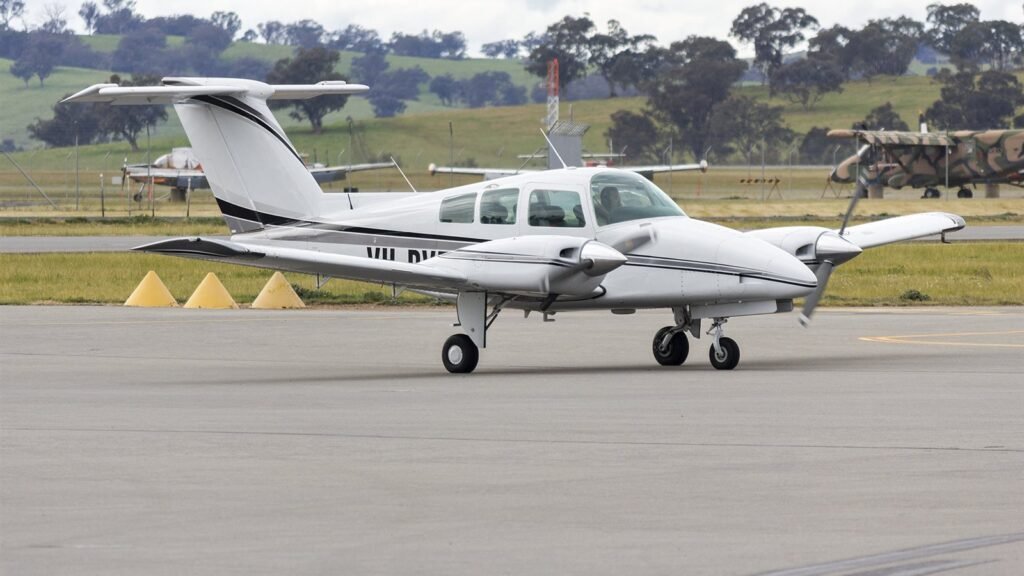
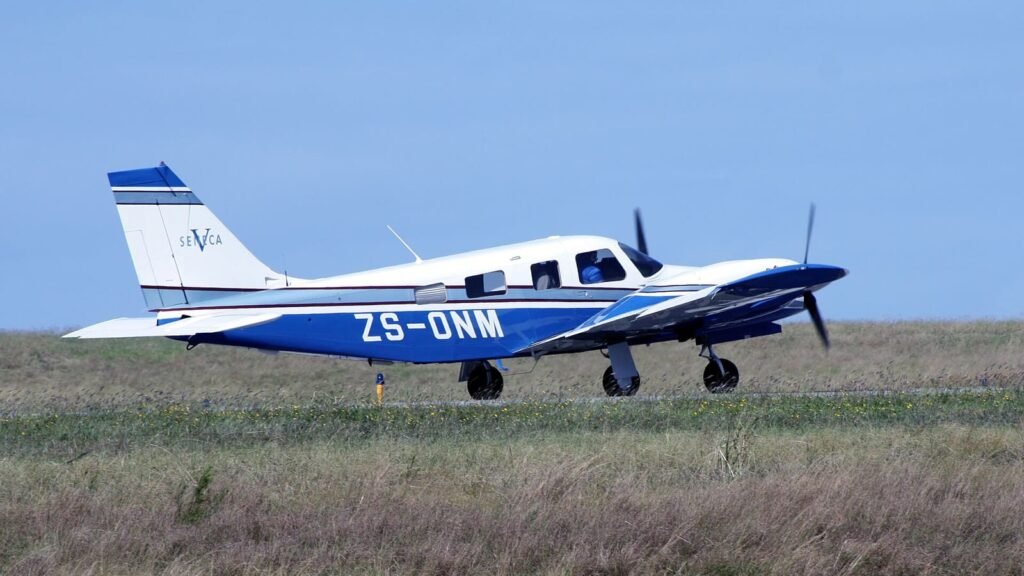
A twin engine pilot is trained and qualified to operate aircraft powered by two engines. In most licensing systems, this requires a multi-engine class rating, endorsement, or equivalent qualification added to an existing pilot license. The exact terminology and privileges depend on the aviation authority, aircraft category, and type of operation, but the purpose is the same: to prepare pilots for the aerodynamic, technical, and operational demands of flying a twin engine aircraft.
Earning a multi-engine rating is an important step for pilots who plan to work in commercial aviation. Airlines, charter companies, cargo operators, corporate flight departments, and air ambulance organizations frequently operate twin engine aircraft because they can offer greater speed, range, payload capacity, and operational flexibility than many basic single-engine airplanes. Multi-engine experience therefore improves a pilot’s qualifications and provides a foundation for transitioning to twin turboprops, business aircraft, regional airliners, and larger transport-category airplanes.
However, becoming a twin engine pilot involves much more than learning to control an aircraft with an additional engine. Pilots must understand asymmetric thrust, minimum control speed, critical engine concepts, single-engine climb performance, propeller systems, emergency procedures, and the limitations that appear when one engine stops producing power. These subjects make twin engine training one of the most valuable stages in professional pilot development.
Why Should You Earn a Multi-Engine Rating?
A multi-engine rating allows a pilot to operate aircraft equipped with more than one engine within the privileges and limitations of the applicable license. For pilots pursuing an airline or commercial career, it is often an essential qualification because professional operations commonly involve twin engine airplanes.
The rating also makes a pilot more marketable. A candidate with documented twin engine experience has already been introduced to higher-performance aircraft, more complex cockpit systems, faster decision-making, and structured emergency procedures. Although the rating alone does not guarantee employment, it demonstrates that the pilot has progressed beyond basic single-engine training and has begun developing skills relevant to professional flight operations.
Advance Toward an Airline Career
Most modern airline fleets are built around twin engine aircraft. Regional carriers may operate twin turboprops or regional jets, while major airlines use larger twin engine aircraft for short-, medium-, and long-haul services. As a result, pilots preparing for airline careers need a strong understanding of multi-engine operations long before entering a transport-category cockpit.
Initial twin engine training introduces many concepts that later appear in airline operations, including engine-out performance, standard operating procedures, checklist discipline, power management, stabilized approaches, and abnormal situation management. The aircraft used during training may be much smaller than an airliner, but the professional habits developed are directly transferable.
Airlines also look beyond the presence of a rating and consider the quality of the pilot’s experience. Accurate aircraft control, sound judgment, knowledge of systems, and the ability to remain organized during high-workload situations are more important than simply accumulating flight time without developing strong operating discipline.
Fly Faster and More Capable Aircraft
Twin engine airplanes are often faster and more capable than the basic trainers used during private pilot instruction. Depending on the aircraft, they may offer greater range, higher cruise speeds, increased payload capacity, retractable landing gear, constant-speed propellers, advanced avionics, pressurization, or operation at higher altitudes.
These capabilities allow twin engine aircraft to perform a wide range of missions. Light twins are used for training and personal transportation, while larger models support charter flights, cargo transport, medical operations, surveillance, corporate travel, and regional passenger services.
Greater capability also brings greater responsibility. Higher speeds reduce the time available for decisions, and more complex systems increase cockpit workload. A twin engine pilot must therefore remain ahead of the aircraft by planning configuration changes, anticipating checklist items, monitoring both engines, and preparing for abnormal events before they occur.
Develop Engine-Failure Management Skills
One of the main reasons for operating an aircraft with two engines is that the remaining engine may provide additional options after a powerplant failure. In some situations, the aircraft may be able to continue climbing, maintain altitude, return to the departure airport, or reach another suitable landing area.
However, a second engine does not automatically guarantee safety. When one engine fails, the remaining engine produces asymmetric thrust, causing the aircraft to yaw and potentially roll toward the inoperative side. The pilot must maintain directional control, protect airspeed, reduce drag, identify and verify the failed engine, and correctly configure the aircraft.
Single-engine performance also varies considerably. Aircraft weight, density altitude, temperature, configuration, terrain, icing, and pilot technique can determine whether a twin engine aircraft climbs, maintains altitude, or descends after an engine failure. The value of the second engine depends on both aircraft performance and the pilot’s ability to use it correctly.
Build Professional Cockpit Discipline
Twin engine training requires pilots to become more methodical. Power settings, propeller controls, fuel systems, electrical equipment, landing gear, flaps, navigation, and communications may all need attention during a relatively short period.
To manage this workload, pilots learn to use standard cockpit flows, challenge-and-response procedures where appropriate, checklists, callouts, departure briefings, and clearly defined priorities. These habits reduce the chance of missing critical items and prepare the pilot for more structured commercial operations.
Learning to Fly Complex Twin Engine Aircraft
For many pilots, a light twin engine airplane is their first exposure to advanced aircraft systems. Although not every twin is legally classified as a complex aircraft under every regulatory system, twin engine trainers commonly introduce features that are not present in basic single-engine airplanes.
These may include:
- two engine and propeller control systems;
- constant-speed or variable-pitch propellers;
- propeller feathering systems;
- retractable landing gear;
- interconnected fuel tanks and selectors;
- more advanced electrical systems;
- hydraulic or electrically operated equipment;
- engine synchronization systems;
- advanced navigation and instrument panels;
- deicing or anti-icing equipment on some models.
The pilot must understand not only how to operate these systems normally but also how one system may affect another during a malfunction. For example, an engine failure may influence electrical generation, hydraulic capability, pneumatic systems, propeller operation, or fuel planning, depending on the aircraft design.
Twin engine aerodynamics also introduce concepts that are unfamiliar to many single-engine pilots. These include asymmetric thrust, VMC, the critical engine, zero-sideslip technique, single-engine service ceiling, and the relationship between airspeed, bank angle, and directional control.
The transition therefore expands both technical knowledge and practical skill. A pilot who previously concentrated mainly on flying the aircraft must now manage a complete system while continuously evaluating performance and risk.
What Does a Twin Engine Pilot Do?
A twin engine pilot operates and monitors an aircraft equipped with two engines during normal, abnormal, and emergency conditions. The exact responsibilities depend on the aircraft, mission, and whether the flight is conducted by a single pilot or a multi-pilot crew.
Not every twin engine aircraft requires two pilots. Many light twins, including common training and personal aircraft, are certified for single-pilot operation. Larger business aircraft, regional aircraft, and commercial transport airplanes may require two or more pilots because of certification rules, operating regulations, company procedures, or aircraft complexity.
During a normal flight, a twin engine pilot may be responsible for:
- conducting aircraft performance calculations;
- planning fuel and alternates;
- inspecting both engines and propeller systems;
- completing engine start and run-up procedures;
- setting and monitoring engine power;
- balancing fuel consumption;
- operating landing gear and flap systems;
- monitoring temperatures, pressures, and electrical loads;
- managing navigation and communication;
- preparing for possible engine failures during critical phases.
The pilot must also understand how the aircraft will perform after losing an engine. Before takeoff, this may involve assessing runway length, obstacles, density altitude, aircraft weight, wind, and the published single-engine performance.
If an engine fails, the pilot must first maintain control. Correct rudder input, a small bank toward the operating engine when recommended, and an appropriate airspeed are essential. Only after stabilizing the aircraft should the pilot proceed with identification, verification, configuration, checklists, communication, and landing decisions.
In a multi-crew environment, these responsibilities are divided according to standard operating procedures. One pilot may control the aircraft while the other completes checklists, communicates with air traffic control, and monitors systems. Effective crew coordination becomes particularly important during an engine failure because the workload can rise sharply within seconds.
What Aircraft Can a Twin Engine Pilot Fly?
A multi-engine qualification does not necessarily authorize a pilot to operate every aircraft with two engines. The aircraft that may legally be flown depends on the pilot’s license, class rating, type rating, instrument privileges, endorsements, experience, and regulatory system.
Nevertheless, many pilots begin their training in light piston twins that are specifically designed or widely used for multi-engine instruction.
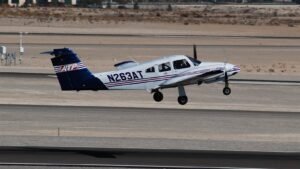
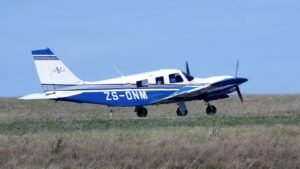
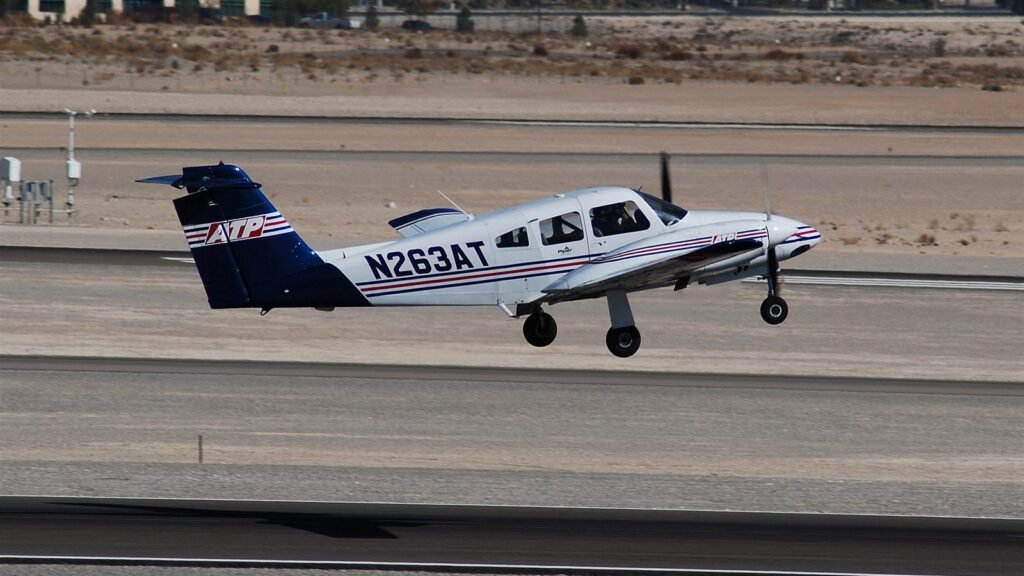
Piper PA-44 Seminole
The Piper PA-44 Seminole is one of the most widely recognized twin engine training aircraft. It has been used by flight schools, universities, and professional training organizations for decades.
Its conventional systems, predictable handling, and clear engine-out characteristics make it suitable for teaching asymmetric flight, propeller feathering, instrument procedures, and multi-engine checkride maneuvers. Many professional pilots complete their first multi-engine hours in a Seminole.
Diamond DA42
The Diamond DA42 is a modern twin engine aircraft frequently used for advanced training and personal transportation. Depending on the version, it may include diesel engines, electronic engine controls, composite construction, and a glass cockpit.
The aircraft introduces students to modern avionics and system management while still allowing them to practice the core aerodynamic principles of twin engine flight. Its cockpit environment can also help prepare pilots for later transitions into technically advanced aircraft.
Diamond DA62
The Diamond DA62 is a larger twin engine aircraft designed for personal, business, and special-mission operations. It offers greater cabin space and payload capacity than many traditional light twins.
Although it may be used for advanced training, it is more commonly associated with transportation and operational missions. Pilots transitioning to the DA62 require aircraft-specific familiarization because its systems, performance, and avionics differ from those found in basic multi-engine trainers.
Beechcraft Baron
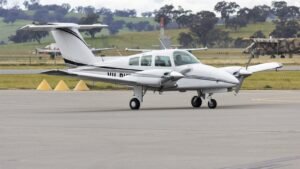
The Beechcraft Baron family includes high-performance piston twin engine aircraft used for personal, business, charter, and training operations. Barons generally offer greater speed and performance than many entry-level trainers, but they also require careful energy management and systems knowledge.
A pilot transitioning to a Baron must understand the specific model’s performance, fuel system, engine limitations, weight and balance, and emergency procedures. Previous multi-engine experience provides a foundation, but aircraft-specific instruction remains essential.
Tecnam P2006T
The Tecnam P2006T is a light twin engine aircraft used by many flight schools for multi-engine and instrument training. Its relatively economical operation has made it attractive to academies seeking to provide structured twin engine experience without the operating costs of some larger models.
The aircraft allows students to practice engine-out handling, asymmetric flight, instrument procedures, and twin engine cockpit management in a modern training environment.
Tecnam P2012 Traveller
The Tecnam P2012 Traveller is a larger twin piston aircraft intended for regional passenger, cargo, special-mission, and utility operations. It represents a step beyond basic training twins and demonstrates how piston-powered twin engine aircraft can support commercial transportation.
Operating an aircraft in this category may require additional training, operational experience, company qualification, and compliance with the rules governing commercial passenger or cargo services.
Twin Turboprops and Business Aircraft
As pilots gain experience, they may progress to twin turboprops such as the Beechcraft King Air family or regional aircraft such as the ATR series. These airplanes introduce turbine engines, pressurization, advanced automation, higher altitudes, more demanding performance planning, and formal crew procedures.
Twin engine business jets and airline aircraft require additional qualifications, often including a specific type rating. A basic multi-engine rating is therefore the beginning of the pathway rather than a universal authorization to fly every twin engine model.
Qualifications and Limitations for a Twin Engine Pilot
A multi-engine rating grants specific privileges, but it does not replace the other licenses, ratings, and qualifications required for a particular flight. Pilots must understand the difference between being allowed to fly a twin engine aircraft and being authorized to conduct a specific operation.
Requirements vary between aviation authorities, so pilots should always consult the regulations applicable to their license and country of operation.
Instrument Privileges
A pilot who intends to fly a twin engine aircraft under Instrument Flight Rules must hold the appropriate instrument privileges. A basic multi-engine qualification may allow flight under visual conditions, but it does not automatically authorize instrument operations.
Depending on the licensing system, a pilot may need a multi-engine instrument rating, an instrument privilege valid in multi-engine aircraft, or additional training demonstrating engine-out control during instrument procedures.
This training is particularly important because an engine failure in cloud or low visibility combines asymmetric aircraft control with instrument scanning, navigation, communication, and approach planning. The workload can be significantly higher than during visual flight.
Commercial Pilot Privileges
A multi-engine rating does not automatically authorize a pilot to receive payment for flying. Commercial operations generally require an appropriate commercial pilot license and compliance with the regulations governing the specific operation.
A commercial pilot may also need:
- sufficient total and multi-engine flight time;
- an instrument rating;
- aircraft-specific training;
- operator training and checking;
- medical certification;
- recent experience and proficiency;
- crew cooperation training where applicable.
The rules differ between private flights, flight instruction, charter operations, airline services, cargo flights, and corporate aviation. Pilots must therefore evaluate the complete legal framework rather than relying on the multi-engine rating alone.
Type Ratings
Larger, more complex, or turbine-powered aircraft may require a type rating specific to the aircraft model. The exact requirement depends on the regulatory authority, aircraft certification, maximum takeoff weight, propulsion type, and operational category.
A type rating normally includes detailed ground school, systems training, simulator sessions, emergency scenarios, and a formal skill test. It prepares the pilot to operate one particular aircraft type or an approved group of closely related variants.
This means that a pilot qualified in a light piston twin cannot immediately move into a regional jet or large business aircraft without additional training and certification.
Aircraft-Specific Differences Training
Even when a separate type rating is not required, pilots still need appropriate familiarization before operating an unfamiliar twin engine aircraft. Differences in fuel systems, propeller operation, engine controls, landing gear, avionics, electrical equipment, and performance can create significant risks.
A pilot trained in one light twin should not assume that procedures will be identical in another. For example, the engine identification sequence, fuel selector design, feathering system, emergency airspeeds, and single-engine handling may vary substantially between models.
Aircraft-specific training helps ensure that general multi-engine knowledge is applied correctly to the actual airplane being flown.
Currency and Proficiency
Holding a valid rating does not necessarily mean that a pilot is proficient. Engine-out skills can deteriorate when they are not practiced regularly, especially identification, verification, directional control, and checklist flow.
Pilots should maintain proficiency through recurrent training, simulator sessions, instructor reviews, and regular study of aircraft procedures. Commercial operators generally impose structured recurrent training and checking requirements, but private pilots must also take personal responsibility for maintaining competence.
Is It Worth Becoming a Twin Engine Pilot?
For pilots pursuing professional aviation careers, becoming a twin engine pilot is generally a worthwhile and often necessary investment. It creates access to a wider range of aircraft, improves employment opportunities, and prepares pilots for more advanced airline, charter, corporate, cargo, and instructional roles.
The training also produces benefits that extend beyond the rating itself. Pilots become better at managing workload, planning ahead, monitoring systems, interpreting aircraft performance, and making decisions under pressure. These skills improve overall professionalism even when the pilot later operates a different category of aircraft.
Twin engine flying also provides access to aircraft with greater speed, range, payload, and mission capability. Pilots may be able to conduct longer cross-country flights, transport more passengers or cargo, and progress toward turbine-powered operations.
At the same time, the rating should not be viewed only as a way to fly bigger aircraft or as a guarantee of greater safety. Twin engine operations introduce their own risks, particularly after an engine failure at low altitude or low airspeed. The aircraft may remain controllable only if the pilot responds correctly, and single-engine climb capability may be limited or unavailable.
The real value of twin engine training lies in understanding both the advantages and the limitations of the aircraft.
How Flight Schools Support Twin Engine Training
The quality of a pilot’s training depends heavily on the flight school, instructors, aircraft, maintenance standards, and structure of the course. A strong training organization should provide more than the minimum number of flight hours required for a checkride.
Effective twin engine instruction should combine:
- detailed ground training;
- simulator preparation where available;
- aircraft systems instruction;
- performance planning;
- normal flight procedures;
- asymmetric flight demonstrations;
- engine-out emergencies;
- instrument procedures;
- scenario-based decision-making;
- thorough preflight and post-flight briefings.
Experienced instructors help students understand why each procedure is performed rather than encouraging them to memorize a sequence without context. This is particularly important during engine failure training, where an incorrect action can have serious consequences.
Aircraft maintenance is equally important. Twin engine trainers contain more engines, propellers, fuel components, electrical equipment, and mechanical systems than basic single-engine aircraft. A professional school should maintain clear safety standards, address defects promptly, and ensure that aircraft remain suitable for demanding training exercises.
Students should also consider aircraft availability and scheduling consistency. Long gaps between flights can slow progress because engine-out procedures and cockpit flows require regular repetition. A structured program with reliable aircraft access usually produces more efficient and confident pilots.
Conclusion
Becoming a twin engine pilot is a significant milestone in any professional aviation career. A multi-engine rating opens the door to faster, more capable aircraft while teaching the advanced skills needed to manage asymmetric thrust, engine failures, complex aircraft systems, and higher cockpit workloads.
More importantly, twin engine training develops the judgment, discipline, and situational awareness that professional pilots rely on throughout their careers. Whether your goal is corporate aviation, charter operations, cargo flying, or the airlines, the experience gained during multi-engine training provides a strong foundation for future aircraft transitions.
One of the best examples of a light twin that combines performance, reliability, and excellent handling is the Beechcraft Baron 58. It has been a favorite among flight schools, private owners, and professional pilots for decades thanks to its balanced performance, robust construction, and outstanding twin engine flying characteristics.
To learn more about one of the world’s most respected twin engine aircraft, continue with our complete guide to the Beechcraft Baron 58:
https://melibrary.pro/article/beechcraft-baron-58/