
Twin-engine aircraft provide an important level of propulsion redundancy, but the presence of a second engine does not automatically guarantee continued safe flight after a power loss. When one engine fails, the aircraft may still have substantial power available, yet the aerodynamic and performance conditions can become significantly more demanding than they were with both engines operating.
Analysis of Twin Engine Power Loss Accidents reveals an important difference between fatal and non-fatal outcomes. In one accident sample, 10 of 11 fatal accidents following power loss in twin-engine aircraft involved an in-flight loss of control. In contrast, many non-fatal accidents were primarily associated with degraded aircraft performance and resulted in forced landings rather than uncontrolled impacts.
This distinction highlights one of the most important principles of multi-engine flying. After an engine failure, the immediate danger is not necessarily the failed engine itself. The greater threat may be allowing asymmetric thrust, decreasing airspeed, excessive drag, or inappropriate control inputs to develop into a loss-of-control situation.
Why Power Loss Is Different in a Twin Engine Aircraft
When a single-engine aircraft loses its only source of propulsion, the aircraft effectively becomes a glider. The pilot must establish an appropriate airspeed, select a landing area, troubleshoot when circumstances permit, and prepare for a forced landing.
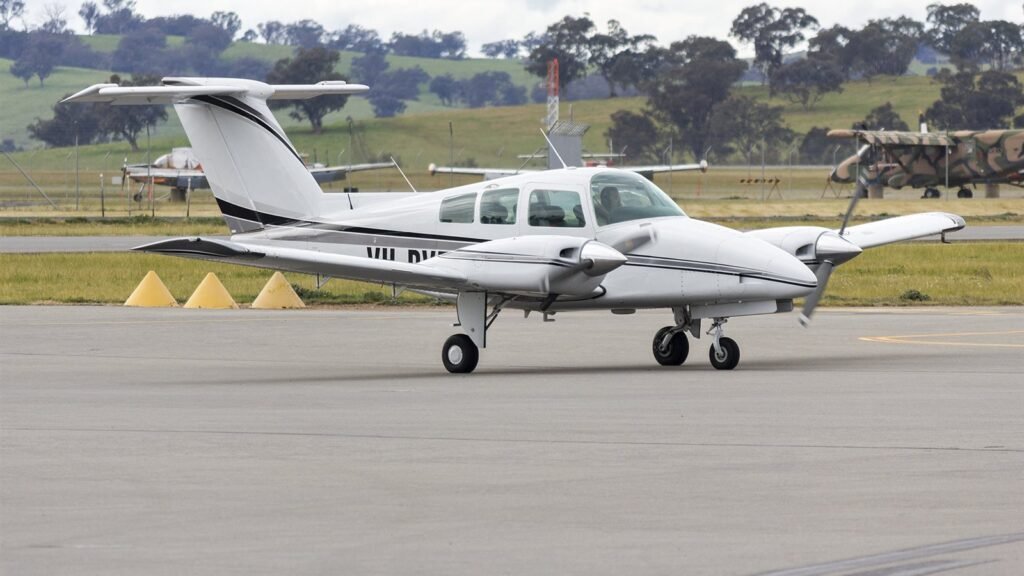
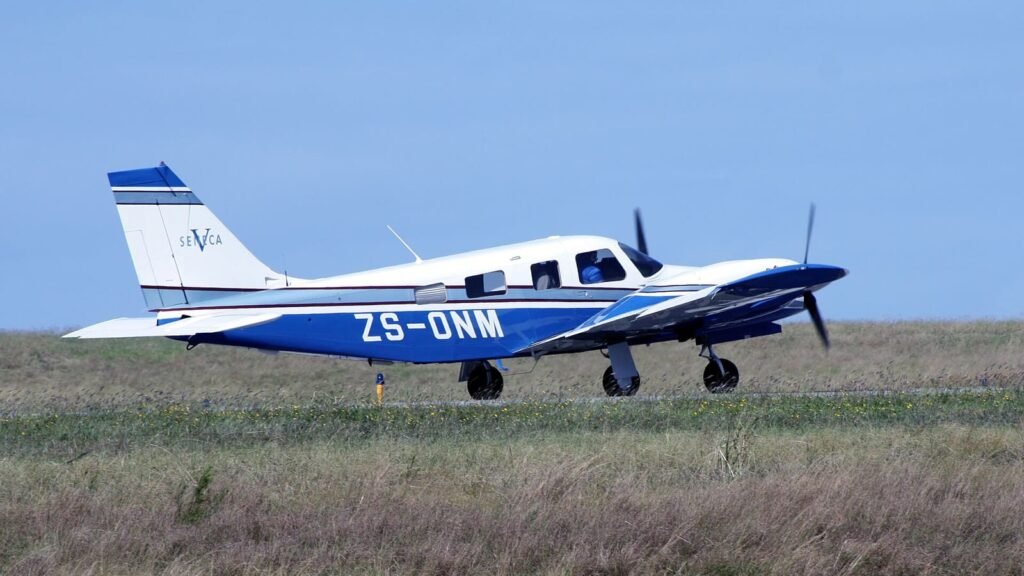
A conventional twin-engine aircraft presents a different problem. If one engine stops producing power while the other continues operating, propulsion remains available, but the thrust is no longer symmetrical.
Because the operating engine is positioned away from the aircraft centerline, its thrust creates a yawing moment toward the failed engine. The pilot must counter this yaw while maintaining appropriate airspeed, controlling bank, reducing unnecessary drag, identifying and verifying the failed engine, and evaluating whether the aircraft can actually maintain altitude or climb.
The remaining engine is therefore both an important safety resource and the source of a new aerodynamic challenge. The aircraft may continue flying, but it must now do so with asymmetric thrust and substantially reduced excess power.
This is why saying that “a twin can fly on one engine” tells only part of the story. Some twin-engine aircraft can climb effectively on one engine under favorable conditions. Others may only maintain altitude, while a heavily loaded light twin operating at high density altitude may be unable to maintain altitude at all.
Asymmetric vs Non-Asymmetric Power Loss
Power-loss events in twin-engine aircraft can be divided broadly into asymmetric and non-asymmetric conditions. The distinction is important because each produces a different combination of control and performance problems.
Asymmetric Power Loss
An asymmetric power condition occurs when one engine continues producing substantially more thrust than the other. A complete failure of one engine while the second engine remains at normal or high power is the most obvious example.
The operating engine creates thrust on one side of the aircraft and therefore produces yaw toward the failed side. The pilot must oppose that tendency primarily with rudder and, when specified by the aircraft procedure, an appropriate small bank toward the operating engine.
The situation becomes increasingly demanding as airspeed decreases. Rudder effectiveness reduces with decreasing airflow while high power from the operating engine can increase the asymmetric yawing moment.
Consequently, a combination of high power and low airspeed can create one of the most hazardous conditions encountered in a conventional twin-engine aircraft.
Non-Asymmetric Power Loss
A non-asymmetric power-loss condition occurs when the propulsion loss does not produce a major left-versus-right thrust imbalance. This could include simultaneous power loss from both engines, a similar reduction in output from both powerplants, or another condition where insufficient total power rather than asymmetric thrust becomes the primary problem.
Directional control may be considerably less demanding than during a one-engine-inoperative event, but the aircraft now faces a different threat: inadequate total power.
The pilot may be unable to maintain altitude and must transition rapidly from attempting to preserve powered flight to managing aircraft energy and preparing for a forced or precautionary landing.
The distinction is therefore fundamental. Asymmetric power loss can threaten both control and performance, while non-asymmetric power loss may primarily threaten the aircraft’s ability to remain airborne.
Why Loss of Control Can Become Fatal
The predominance of loss-of-control events among fatal twin-engine power-loss accidents is aerodynamically understandable.
An aircraft that remains controllable can often be directed toward a runway or another suitable landing area even if its performance is severely degraded. Once directional and lateral control are lost at low altitude, however, there may be insufficient height or time available for recovery.
Several problems can develop simultaneously after one engine fails. Airspeed may decrease as the pilot attempts to maintain altitude, asymmetric yaw can increase as additional power is demanded from the operating engine, and increasingly large rudder inputs may be required to maintain directional control.
If airspeed continues decreasing, the aerodynamic effectiveness of the flight controls also decreases. The combination of low speed, substantial asymmetric thrust, high angle of attack, and improper coordination can ultimately produce rapid yaw and roll.
The FAA’s guidance on loss-of-control prevention repeatedly emphasizes maintaining aircraft control as the primary response when abnormal situations occur. Pilots can review the FAA’s Loss of Control safety guidance for additional information about LOC accident prevention.
Understanding VMC in Power Loss Accidents
Minimum control speed, or VMC, is fundamental to understanding why some twin-engine engine failures develop into loss-of-control accidents.
VMC represents the calibrated airspeed at which directional control can be maintained under specific certification conditions with the critical engine inoperative. However, the published red-line speed should not be interpreted as an invisible boundary above which control is guaranteed and below which control is automatically lost.
Actual directional-control margins depend on several factors, including engine power, aircraft weight, center of gravity, bank angle, density altitude and aircraft configuration.
A pilot who allows airspeed to decay while maintaining substantial power on the operating engine may therefore move progressively closer to a condition where available rudder authority can no longer counter the asymmetric yaw.
For detailed official guidance on multiengine aerodynamics, VMC and engine-out operations, the FAA’s Airplane Flying Handbook – Multiengine Airplanes provides a useful technical reference.
Why Takeoff Is Particularly Dangerous
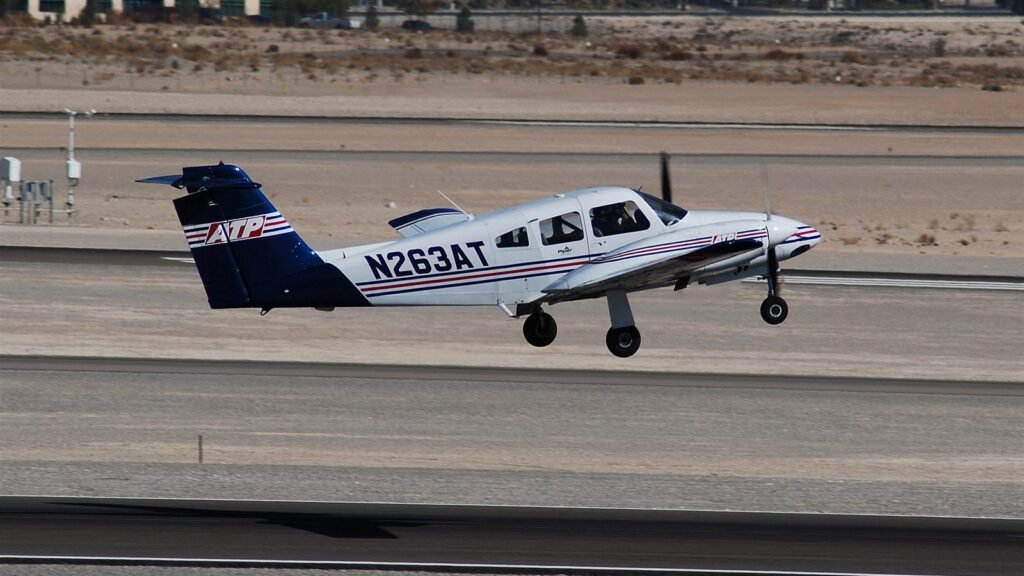
Takeoff and initial climb are among the most critical phases for a Twin Engine Power Loss Accident because several unfavorable conditions exist simultaneously. The aircraft is relatively slow, engine power is high, altitude is limited, and the pilot may have only seconds to recognize the failure and respond.
If an engine fails while sufficient runway remains and the applicable procedure calls for a rejected takeoff, remaining on the ground may provide the safest outcome. Once airborne, however, directional control and airspeed become immediate priorities.
One particularly dangerous response is attempting to preserve the original climb by continuously increasing pitch. If the aircraft does not have sufficient single-engine performance, raising the nose simply trades airspeed for altitude until the available directional-control margin becomes dangerously small.
At the same time, applying maximum power to the operating engine can increase asymmetric yaw. The pilot may therefore unintentionally combine decreasing airspeed with increasing asymmetric thrust.
A controlled descent or landing can sometimes provide a much safer outcome than trying to extract climb performance that the aircraft does not possess.
Why One Engine Does Not Mean Half the Performance
A common misconception about twin-engine aircraft is that losing one of two engines leaves approximately 50 percent of normal performance.
The problem is that aircraft climb capability depends heavily on excess power, not simply total installed engine power.
Part of the power produced by both engines is already required to overcome drag and maintain level flight. Only the remaining excess is available for climbing. If one engine fails, a large portion of the surviving engine’s output may be needed simply to keep the aircraft airborne.
At the same time, additional aerodynamic penalties may appear. The pilot must counter asymmetric thrust, a windmilling propeller can produce substantial drag, and rudder and bank inputs required for coordinated flight can introduce further aerodynamic penalties.
Consequently, losing approximately half of the installed engine power can eliminate most or even all of the aircraft’s positive climb capability.
Weight and Density Altitude
Weight can dramatically affect the outcome of an engine failure. A lightly loaded twin on a cool day near sea level may demonstrate useful single-engine climb capability, while the same aircraft at high gross weight on a hot day at a high-elevation airport may have little or no positive climb capability.
Density altitude compounds the problem. Normally aspirated piston engines develop less power in less-dense air, propeller effectiveness changes, and aircraft performance deteriorates.
Terrain adds another important consideration. An aircraft capable of maintaining altitude after losing an engine over flat terrain may still be unable to achieve the climb gradient necessary to clear rising terrain or obstacles.
This is why multi-engine performance planning should answer more than one question. It is not enough to determine whether the aircraft can legally and physically take off. The pilot should also understand what the aircraft is expected to do if an engine fails during or immediately after departure.
Aircraft Configuration Can Determine the Outcome
Drag management becomes critically important following a twin-engine power loss.
A windmilling propeller can produce substantial aerodynamic drag. On aircraft equipped with feathering propellers, correctly feathering the failed engine can therefore produce a major improvement in one-engine-inoperative performance.
However, correct engine identification and verification are essential. Feathering or shutting down the operating engine can transform a manageable one-engine emergency into a complete loss-of-power event.
Landing gear and flaps create another performance consideration. Extending them prematurely may eliminate an already narrow climb margin, while unnecessary configuration changes increase pilot workload during a critical phase.
Actual procedures must always follow the aircraft’s approved AFM/POH and emergency checklist because configuration sequences and limitations vary significantly among twin-engine designs.
Why Some Power Loss Accidents End in Forced Landings
The contrast between fatal loss-of-control accidents and survivable forced landings reveals an important safety principle: an aircraft that cannot maintain altitude may still be completely controllable.
If the pilot accepts degraded performance and maintains the appropriate airspeed, the aircraft may remain stable while descending. That gives the crew an opportunity to select a suitable landing area, communicate the emergency, manage configuration and preserve energy until touchdown.
A forced landing can obviously damage the aircraft and may still result in injuries. Nevertheless, maintaining control preserves options.
Attempting to maintain altitude or climb beyond the aircraft’s available performance can do the opposite. Airspeed decreases, control margins shrink, and a performance problem can eventually become an aerodynamic control problem.
Altitude can sometimes be surrendered deliberately. Aircraft control cannot.
Pilot Workload After a Twin Engine Power Loss
A power loss can create an exceptionally high workload because aerodynamic control, aircraft performance, diagnosis and decision-making must all be managed simultaneously.
The pilot may need to correct yaw, establish the appropriate engine-out airspeed, identify and verify the failed engine, reduce drag, complete memory items, use the checklist, communicate with ATC, evaluate terrain and weather, and select a suitable landing site.
Attempting to accomplish everything at once can increase the likelihood of errors. A disciplined sequence is therefore essential: control the aircraft first, establish a safe flight condition, and then proceed with identification, verification, troubleshooting and communication as altitude and circumstances permit.
This is also why realistic multi-engine training emphasizes engine failures during high-workload phases. Memorizing a checklist is important, but pilots must also learn to recognize deteriorating airspeed and directional control before becoming absorbed in troubleshooting.
Common Factors in Twin Engine Power Loss Accidents
Although every accident sequence is different, recurring factors can make engine failures considerably more dangerous:
- allowing airspeed to decay while attempting to maintain altitude;
- applying high operating-engine power without adequate directional control;
- misunderstanding actual single-engine climb capability;
- failing to identify and verify the failed engine correctly;
- feathering or shutting down the operating engine;
- excessive drag from a windmilling propeller;
- extending landing gear or flaps prematurely;
- high aircraft weight;
- high density altitude;
- inadequate terrain or obstacle clearance;
- attempting to climb when the aircraft can only maintain altitude or descend;
- excessive pilot workload during the initial response.
These factors demonstrate why Twin Engine Power Loss Accidents cannot be understood simply as mechanical failures. The ultimate outcome often results from an interaction between the original power loss, aerodynamic control, available aircraft performance and pilot decision-making.
What Twin Engine Pilots Can Learn From These Accidents
The central lesson from Twin Engine Power Loss Accidents is that propulsion redundancy provides an advantage only when the aircraft remains controllable and the pilot understands the performance that remains available.
A second engine may provide enough power to continue the flight, but asymmetric thrust creates an aerodynamic problem that does not exist during a conventional total power loss. The pilot must therefore understand not only engine-out procedures but also how airspeed, configuration, aircraft weight and atmospheric conditions affect directional control and climb capability.
Effective preparation includes understanding expected single-engine performance before departure, rather than discovering the aircraft’s limitations after an actual failure. Pilots should know how propeller drag affects performance, understand their aircraft’s critical-engine characteristics where applicable, and recognize circumstances in which maintaining altitude may simply not be possible.
Most importantly, the objective after an engine failure is not to prove that the airplane can remain airborne on one engine. The objective is to preserve control and achieve the safest possible outcome.
Conclusion
Twin Engine Power Loss Accidents demonstrate that having a second engine does not automatically guarantee a safe continuation of flight. Following a power loss, asymmetric thrust, reduced climb capability, propeller drag, aircraft weight, density altitude, configuration and pilot workload can rapidly reduce the available safety margin.
The critical distinction is often between performance loss and control loss. A twin-engine aircraft that cannot maintain altitude may still remain controllable, allowing the pilot to accept a descent and complete a forced landing. Once directional control is lost near the minimum-control region, however, the event can develop into a rapid yaw-and-roll sequence from which recovery may be impossible at low altitude.
For that reason, engine-out training emphasizes maintaining directional control and airspeed before attempting detailed troubleshooting. The remaining engine should be treated as a resource rather than a guarantee: whether it can support a climb, level flight or only a controlled descent depends on the aircraft and conditions.
For a broader explanation of exactly what happens after one powerplant stops producing thrust, continue with Can Planes Fly With One Engine: 7 Facts About Twin Engine Aircraft Safety.

One Response