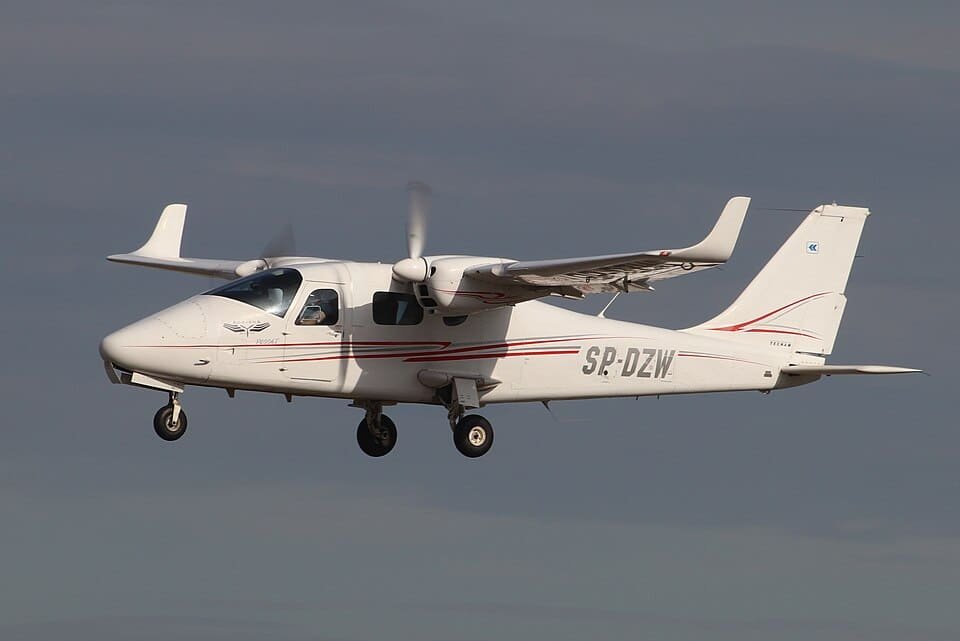
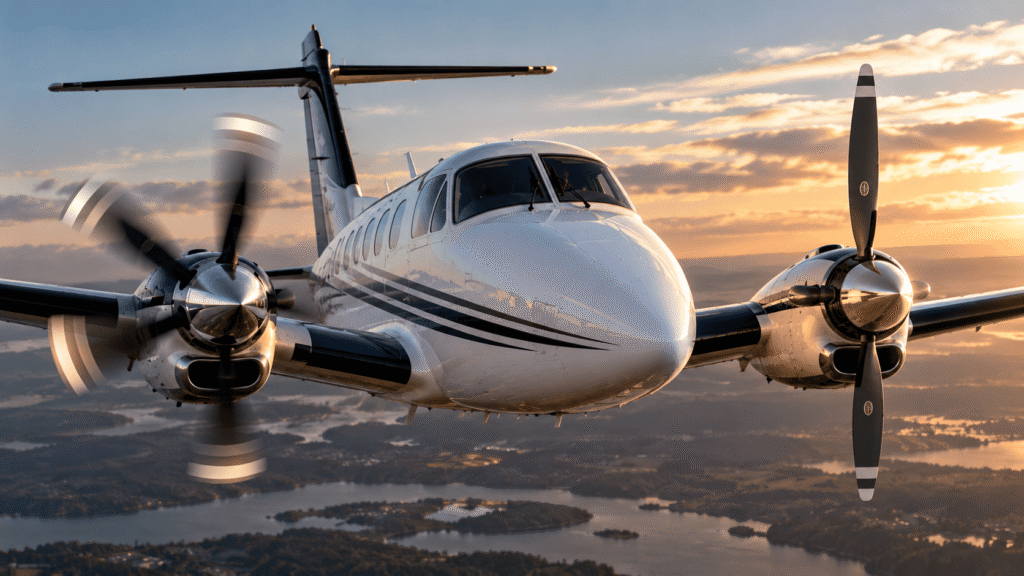
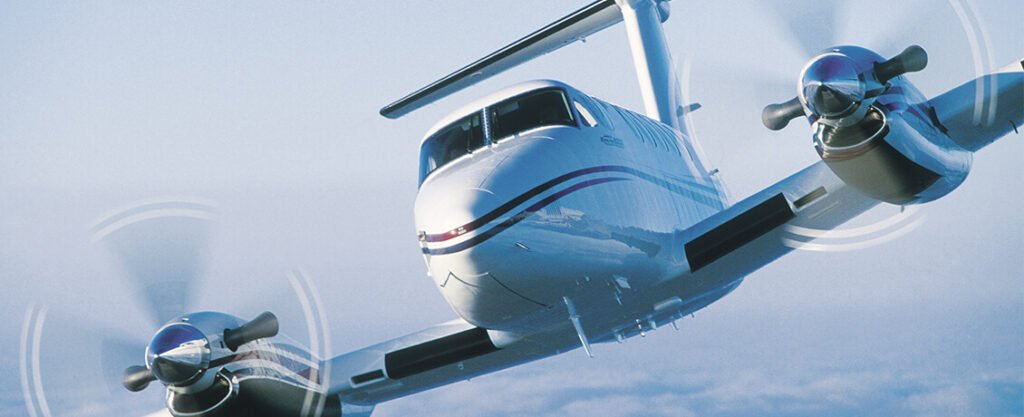
A Multi-Engine Add-On Rating is one of the most important steps for pilots who want to move beyond single-engine airplanes and develop the skills required to operate twin engine aircraft. For many pilots, it is also a major professional milestone because multi-engine experience forms an important part of the progression toward more advanced commercial, charter, corporate, and airline flying.
At first glance, the transition may seem straightforward: instead of operating one engine, the pilot now operates two. In practice, however, twin engine flying introduces a significantly different set of aerodynamic, performance, systems, and decision-making considerations. The additional engine provides redundancy and greater capability, but an engine failure can produce asymmetric thrust and create a demanding control problem that simply does not exist in a conventional single-engine airplane.
For that reason, earning a Multi-Engine Add-On Rating is not simply about learning to operate another engine. Training is centered heavily on understanding what happens when one engine stops producing thrust, how aircraft performance changes, how directional control is maintained, and how the pilot makes safe decisions when the expected redundancy of two engines suddenly becomes one-engine-inoperative flight.
What Is a Multi-Engine Add-On Rating?
Under the FAA certification system, airplane ratings distinguish between classes such as Airplane Single-Engine Land (ASEL) and Airplane Multi-Engine Land (AMEL). A pilot who already holds an airplane certificate with single-engine privileges can add the appropriate multi-engine class rating by receiving the required training, endorsements, and successfully completing the applicable practical test.
The precise training and testing requirements depend on the pilot certificate and ratings already held. The FAA’s current Airman Certification Standards contain additional-rating task tables that determine which tasks apply to an applicant adding another airplane class rating.
This distinction is important because the Multi-Engine Add-On Rating is not a separate pilot certificate. Instead, it adds multi-engine class privileges at the applicable certificate level.
Once properly rated, a pilot can act as pilot in command of airplanes within those privileges, subject to other applicable limitations, endorsements, type-rating requirements, currency rules, and aircraft-specific requirements.
Why Twin Engine Aircraft Require Additional Training
Twin engine aircraft introduce capabilities that are attractive to both private and professional pilots. They may offer greater cruise speed, payload, range, system capability, and operational flexibility than basic single-engine trainers.
The second engine also provides an important form of redundancy. However, redundancy should never be interpreted as a guarantee that a twin can safely climb—or even maintain altitude—after losing one engine.
This is one of the first misconceptions that Multi-Engine Add-On Rating training must correct.
When both engines operate normally, their thrust is generally symmetrical. If one engine fails, the remaining engine continues producing thrust on only one side of the aircraft. The result is asymmetric thrust, producing yaw and requiring immediate pilot input to maintain directional control.
At the same time, total available power decreases dramatically while aerodynamic drag may increase. A windmilling propeller can produce substantial drag, and additional control inputs required to counter asymmetric thrust create further penalties.
Consequently, losing one of two engines can remove far more than half of the aircraft’s climb performance.
Understanding VMC
One of the most important concepts introduced during twin engine training is VMC, or minimum control speed with the critical engine inoperative under specified certification conditions.
VMC is fundamentally about directional control, not climb performance.
When one engine fails and the other continues producing significant power, asymmetric thrust attempts to yaw the airplane toward the failed engine. The pilot primarily uses rudder, together with the appropriate aircraft-specific technique, to counter that yaw.
As airspeed decreases, the aerodynamic effectiveness of the rudder decreases. Eventually, a condition can be reached where the available control authority is insufficient to counter the asymmetric thrust under the applicable conditions.
This is why allowing airspeed to deteriorate while applying high power on the operative engine can become extremely dangerous.
A pilot completing a Multi-Engine Add-On Rating therefore needs to understand not only the published VMC value but also the factors that influence actual controllability. Aircraft configuration, power, propeller condition, bank, weight, center of gravity, density altitude, and other factors can change the available control margin.
VMC should never be treated simply as another number to memorize for the checkride.
The Critical Engine
Many conventional piston twins also introduce the concept of a critical engine.
The critical engine is the engine whose failure most adversely affects aircraft performance or handling. On aircraft with propellers rotating in the same direction, aerodynamic effects such as P-factor can cause the failure of one engine to create a greater yawing moment than failure of the other.
This distinction becomes important because the most demanding engine-out condition may occur when the critical engine is the one that fails.
Pilots need to understand why the critical engine exists rather than simply memorizing “left” or “right” for a particular aircraft. They should also understand that not every twin has a conventional critical engine. Counter-rotating propeller arrangements, for example, can substantially change the asymmetric-thrust characteristics.
Understanding these aerodynamic differences is an essential part of becoming competent in twin engine aircraft rather than simply passing a practical test.
Single-Engine Performance Is Not Guaranteed
Another major lesson of Multi-Engine Add-On Rating training is that having an operating engine does not guarantee useful climb performance.
Climb depends on excess power—the power available beyond what is required to maintain level flight. A twin engine airplane may have excellent climb performance with both engines operating because the combined powerplants provide a substantial excess-power margin.
After one engine fails, much of that margin disappears.
The aircraft may also experience additional drag from the failed propeller, asymmetric control inputs, configuration, or other factors. As a result, a light piston twin that climbs strongly with both engines may have only a modest single-engine climb rate under favorable conditions.
Under less favorable conditions, it may only maintain altitude or may descend despite maximum appropriate power from the operative engine.
Aircraft weight, density altitude, temperature, terrain, icing or contamination, landing gear and flap position, propeller condition, and the health of the remaining engine all influence the outcome.
This is why multi-engine training places such strong emphasis on performance planning before takeoff.
VYSE and Engine-Out Airspeed Management
Alongside VMC, another important speed for many light twins is VYSE, the best single-engine rate-of-climb speed under the applicable conditions. In many training aircraft it is represented by a blue radial line on the airspeed indicator, which is why pilots frequently call it the blue line.
VMC and VYSE serve very different purposes. VMC concerns controllability under specified conditions, while VYSE concerns achieving the best available single-engine rate of climb.
That distinction matters immediately after an engine failure.
Attempting to hold altitude by continually increasing pitch while airspeed deteriorates can move the aircraft toward a dangerous loss-of-control condition. Pilots therefore learn to protect airspeed and accept the actual performance the airplane can provide rather than demanding a climb that is aerodynamically unavailable.
This relationship between airspeed, control, and performance is one of the central skills developed during twin engine flight training.
Identifying and Verifying a Failed Engine
Engine failure procedures form a major component of the Multi-Engine Add-On Rating because shutting down the wrong engine can transform a manageable emergency into a complete loss-of-power situation.
Pilots learn to recognize the effects of asymmetric thrust through aircraft yaw, rudder pressure, engine instrumentation, sound, and other available indications. The traditional memory aid “dead foot, dead engine” can help with initial identification, but identification and verification are not the same thing.
Before securing an engine, the pilot must follow the aircraft-specific procedure to verify that the suspected engine is actually the failed one.
The exact procedure varies between aircraft, which is why generic internet checklists should never replace the approved POH, AFM, checklist, or instructor guidance for the aircraft being flown.
Once verified, the failed engine may need to be secured and the propeller feathered where applicable. Feathering aligns the propeller blades more closely with the airflow, significantly reducing the drag associated with a stopped or windmilling propeller.
Why Engine Failure After Takeoff Receives So Much Attention
An engine failure in cruise may provide altitude and time for aircraft control, diagnosis, checklist completion, and diversion planning. An engine failure immediately after takeoff can provide almost none of those advantages.
The aircraft is low, relatively slow, operating at high power, and often still transitioning from takeoff configuration. If one engine fails, asymmetric thrust appears at precisely the time when the available control and performance margins may already be limited.
This makes prioritization essential.
The pilot’s first responsibility is maintaining aircraft control. Attempting to troubleshoot an engine while airspeed deteriorates or directional control is being lost reverses the correct priorities.
Multi-engine training therefore develops disciplined responses to failures occurring during different stages of the takeoff. The appropriate decision may differ depending on whether the aircraft is still on the runway, has just become airborne, or has reached an altitude where additional actions can safely be performed.
Twin Engine Aircraft Systems
A Multi-Engine Add-On Rating also requires a stronger understanding of aircraft systems because a typical training twin introduces considerably more complexity than a basic single-engine trainer.
Depending on the aircraft, pilots may need to understand:
- dual-engine fuel systems and fuel selectors;
- crossfeed or other fuel-management arrangements;
- constant-speed and feathering propellers;
- retractable landing gear;
- electrical generation and distribution;
- engine-driven accessories;
- vacuum or pressure systems where installed;
- cowl flaps and engine cooling;
- turbocharging where applicable;
- fire detection or suppression systems;
- autofeather or automatic engine-management systems where installed.
The goal is not simply to memorize a diagram. Pilots need to understand how a system failure affects the rest of the aircraft and which resources remain available after an engine is secured.
For example, an engine failure may also remove an alternator, hydraulic pump, vacuum source, or another engine-driven component. The pilot therefore needs to think beyond thrust alone.
Multi-Engine Add-On Rating Requirements
The exact requirements depend on the certificate and ratings already held, so applicants should use the current FAA regulations and applicable ACS rather than relying on a universal training-hour estimate.
For an additional aircraft class rating at the same pilot-certificate level, FAA rules focus on the applicable training, endorsements, aeronautical proficiency, and practical-test requirements. The ACS then determines the specific tasks that must be evaluated based on the rating being added and the ratings already held.
This is why claims such as “everyone needs exactly 15 hours” should be treated cautiously. A flight school may use a typical training estimate for scheduling or pricing, but that is not necessarily the same thing as a universal FAA minimum for every add-on applicant.
The amount of training actually required depends heavily on pilot proficiency. A pilot already comfortable with complex aircraft, constant-speed propellers, retractable gear, instrument procedures, and disciplined checklist use may adapt differently from someone encountering all of those concepts for the first time.
Is Another FAA Knowledge Test Required?
For many applicants adding an airplane class rating at the same certificate level under the applicable provisions of 14 CFR §61.63, the process differs from obtaining an entirely new pilot certificate, and a separate knowledge test may not be required.
However, pilots should verify the requirements that apply to their specific certificate and rating combination rather than treating “no written test” as a universal statement for every possible certification path.
The FAA maintains the current ACS documents and testing information through its official Airman Certification Standards resource. The current ACS should always be used when preparing for a practical test because it defines the knowledge, risk-management, and flight-proficiency elements applicable to the rating.
What Training Should You Expect?
Although individual programs differ, effective Multi-Engine Add-On Rating training normally combines ground instruction with flight training so that pilots understand both the aerodynamics and the procedures they are practicing.
Ground preparation should include aircraft systems, performance calculations, limitations, VMC factors, critical-engine concepts, single-engine aerodynamics, propeller systems, weight and balance, emergency procedures, and risk management.
Flight training then turns those concepts into practical skills. The pilot learns normal operations in the twin while progressively developing proficiency in abnormal and engine-out situations.
Training may include normal and short-field operations as applicable, maneuvering, slow flight, stalls where required, VMC demonstration, engine failures during different phases of flight, engine securing and restart procedures when appropriate, single-engine maneuvering, approaches, landings, and other tasks required by the applicable ACS.
The FAA structures ACS testing around integrated knowledge, risk management, and flight proficiency, rather than treating the checkride as a collection of isolated maneuvers.
The Multi-Engine Add-On Checkride
The final step is the practical test with an authorized evaluator such as a Designated Pilot Examiner, as applicable.
The practical test includes an oral portion and a flight portion. The examiner uses the applicable FAA ACS and its additional-rating task table to determine what must be evaluated for the applicant’s specific certification situation. FAA guidance specifically provides additional-rating task tables because an applicant adding a class rating does not necessarily repeat every task associated with an initial certificate practical test.
During the oral portion, applicants should be prepared to demonstrate genuine understanding of the airplane rather than reciting memorized definitions. Aircraft systems, limitations, performance, VMC, critical-engine aerodynamics, engine-out procedures, risk management, weight and balance, and decision-making can all become important areas.
During the flight, the examiner is looking not only for maneuver accuracy but also for safe aircraft management. A technically correct procedure performed while allowing airspeed or directional control to deteriorate does not demonstrate sound multi-engine proficiency.
What Makes the Multi-Engine Rating Challenging?
For many pilots, the greatest difficulty is not physically flying the airplane. It is learning to manage several things at once without losing sight of priorities.
During normal flight, a light twin can feel stable and surprisingly familiar. During an engine failure, however, the pilot may suddenly need to control asymmetric thrust, maintain the correct airspeed, identify and verify the failed engine, configure the aircraft, manage systems, use a checklist, communicate with ATC, evaluate terrain and weather, and decide where to land.
That workload is precisely why good training emphasizes a clear sequence.
Aircraft control comes first.
Once the airplane is stable and the immediate threat has been managed, the pilot has more mental capacity available for diagnosis, checklists, communication, and planning.
Is a Multi-Engine Add-On Rating Right for You?
For a pilot who intends to pursue professional aviation, a Multi-Engine Add-On Rating is often a logical and valuable progression. It introduces the aerodynamic and operational principles that become increasingly important as pilots move toward larger and more sophisticated aircraft.
It can also be valuable for private pilots who want access to faster or more capable twin engine aircraft. However, the decision should be based on the type of flying the pilot actually intends to do rather than on the assumption that two engines automatically make every flight safer.
A twin provides redundancy, but that redundancy comes with additional systems, additional workload, asymmetric-flight considerations, and the requirement to remain proficient in engine-out procedures. A poorly managed twin after an engine failure can present challenges that simply do not exist in the same form in a single-engine aircraft.
The real advantage therefore comes from combining the capabilities of a twin with proper training, realistic performance planning, disciplined procedures, and continued proficiency.
Conclusion
Earning a Multi-Engine Add-On Rating is an important step for pilots who want to move from single-engine airplanes into the more demanding environment of twin engine flying. The training develops much more than the ability to operate two engines: it introduces asymmetric thrust, VMC, single-engine performance, propeller management, additional aircraft systems, and the decision-making skills required when one engine is no longer available.
The greatest value of multi-engine training is learning to understand both the capabilities and the limitations of a twin. A second engine provides valuable redundancy, but safe operation still depends on maintaining directional control, protecting airspeed, correctly identifying and verifying an engine failure, understanding actual aircraft performance, and making appropriate decisions when the available safety margin becomes small.
For pilots considering their own transition into multi-engine flying, it can also be useful to see what that first experience actually feels like from the cockpit. Read My First Twin Engine Flight: Flying the Piper Seminole for a personal account of moving from familiar single-engine aircraft into the Piper PA-44 Seminole, including the first impressions of two engines, differential thrust, additional cockpit workload, takeoff, and the first twin-engine landings.