
Every pilot remembers certain flights more clearly than others: the first solo, the first cross-country, the first time flying a new aircraft type. For me, another memorable milestone was my first twin engine flight.
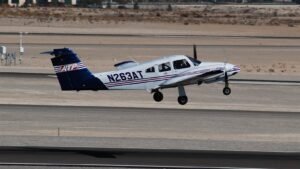
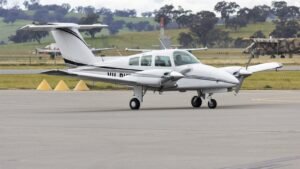
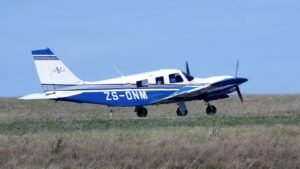
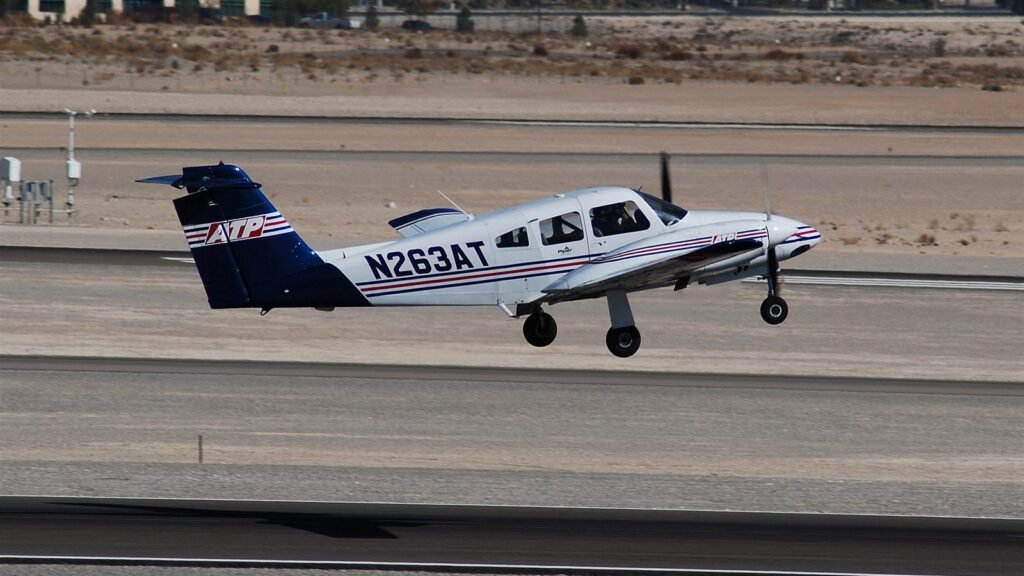
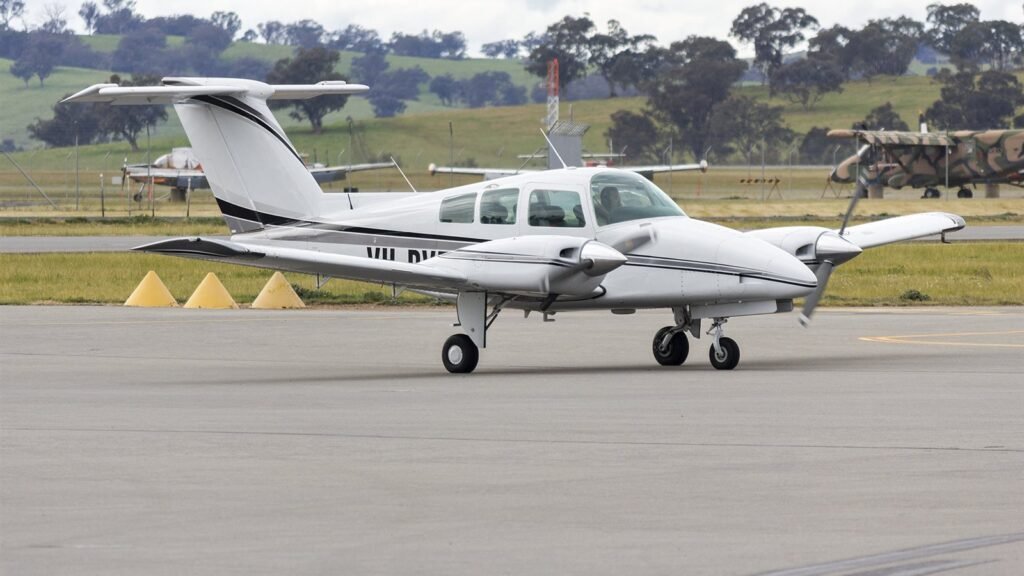
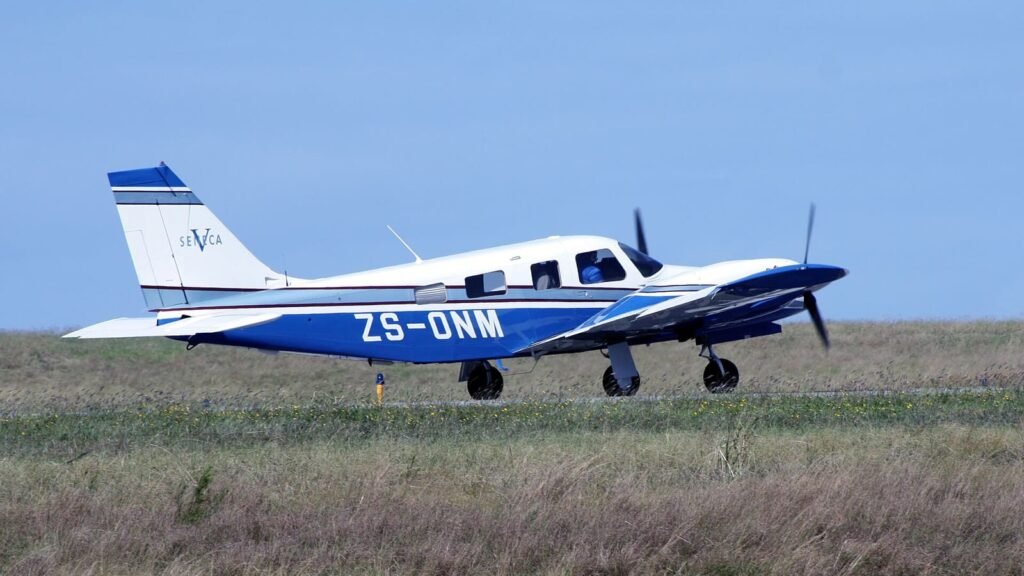
While I was in Hungary completing FI(A) training, I had the opportunity to fly a Piper PA-44 Seminole at the local flight school. I had spent most of my flying time in relatively simple single-engine aircraft, so sitting in a cockpit with two engines, two propellers, retractable landing gear, and considerably more systems immediately felt like stepping into another level of general aviation.
The flight itself would be short. But sometimes you do not need several hours in the air to discover how different another category of aircraft can feel.

Key Takeaways
- The first twin flight starts in the briefing: engine-failure planning becomes part of every takeoff.
- Starting, taxiing and the run-up feel familiar, but every check is done twice and the airplane responds differently on the ground.
- A light twin like the Piper Seminole accelerates and climbs noticeably better than typical single-engine trainers.
- Higher speeds on approach and landing demand earlier planning and stable configuration.
- Personal stories like this one show what checklists cannot: how the transition to a twin actually feels.
From Single Engine to Twin Engine
My previous experience was mainly in aircraft such as the Cessna 172 and Diamond Super Dimona. The Super Dimona had already introduced me to a constant-speed propeller, but the Piper PA-44 Seminole brought several new elements together in one airplane.
Instead of one engine, there were two. Instead of one propeller, there were two constant-speed propellers. There was retractable landing gear, additional engine instrumentation, more controls to manage, and considerably more to think about if something went wrong.
Yet the interesting thing about moving into a twin is that the fundamental airplane underneath all that complexity is still familiar. The aircraft still responds to elevator, aileron, and rudder inputs. The wings still generate lift, and the pilot still needs to manage attitude, airspeed, coordination, and energy.
The difference is that a twin-engine airplane adds another layer of systems management and, most importantly, introduces asymmetric flight.

The Briefing Changed How I Looked at Twin Engine Aircraft
Before starting the engines, we had a thorough briefing. This was actually one of the most valuable parts of my first twin engine flight.
We discussed the additional risks associated with multi-engine aircraft, particularly what happens when an engine fails close to the ground. Having two engines provides redundancy, but it does not mean that losing one engine is simply equivalent to continuing with half the available power.
In a conventional twin, losing one engine creates asymmetric thrust. The operating engine continues producing thrust on one side of the aircraft while the other side does not, creating yaw and introducing an entirely different control problem. Airspeed, configuration, aircraft weight, density altitude, propeller condition, and pilot response can all influence whether the airplane can maintain altitude or climb.
That discussion reinforced something I have always valued in aviation: learning from experienced pilots is enormously useful. Manuals and training material provide the technical foundation, but hearing another pilot explain how those principles affect real decisions can make the information much more memorable.
The FAA’s Airplane Flying Handbook is also an excellent reference for pilots who want to study multi-engine aerodynamics, performance, and engine-out operations in greater detail.

Starting Two Engines
Starting the Piper Seminole was not radically different from starting the airplanes I already knew. The obvious difference was that nearly everything related to engine operation now had to be considered twice.
That sounds almost trivial until you sit in the cockpit.
Two engines mean monitoring two sets of indications, managing two throttles, two propeller controls, and considering how the engines interact with the handling of the airplane. Even during completely normal operations, the pilot’s attention has to cover more information than in a basic single-engine trainer.
The cockpit therefore felt familiar and unfamiliar at the same time. I understood what most of the controls were doing, but there were simply more of them and more relationships between them.
Taxiing the Piper Seminole Was My First Surprise
Taxiing was where the experience immediately began to feel different.
I was accustomed to using techniques familiar from light single-engine airplanes, but in the Seminole we could use differential thrust to help control direction. Applying different amounts of power to the left and right engines makes the aircraft respond in a way that simply does not exist when you have only one engine.
It was a new experience, but surprisingly intuitive.
The first few minutes also made the twin-engine configuration feel much more tangible. On paper, “two engines” sounds like a specification. Sitting between them and independently controlling their power makes the difference much more obvious.
Run-Up: Familiar Procedures, Twice the Engines
The run-up followed many familiar principles, except that the engine-related checks had to be performed for both sides.
That became something of a theme throughout the flight. A pilot transitioning from a single-engine aircraft does not suddenly need to relearn everything about flying. Instead, familiar tasks are combined with additional systems, procedures, and workload.
The importance of disciplined checklist use also becomes more obvious. With additional controls and systems, relying purely on habit creates more opportunities to overlook something.
And then it was time for takeoff.
My First Twin Engine Takeoff
The takeoff roll felt longer than what I was accustomed to, but once the Seminole left the runway, the basic act of flying became surprisingly familiar.
I received plenty of help with the power and propeller settings, which were still new to me. Once the aircraft was configured and established in flight, however, I could concentrate on simply flying it.
That was probably the biggest surprise of my first twin engine flight.
From the pilot’s seat, a more complex aircraft can look intimidating before departure. There are more levers, more gauges, more procedures, and another engine to manage. But once established in normal flight, many of the skills developed in smaller aircraft transfer directly.
Pitch still controls the aircraft’s attitude. The ailerons still control roll. The rudder still controls yaw. Trim still reduces control forces. Good lookout and situational awareness remain just as important.
The airplane was more complex, but it was still an airplane.

A Very Different View From the Cockpit
Another immediately noticeable difference was the view.
Without a large propeller directly in front of the windshield, the forward view felt much cleaner than in the single-engine aircraft I was accustomed to. Looking straight ahead without a spinning propeller dominating the view was surprisingly pleasant.
The view sideways was another story.
With an engine nacelle and propeller mounted on each wing, there was considerably more machinery between me and the scenery. Looking across the wing made the Seminole’s twin-engine configuration impossible to forget.
It was also simply exciting to look outside and see an engine running on the wing. For someone accustomed to having the engine directly ahead of the cockpit, that visual difference alone made the flight feel special.
Flying Along the Danube
We flew a short route along the Danube and made several turns so I could get a better sense of the Seminole’s handling.
This was not intended to be a complete multi-engine training lesson, and we were not trying to cover every maneuver or emergency procedure. It was an introduction: an opportunity to experience how a light twin feels and how the additional systems change the pilot’s workload.
In normal flight, the aircraft felt reassuringly conventional. That was perhaps the most useful lesson of the experience. Twin-engine flying is not about abandoning everything learned in single-engine aircraft. It is about building another layer of knowledge on top of those existing skills.
The major differences become especially important when the aircraft is slow, being configured, operating close to the ground, or dealing with an engine failure. That is where proper multi-engine training becomes essential.
Coming Back for My First Twin Engine Landing
After our short flight along the Danube, we returned to the airport and completed a touch-and-go followed by a full-stop landing.
And yes, technically they were my two best multi-engine landings ever.
They were also my first two.
Joking aside, the approach and landing provided another opportunity to experience the additional workload of the Seminole. Power management, propeller settings, landing gear, flap configuration, airspeed, and the normal tasks associated with an approach all have to come together in the correct sequence.
This is where good cockpit discipline becomes particularly valuable. Complexity becomes much easier to manage when tasks are performed systematically rather than rushed.
What My First Twin Engine Flight Taught Me
The flight was short, but it changed my perspective on multi-engine airplanes.
Before flying the Seminole, the additional engine was the most obvious difference in my mind. Afterwards, I understood more clearly that twin-engine flying is really about managing complexity, performance, and redundancy.
The second engine provides capabilities a single-engine airplane cannot offer, but it also introduces new responsibilities. Pilots need to understand asymmetric thrust, VMC, single-engine climb performance, propeller management, engine identification and verification, and the consequences of an engine failure during critical phases of flight.
At the same time, my first experience showed me that transitioning to a twin does not mean starting again from zero. Fundamental flying skills remain relevant. What changes is the amount of information the pilot must manage and the importance of understanding what happens when the symmetry of normal two-engine flight suddenly disappears.
Why Pilot Stories Matter
One reason I enjoy hearing other pilots talk about their experiences is that aviation knowledge does not exist only in textbooks. Personal flying stories provide context for the procedures and aerodynamic principles pilots study during training.
A first twin-engine flight is obviously very different from an actual engine-out emergency or advanced multi-engine training. But even a short introductory flight can make concepts that previously existed only on paper feel much more real.
It can also remind us that aviation is a continuous learning process. Every new aircraft, instructor, airport, weather condition, and unfamiliar cockpit provides another opportunity to discover something.
That is one of the reasons sharing experiences within the aviation community is so valuable. One pilot’s first encounter with a new aircraft may encourage another pilot to study a system more carefully, ask an instructor a question, or simply understand what transitioning to a twin actually feels like.
Conclusion
My first twin engine flight in the Piper PA-44 Seminole was not long, but it was one of those flights that added an entirely new perspective to my logbook. From differential thrust during taxi to managing two engines and constant-speed propellers, retractable landing gear, and a noticeably different cockpit environment, the experience demonstrated how much additional capability — and responsibility — comes with a twin-engine aircraft.
More importantly, it reinforced that safe multi-engine flying depends on much more than learning where the extra controls are located. Understanding workload, decision-making, asymmetric thrust, emergency priorities, and the way pilots respond under pressure is just as important as learning the aircraft itself. For a deeper look at this side of twin-engine safety, continue with Human Factors in Twin Engine Aircraft.


3 Responses