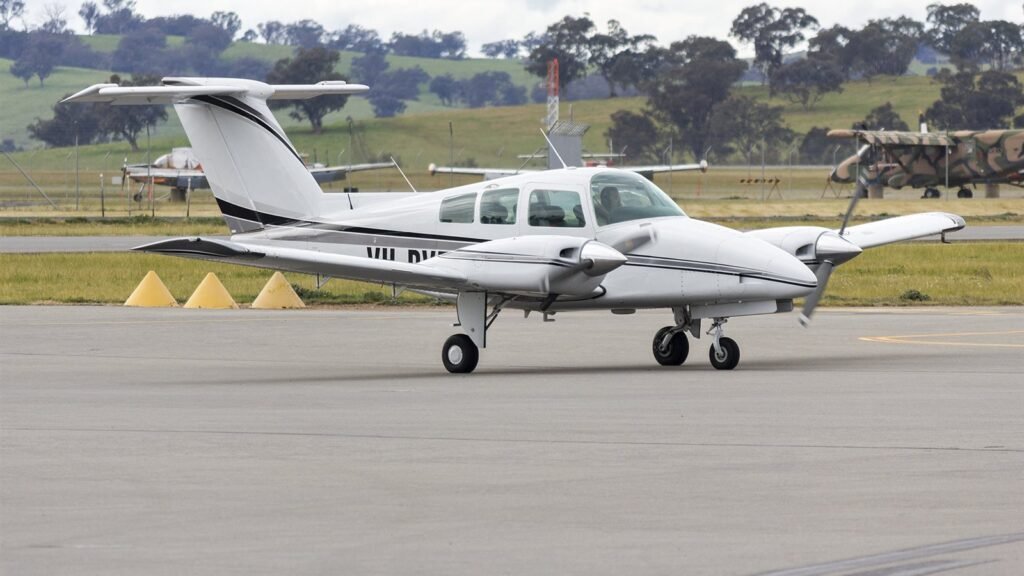
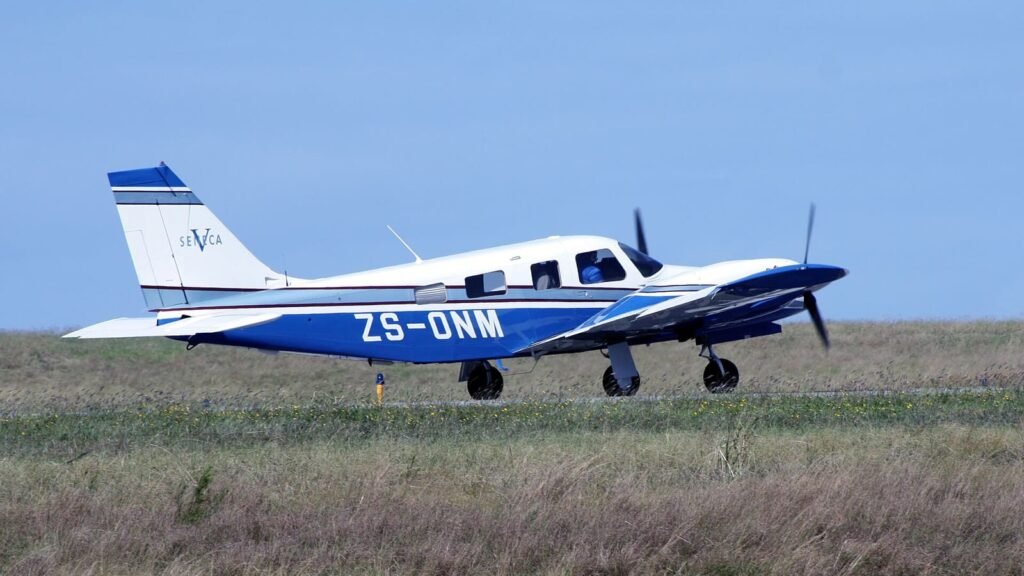
One of the most dramatic questions in aviation is simple: what happens if all engines fail plane mid-flight?
The instinctive fear is that the aircraft will immediately fall from the sky. In reality, that is not how airplanes work.
Modern aircraft — especially twin engine aircraft — are designed to remain stable and controllable even without engine thrust. If all engines fail, the aircraft does not drop vertically. Instead, it transitions into a controlled glide, allowing pilots time to assess the situation and attempt a safe landing.
How Aircraft Continue Flying Without Engines
Flight is not dependent on engines alone. Engines provide thrust, but lift is generated by airflow over the wings.
When considering what happens if all engines fail plane, the key concept is energy management. Without thrust, the aircraft must trade altitude for speed. In other words, it descends in a controlled way to maintain airflow over the wings.
As long as the aircraft maintains sufficient airspeed, it continues to fly normally — just without power. If pilots attempted to maintain altitude without thrust, the aircraft would lose speed and eventually stall. That is why trained pilots immediately establish a safe glide speed after total engine failure.
Interestingly, during normal flights, aircraft already spend long periods effectively gliding. During descent, engines are often set to idle, producing minimal thrust while the aircraft maintains forward motion through controlled descent.
Glide Performance of Twin Engine Aircraft
A key factor in understanding what happens if all engines fail plane is glide performance.
Most commercial aircraft have a glide ratio of approximately 10:1. This means that for every unit of altitude lost, the aircraft can travel ten times that distance forward.
At a typical cruising altitude of 36,000 feet (about 6 miles high), this translates into a potential glide distance of roughly 60 miles. That is a significant distance, especially when combined with pilot decision-making and route planning.
This also means that aircraft at high altitude may have 20–30 minutes of flight time after losing all engines. That window is critical, allowing pilots to locate a suitable landing site and prepare for an emergency landing.
Why Twin Engine Aircraft Are Still Safe
Even in the extreme scenario behind what happens if all engines fail plane, modern twin engine aircraft remain highly survivable and controllable. This is because aviation safety is not built around engine thrust alone, but around aerodynamic design, system redundancy, and pilot training.
First, aircraft are designed to remain stable without engine power. Lift is generated by airflow over the wings, not by the engines themselves. As long as the aircraft maintains sufficient airspeed, it will continue to fly. The fuselage, wings, and tail surfaces are engineered to provide predictable handling, meaning the aircraft does not become uncontrollable after a total loss of thrust.
Modern airliners also have highly efficient aerodynamic profiles. Their lift-to-drag ratio allows them to glide long distances while losing altitude gradually. Pilots are trained to maintain the best glide speed, which maximizes distance and gives them more time to plan a landing. This is why a large twin engine jet at cruising altitude can remain airborne for many minutes — sometimes over 20 minutes — even with no engine power.
Another critical factor is system redundancy. Even if both engines fail, the aircraft does not lose all functionality. Emergency systems automatically provide power to essential components. One of the most important is the Ram Air Turbine (RAT), which deploys into the airflow and generates hydraulic and electrical power. Combined with onboard batteries and backup systems, this ensures that flight controls, navigation instruments, and communication systems continue to operate.
Pilot training is equally important. Crews regularly practice total engine failure scenarios in simulators. They learn how to stabilize the aircraft, maintain correct airspeed, calculate glide range, and select the safest landing option under pressure. These procedures are standardized and rehearsed repeatedly, ensuring that pilots can respond quickly and correctly in real situations.
In addition, modern flight planning takes these risks into account. Routes are designed so that, even in the event of total engine failure, there are always potential landing options within gliding distance or within a manageable descent path.
The key takeaway is that the safety of twin engine aircraft does not depend solely on having engines running. It comes from a combination of aerodynamic efficiency, intelligent system design, and disciplined pilot training. Even in a worst-case scenario, the aircraft remains controllable, predictable, and capable of a safe landing.
Real-Life Examples of Total Engine Failure
Although extremely rare, total engine failure has occurred in real life — and the results show how effective training and aircraft design can be.
US Airways Flight 1549 (Hudson River Landing)
One of the most famous examples occurred in 2009, when an Airbus A320 lost both engines after a bird strike shortly after takeoff. Captain Chesley Sullenberger and First Officer Jeffrey Skiles successfully glided the aircraft and landed it on the Hudson River.
All passengers survived, demonstrating exactly what happens when pilots apply correct procedures in a what happens if all engines fail plane scenario.
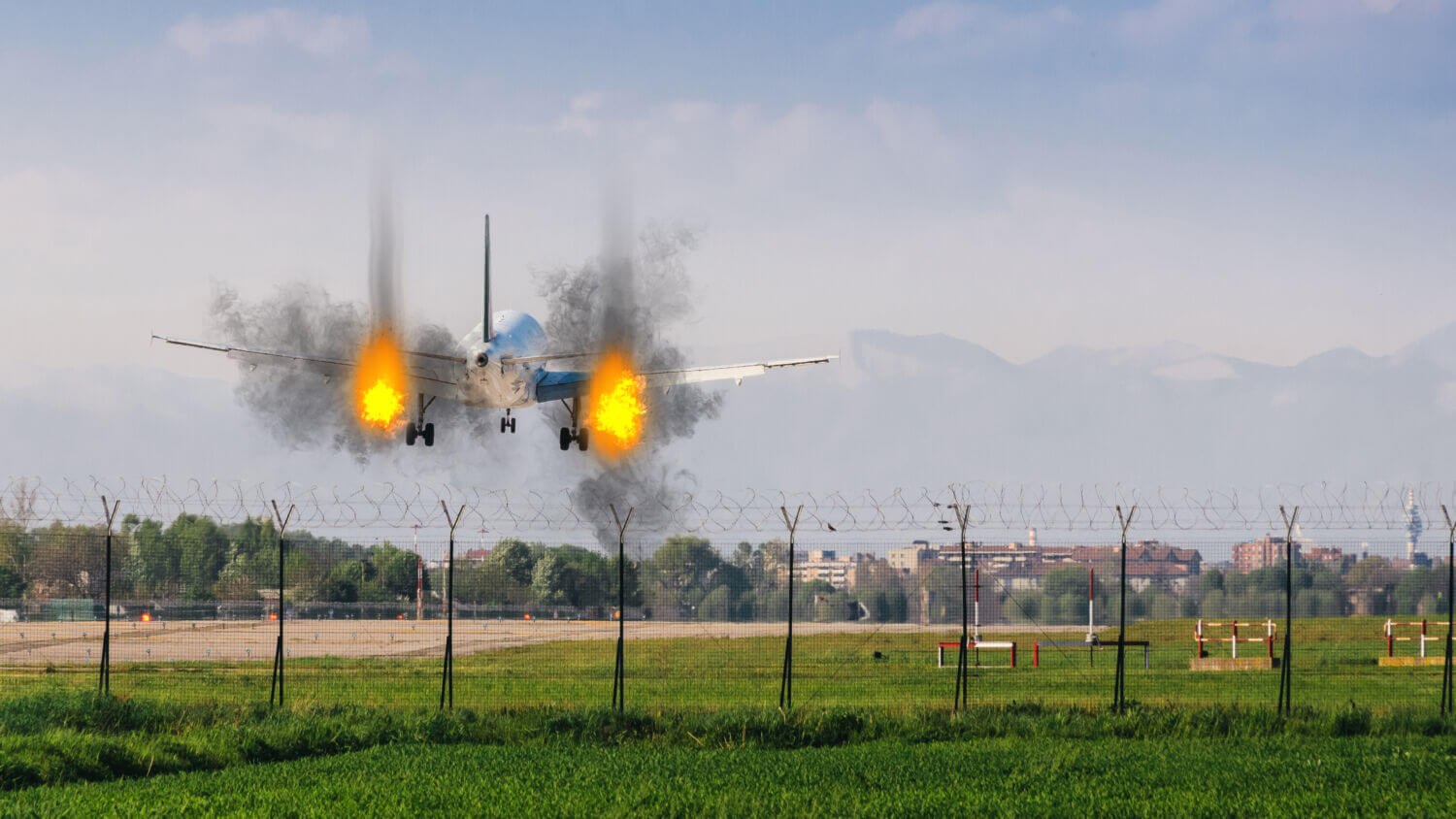
Another well-known case involved Air Transat Flight 236, one of the most remarkable real-world examples of what happens if all engines fail plane in cruise.
On August 24, 2001, the Airbus A330-200 was flying from Toronto to Lisbon when a fuel leak developed in the right engine. Due to a maintenance error, fuel continued to transfer across tanks, eventually starving both engines. At approximately 39,000 feet over the Atlantic Ocean, the aircraft lost all engine power.
At that moment, the aircraft effectively became a glider.
The pilots immediately established the correct glide speed and began calculating their range. With no thrust available, they had to carefully manage altitude and energy while selecting the nearest suitable landing option — Lajes Air Base in the Azores.
The aircraft glided for approximately 65 nautical miles over about 17 minutes. During this time, the crew had limited electrical and hydraulic power, relying on emergency systems to maintain control.
Despite these challenges, the pilots successfully landed the aircraft. The landing was hard, with blown tires and significant braking demands, but all 306 people on board survived. This case is often studied in aviation training because it demonstrates how discipline, aerodynamics, and decision-making can turn a complete loss of engines into a survivable event.
US Airways Flight 1549 (Hudson River Landing)
Perhaps the most famous example of total engine failure occurred in 2009 with US Airways Flight 1549.
Shortly after takeoff from New York LaGuardia, the Airbus A320 struck a flock of birds, causing both engines to fail almost instantly. At low altitude, the aircraft had very limited time and distance to respond — far less than in cruise scenarios like Air Transat 236, clearly illustrating what happens if all engines fail plane in a real-world emergency.
Captain Chesley Sullenberger and First Officer Jeffrey Skiles quickly assessed that returning to an airport was not possible. Instead, they executed a controlled glide and successfully ditched the aircraft on the Hudson River.
The aircraft remained intact, and all passengers and crew survived. This case highlighted not only how aircraft can glide without engines, but also how critical rapid decision-making is when altitude is limited.
British Airways Flight 9 (Volcanic Ash Incident)
Another important case, although slightly different, was British Airways Flight 9 in 1982.
The Boeing 747 flew through a cloud of volcanic ash over Indonesia, causing all four engines to fail. While this was a four-engine aircraft, the aerodynamic principles were exactly the same as in a twin engine aircraft, further illustrating what happens if all engines fail plane in extreme conditions.
The aircraft descended rapidly while the crew attempted to restart the engines. After losing significant altitude, the engines were eventually restarted, and the aircraft landed safely.
This case demonstrated that even multiple engine failures do not immediately result in loss of the aircraft — control can be maintained long enough to recover or land.
Gimli Glider (Air Canada Flight 143)
One of the most famous glide events in aviation history is Air Canada Flight 143, known as the “Gimli Glider.”
In 1983, a Boeing 767 ran out of fuel due to a fuel calculation error. Both engines stopped at cruising altitude, leaving the aircraft completely without thrust — a clear example of what happens if all engines fail plane in real operational conditions.
The crew successfully glided the aircraft to an abandoned airbase in Gimli, Manitoba. Despite limited instrumentation and no engine power, they managed a controlled landing.
This event showed that even large commercial jets can be flown safely without engines over significant distances when handled correctly.
Why Total Engine Failure Is Extremely Rare
Despite these examples, total engine failure is one of the rarest events in aviation.
Modern engines are highly reliable, and the likelihood of both engines failing simultaneously is extremely low. Systems are designed to prevent shared failures, and strict maintenance standards reduce risk even further.
This is why the question what happens if all engines fail plane is more theoretical than practical for most flights.
Energy Management: The Key to Survival
The most important factor in total engine failure is not the engines — it is energy.
In any what happens if all engines fail plane scenario, pilots immediately shift their focus from thrust to energy management. This means controlling how the aircraft converts altitude into forward motion while maintaining safe and efficient flight.
Pilots must carefully manage airspeed, altitude, glide path, and landing options, but these are not separate actions — they are all part of one continuous decision-making process. Airspeed must be kept within an optimal range, because too slow leads to a stall, while too fast increases drag and reduces glide distance. Altitude becomes a limited resource, effectively acting as “stored energy” that must be used wisely to extend range and buy time.
The glide path must be constantly adjusted depending on wind, terrain, and available landing options. In real situations, pilots often make small continuous corrections rather than one large decision. Even slight changes in pitch or speed can significantly affect how far the aircraft can travel.
A critical concept pilots use is the “best glide speed.” This is the speed at which the aircraft achieves the maximum distance for each unit of altitude lost. Maintaining this speed is essential in a what happens if all engines fail plane situation, as it directly determines how many miles the aircraft can glide and which landing options remain reachable.
Landing options are also evaluated dynamically. At high altitude, pilots may have several possible airports within range. As the aircraft descends, those options reduce, and decisions must be made early. This is why situational awareness and forward planning are crucial.
Every decision affects the outcome. A small delay in selecting a landing site or an incorrect speed can reduce available distance and limit safe options. This is why pilots train extensively for these scenarios, even though they are rare.
In real-world aviation, success in a what happens if all engines fail plane event depends on calm decision-making, precise control, and a deep understanding of how the aircraft behaves without engine power.
Conclusion
So, what happens if all engines fail plane in real life? The aircraft does not fall — it flies.
Modern twin engine aircraft are designed to glide efficiently, giving pilots time and distance to respond. With proper speed management, even a powerless aircraft can travel dozens of miles and reach a safe landing area.
Real-world examples prove that total engine failure, while serious, is not necessarily catastrophic. It is a scenario that aviation has prepared for through engineering, training, and procedures.
To explore more about how safety is maintained in multi-engine operations, continue here:
https://melibrary.pro/article/twin-engine-flight-safety/