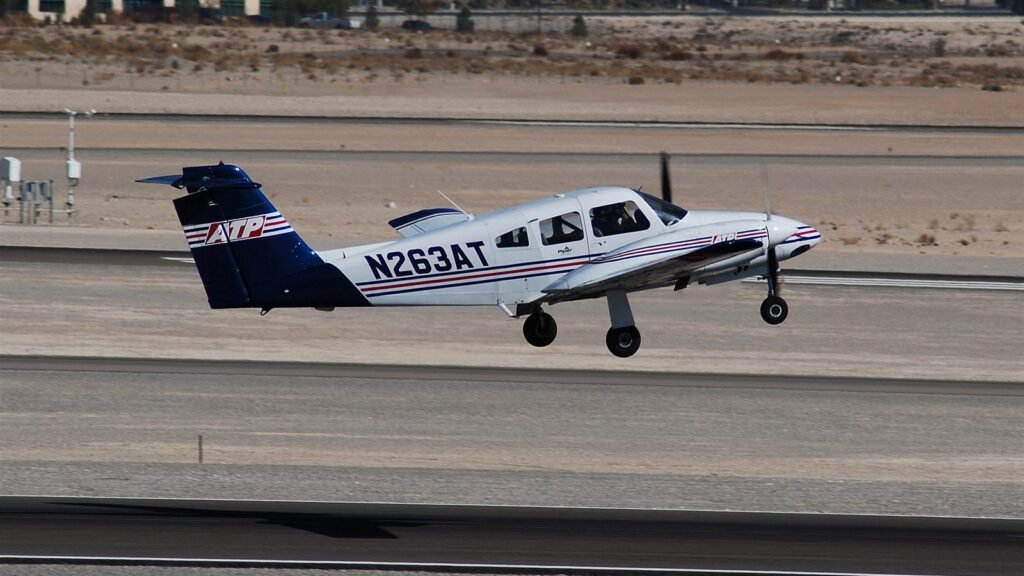
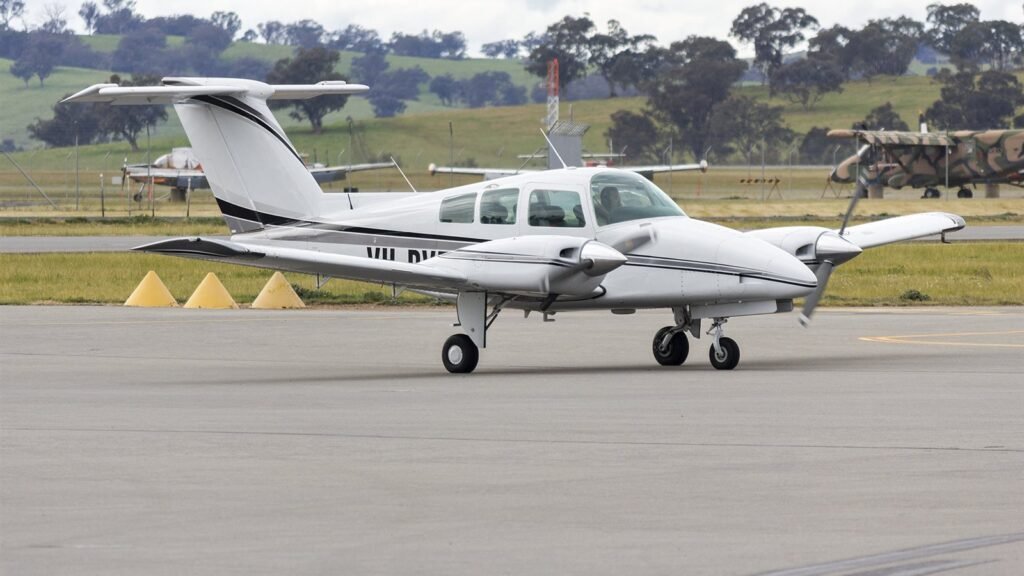
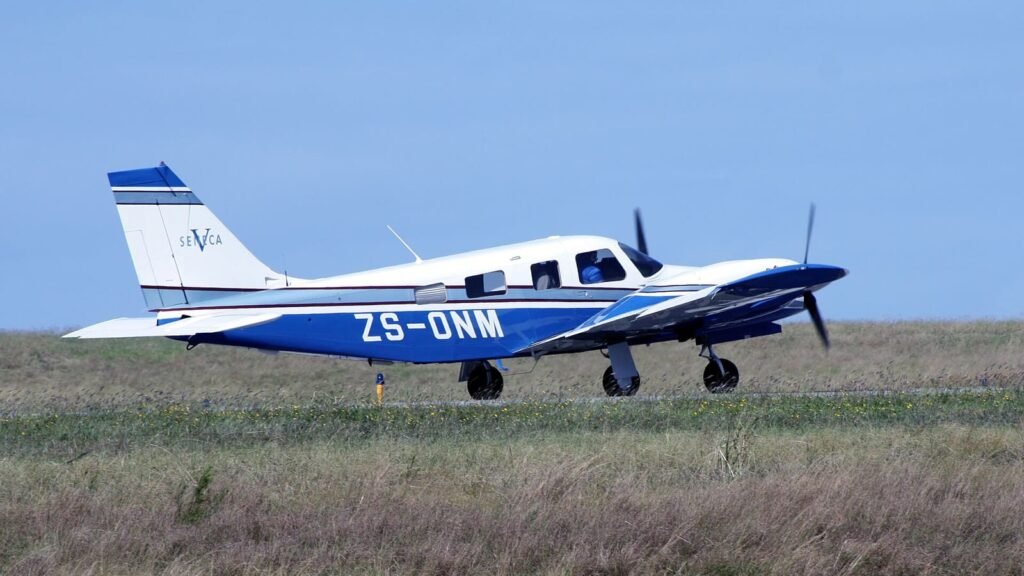
Engine failures in multi-engine airplanes represent one of the most challenging situations a pilot can encounter. Understanding proper engine out procedures twin engine aircraft require is essential for maintaining aircraft control and achieving the best possible climb performance after an engine failure.
When one engine stops producing thrust, the aircraft immediately experiences asymmetric forces. These forces affect both directional control and aircraft performance. Pilots must manage rudder input, bank angle, and airspeed simultaneously while maintaining situational awareness.
Despite the importance of these procedures, aviation training has historically focused primarily on directional control, often overlooking other critical performance factors such as climb efficiency and aerodynamic drag.
This article explains the real aerodynamic principles behind engine out procedures twin engine aircraft require, and how proper technique can significantly improve aircraft performance during single-engine flight.
Engine Out Procedures Twin Engine: Understanding Asymmetric Thrust
When one engine fails in a twin engine aircraft, the airplane immediately experiences asymmetric thrust. The operating engine continues producing thrust while the failed engine produces drag.
This imbalance generates several aerodynamic forces:
-
yaw toward the failed engine
-
rolling moment caused by asymmetric lift
-
increased aerodynamic drag due to sideslip
Pilots must apply rudder toward the operating engine to maintain directional control. However, rudder deflection alone does not completely solve the aerodynamic imbalance.
During engine out procedures twin engine aircraft, the aircraft often enters a sideslip condition. Sideslip increases drag and significantly reduces climb performance.
Managing this sideslip is critical for achieving the best possible climb rate after an engine failure.
The Traditional Five-Degree Bank Technique
For decades, multi-engine pilot training has taught pilots to maintain approximately five degrees of bank toward the operating engine during engine-out flight.
This technique is intended to help balance the aircraft by introducing a horizontal component of lift. The horizontal lift component partially offsets the side force produced by the rudder.
While this technique does help improve control, research has shown that a fixed five-degree bank angle is not always the most efficient configuration.
The effectiveness of this technique depends on several variables, including:
-
aircraft weight
-
density altitude
-
power settings
-
aerodynamic drag
-
propeller configuration
Because these factors vary in real flight operations, the optimal bank angle during engine out procedures twin engine aircraft situations may be smaller than traditionally taught.
Zero Sideslip: A More Efficient Solution
Research and aerodynamic analysis suggest that the best climb performance after an engine failure occurs when the aircraft is flown at zero sideslip.
Zero sideslip means the aircraft is aerodynamically balanced so that airflow meets the fuselage directly from the front rather than from the side.
Flying at zero sideslip reduces drag and improves climb performance.
Wind tunnel testing and flight tests in several light twin-engine aircraft have confirmed that maintaining zero sideslip provides measurable performance improvements during single-engine flight.
When pilots properly coordinate rudder and bank angle to eliminate sideslip, the aircraft experiences:
-
reduced aerodynamic drag
-
improved climb performance
-
increased directional stability
These findings highlight the importance of understanding aerodynamic principles when applying engine out procedures twin engine pilots use during emergencies.
How Bank Angle Affects Single-Engine Climb Performance
Flight testing in multiple light twin-engine aircraft has demonstrated that bank angle strongly influences climb performance after an engine failure.
In many cases, increasing the bank angle to five degrees actually reduces climb performance.
Tests have shown that excessive bank angles can reduce climb rate by approximately 75 to 90 feet per minute compared with the optimal bank angle.
This performance penalty can be significant.
A reduction of 90 feet per minute in climb performance is equivalent to:
-
increasing aircraft weight by nearly 9 percent, or
-
operating at a density altitude approximately 1900 feet higher.
For pilots operating in high-altitude environments or hot weather conditions, this performance loss can become critical.
Understanding the relationship between bank angle and aircraft performance is therefore a key part of effective engine out procedures twin engine aircraft require.
Engine Out Procedures at Low Speed and Low Altitude
Engine failures occurring during takeoff or initial climb represent the most dangerous phase of multi-engine flight.
At low speeds and low altitudes, pilots have limited time to react and minimal performance margins.
In these situations, correct technique becomes essential.
Pilots must focus on several priorities:
-
Maintain airspeed above VMCA
-
Maintain directional control using rudder
-
Minimize sideslip
-
Establish the correct bank angle
-
Achieve the best possible climb performance
Proper application of engine out procedures twin engine aircraft require allows pilots to maintain aircraft control while maximizing available performance.
Why Pilot Training Often Misunderstands Engine-Out Aerodynamics
Investigations using National Transportation Safety Board (NTSB) accident data have revealed that many engine-out accidents result from misunderstandings of aerodynamic principles.
Traditional training has emphasized rudder control and maintaining directional stability. While this is important, it represents only one part of the overall problem.
Engine-out performance also depends heavily on:
-
drag management
-
sideslip control
-
bank angle optimization
-
aircraft configuration
Improved pilot education regarding these aerodynamic factors can significantly increase safety during engine out procedures twin engine aircraft situations.
Improving Safety in Twin Engine Aircraft
Modern multi-engine flight training increasingly emphasizes aerodynamic efficiency rather than simply maintaining directional control.
Pilots are now encouraged to focus on:
-
maintaining coordinated flight
-
minimizing sideslip
-
optimizing bank angle
-
managing aircraft configuration
These techniques improve both aircraft performance and safety margins.
When pilots fully understand the aerodynamic principles involved, engine out procedures twin engine aircraft situations become far more manageable.
Conclusion
Understanding proper engine out procedures twin engine aircraft require is essential for safe multi-engine flight. When one engine fails, the aircraft immediately experiences asymmetric thrust, increased drag, and significant performance changes. Pilots must manage rudder input, airspeed, and bank angle simultaneously while maintaining situational awareness.
Research and flight testing show that minimizing sideslip and carefully optimizing bank angle can significantly improve single-engine climb performance. Even small aerodynamic improvements can make a meaningful difference in critical situations, particularly during low-altitude or high-density-altitude operations.
For this reason, modern multi-engine training emphasizes not only directional control but also aerodynamic efficiency. Pilots who fully understand the principles behind engine out procedures twin engine aircraft use in real operations are better prepared to maintain control, maximize climb performance, and safely manage an engine-out scenario.
To learn more about modern technologies used to monitor and improve aircraft engine reliability, read our article on digital twin technology in aircraft engine maintenance:
https://melibrary.pro/article/aircraft-engine-maintenance-digital-twin/