The Boeing 777-9X twin engine jetliner represents one of the most ambitious commercial aircraft ever created. It is not only the largest twin engine jetliner in aviation history, but also one of the most technologically advanced passenger aircraft Boeing has ever produced.
At first glance, the aircraft looks almost unreal. The fuselage is enormous, the wings stretch wider than many four-engine airliners from previous generations, and the engines themselves are larger than the fuselage of some regional jets. Yet despite its size, the Boeing 777-9X was designed around one major goal:
making ultra-long-haul flying more efficient using only two engines.
For decades, routes connecting distant cities such as Sydney, London, New York, Dubai, and Singapore were dominated by massive four-engine aircraft like the Boeing 747 and Airbus A380. But advances in engine reliability, aerodynamics, and ETOPS certification completely changed modern aviation.
The result is aircraft like the largest twin engine jetliner ever built — the Boeing 777-9X.
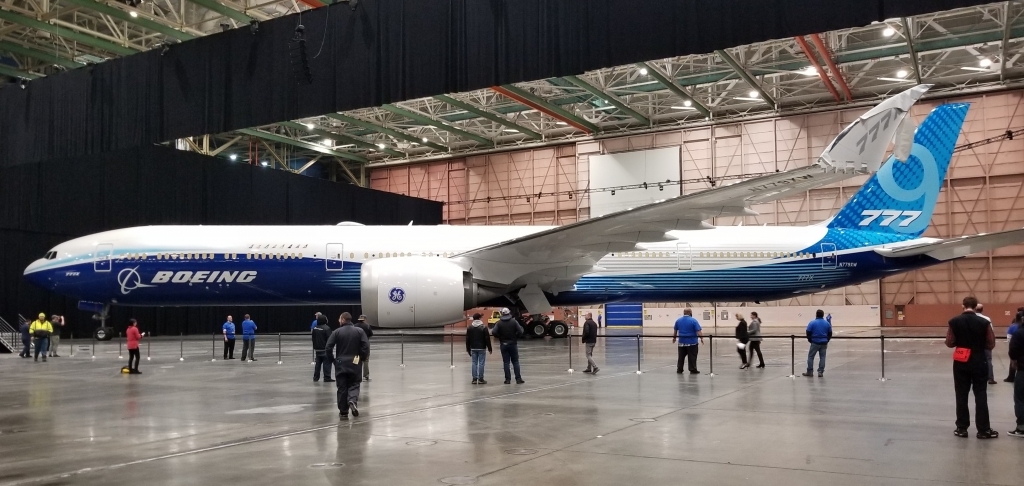
The Evolution of the Boeing 777 Family
The original Boeing 777 already changed commercial aviation when it entered service in the 1990s. It was the first commercial airliner designed entirely using 3D computer modeling, eliminating the need for expensive full-scale mockups during development.
This may sound normal today, but at the time it was revolutionary.
The 777 family quickly became famous for:
- long-range capability
- exceptional reliability
- large passenger capacity
- powerful twin-engine performance
Airlines loved the aircraft because it combined the economics of a twin engine jet with the passenger capacity previously associated with larger three-engine and four-engine aircraft.
The Boeing 777-9X twin engine jetliner takes that concept even further. Boeing essentially redesigned the aircraft to compete directly with the Airbus A350 while replacing aging Boeing 747 and Airbus A380 fleets worldwide.
The Largest Twin Engine Jetliner Ever Built
What immediately makes the Boeing 777-9X twin engine jetliner remarkable is its size.
The aircraft measures approximately:
- 76.7 meters (251 feet) in length
- 71.8 meters (235.5 feet) wingspan unfolded
- nearly 20 meters tall
That wingspan is so large that Boeing engineers faced a practical problem:
many airports simply could not accommodate the aircraft.
The solution became one of the most fascinating engineering features in modern aviation:
folding wingtips.
The outer portions of the wings fold upward while the aircraft is on the ground, reducing overall span enough for airport compatibility. Once airborne, the wings fully extend and lock into position for maximum aerodynamic efficiency.
This makes the 777-9X the first commercial airliner with folding wingtips used in regular passenger service.
Many aviation enthusiasts describe the aircraft as:
“a giant that shrinks itself at the gate.”
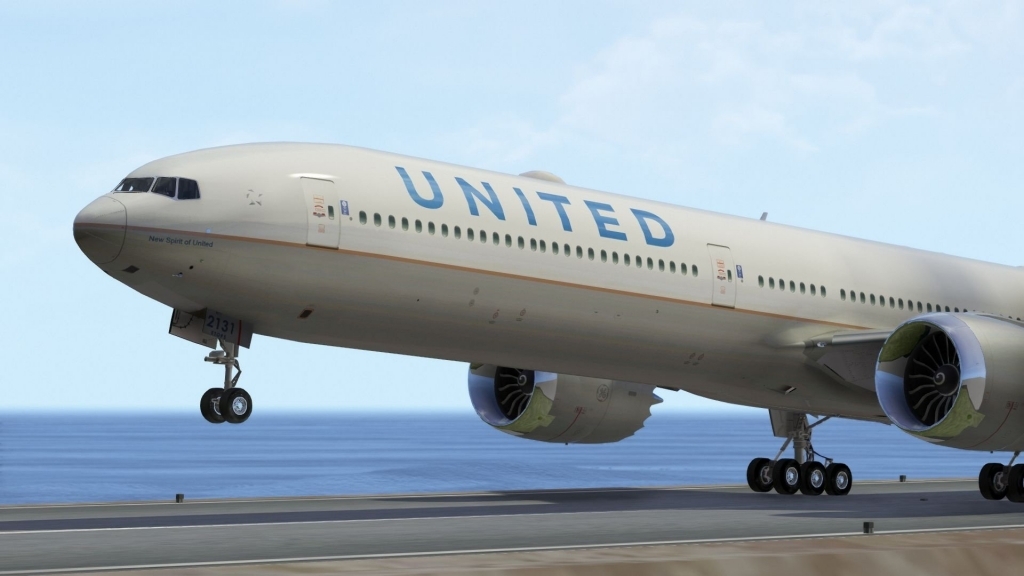
Why the Wings Are So Important
One of the most advanced parts of the Boeing 777X specifications is the wing design.
Unlike older aluminum-heavy aircraft, the 777-9X uses massive carbon fiber composite wings. These wings are:
- lighter
- stronger
- more flexible
- more aerodynamically efficient
Carbon fiber allows the wings to bend dramatically during flight, which helps absorb turbulence and improve aerodynamic efficiency.
Passengers sitting near the wing during turbulence often notice how much the wing flexes upward. On the 777X, that flexibility is intentional and carefully engineered.
Boeing designed the aircraft to achieve roughly 10–12% better fuel efficiency compared to previous-generation long-haul aircraft of similar size.
In modern aviation, fuel efficiency is everything. Even small percentage improvements can save airlines millions of dollars annually.
The GE9X Engines: The Most Powerful Engines Ever Built for a Passenger Aircraft
The heart of the Boeing 777-9X twin engine jetliner is the GE9X engine.
These engines are absolutely enormous:
- fan diameter: over 134 inches
- thrust: approximately 105,000 pounds each
- larger than many private jet fuselages
The GE9X engine performance represents one of the biggest leaps in turbofan technology in decades.
The engines use:
- advanced ceramic matrix composites
- lightweight carbon fiber fan blades
- improved thermal efficiency
- lower fuel consumption
- reduced emissions
Despite their massive power, the engines are significantly more efficient than older generation powerplants used on aircraft like the Boeing 747-400.
And perhaps most impressively:
the aircraft achieves intercontinental range using only two engines.
That alone demonstrates how dramatically twin engine aviation evolved over the last several decades.
Designed for Ultra Long-Haul Routes
The Boeing 777-9X range and capacity make it one of the most capable long-haul aircraft in the world.
Typical configuration:
- around 350–425 passengers
- range exceeding 14,000 kilometers (8,700+ miles)
This allows airlines to operate ultra-long-haul routes connecting distant city pairs nonstop.
One major goal for the aircraft involved projects like Qantas’ “Project Sunrise,” which aims to connect Australia directly with cities such as London and New York without intermediate stops.
Flights of this length create enormous operational challenges:
- fuel planning
- crew fatigue management
- ETOPS considerations
- passenger comfort
- maintenance reliability
Modern twin engine long haul aircraft like the 777-9X were specifically engineered to handle these extreme operational demands efficiently.
Why Airlines Love Twin Engine Long-Haul Aircraft
The aviation industry moved aggressively toward large twin engine aircraft for one major reason:
economics.
Four engines create:
- higher fuel burn
- more maintenance
- higher operational costs
- greater complexity
Modern engine reliability became so good that airlines no longer needed four engines for most long-haul operations.
Aircraft like the Boeing 777-9X allow airlines to transport large numbers of passengers over extremely long distances while burning significantly less fuel than older four-engine aircraft.
This is one reason airlines including:
- Emirates
- Lufthansa
- ANA
- Qatar Airways
invested heavily in the aircraft.
In many ways, the 777-9X symbolizes the final transition away from the era of giant four-engine passenger jets.
Passenger Experience Inside the 777-9X
The passenger cabin of the Boeing 777-9X twin engine jetliner was also redesigned heavily.
Features include:
- larger windows
- improved cabin humidity
- lower cabin altitude pressure
- quieter engines
- wider cabin layout
- advanced LED lighting systems
The aircraft aims to reduce passenger fatigue on ultra-long flights, something that becomes increasingly important on routes lasting 15–20 hours.
Interestingly, despite carrying hundreds of passengers, the 777X cabin is expected to feel noticeably quieter than older widebody aircraft due to advances in engine acoustic design and airflow management.
The Future of Twin Engine Aviation
The 777-9X is more than just another large aircraft.
It represents the future direction of commercial aviation.
Modern long-haul aviation now revolves around:
- high-efficiency twin engine aircraft
- advanced composites
- lower emissions
- smarter aerodynamics
- ETOPS-certified ultra-long routes
Aircraft like the Boeing 747 and Airbus A380 became icons of aviation history, but the industry increasingly prioritizes flexibility and operational efficiency over simply building the largest airplane possible.
The Boeing 777-9X twin engine jetliner combines enormous passenger capacity with the economic advantages of modern twin engine design — something that would have seemed impossible only a few decades ago.
Conclusion
The Boeing 777-9X twin engine jetliner is not just the world’s largest twin engine aircraft — it is a symbol of how modern aviation evolved.
With massive composite wings, folding wingtips, ultra-efficient GE9X engines, and extraordinary long-range capability, the aircraft demonstrates how twin engine technology now dominates global commercial aviation. What once required four engines can now be achieved more efficiently, more quietly, and more economically with only two.
The 777-9X represents a new generation of aviation where performance, efficiency, and long-range capability coexist on a scale never seen before in twin engine passenger aircraft.
To better understand smaller categories of twin engine aviation and how multi-engine aircraft evolved across different classes, continue here:
👉 https://melibrary.pro/article/what-is-a-light-twin-aircraft/
