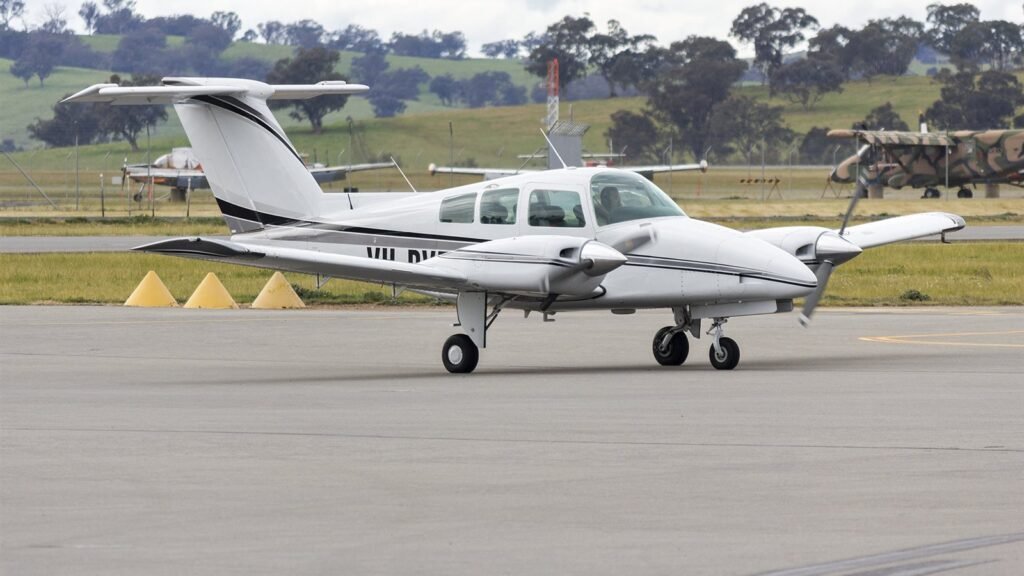
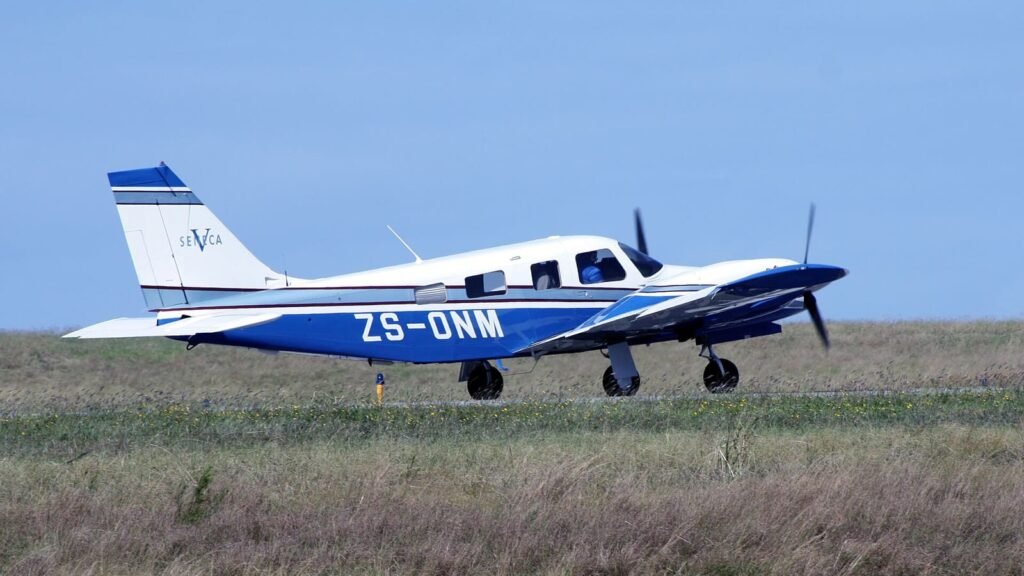
As the controller calmly asked, “Would you like to declare an emergency?”, I already knew the answer. Glancing at the stopped and perfectly feathered left engine on my Cessna 310R—a Twin Engine aircraft I had owned for barely ten days—there was no hesitation: “Yes.”
Just moments earlier, the engine began shaking so violently that I feared structural damage or an imminent internal failure. Relying on my training, I immediately identified the failing engine, pulled it to feather, secured it, and stabilized the aircraft. With the airplane trimmed and holding well above VYSE, I contacted ATC:
“Buffalo Approach, Twin Cessna 692, my left engine has failed.”
This moment—unexpected, intense, and absolutely real—validated one of the most important twin engine training tips every multi-engine pilot learns: when an engine fails, your response must be automatic, disciplined, and calm.
Real-World Experience That Shaped My Twin Engine Training Tips
So there I was, about 20 miles from my destination with only one engine turning, unexpectedly dealing with the failure of a freshly overhauled powerplant. I stabilized the aircraft, trimmed for single-engine flight, held the airspeed well above the blue line, and selected Direct-To on the GPS. Approach advised they would notify my non-towered destination of my situation and emergency arrival — a perfect real-world reminder of why twin engine training tips, twin-engine safety principles, and solid engine-out decision-making aren’t just academic concepts, but skills that save airplanes and people.
In VMC, I switched the GPS into OBS mode to create a long extended centerline, giving myself the most stabilized single-engine approach possible. This technique, commonly emphasized in high-quality multi-engine training, allows a Twin Engine pilot to maintain situational awareness, alignment, and energy management even when asymmetric thrust complicates the picture. With a bit of extra airspeed for safety margin — another cornerstone of single-engine performance in twin aircraft — I executed one of my most controlled landings to date and managed to taxi to the ramp using only left turns.
My young cousin — the only passenger onboard — remained completely silent. Later she admitted that the only moment that unsettled her was ATC’s question about “souls on board.” The calm tone of the controllers, combined with my deliberate and unhurried responses, transformed what could have been a frightening emergency into something she later described as a “crazy but kind of cool” story on social media. Situations like this highlight why twin engine emergency procedures and twin engine pilot proficiency must be practiced and reinforced consistently.
None of this would have gone nearly as smoothly without the dozen-plus single-engine landings I had practiced during my ME training. Those repetitions, especially the simulated failures at altitude and the controlled zero-thrust drills, directly shaped my ability to stabilize the airplane, manage asymmetric thrust, and protect blue-line airspeed. That training mattered far more than I ever expected.
Still, the experience — the first emergency I had formally declared in twenty years — made it painfully clear that there were several areas where my training had gaps. The event became a turning point, the moment I truly understood which twin engine training tips matter most in real-world Twin Engine operations, and which techniques make the difference between merely “handling” an emergency and truly mastering it.
What I Learned, and What I Didn’t
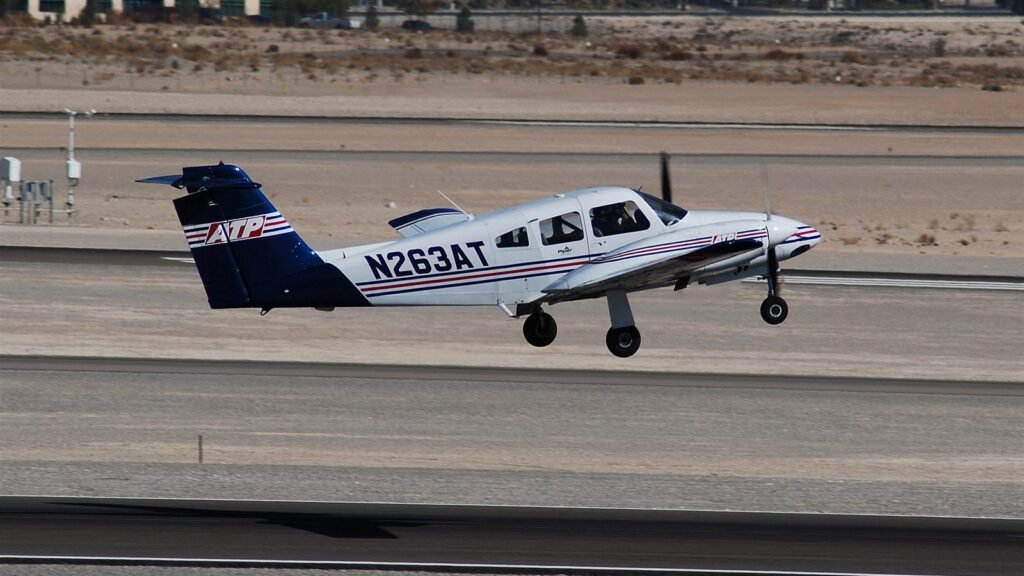
My multiengine commercial training covered all the required fundamentals. I began with Paul Craig’s Multiengine Flying to understand the underlying theory of twin engine flying and multi-engine aerodynamics. My instructor then introduced me to a steam-gauge Piper Seminole after my previous experience in a G1000-equipped Cessna 206. Before every takeoff, we followed detailed pre-takeoff briefings, used full runway length, monitored engine instruments, and practiced both normal and short-field departures. Occasionally, my instructor quietly pulled an engine on the roll to test readiness — a core element of practical twin engine training and one of the essential twin engine training tips pilots rely on.
We also conducted extensive airwork: steep turns, stalls, VMC demonstrations, shutdowns, and simulated single-engine operations. We performed approaches with both engines and with one engine operating (simulated), and my instructor introduced announced engine failures to reinforce proper flow and control — textbook multi-engine engine-out procedures.
Interestingly, my taildragger experience paid off significantly. Twins are heavier and tolerate far less side-loading on the gear during landing and taxi. The ability to land smoothly one wheel at a time in a crosswind — something I learned in the Citabria — turned out to be a critical skill during my ME transition, improving my twin engine handling skills and asymmetric-thrust control.
Despite feeling fully prepared according to PTS standards, the checkride exposed small but important weaknesses in my reactions to engine-out situations. Ultimately, everything distilled into five essential areas I wish I had trained more aggressively — the core of the five twin engine training tips this article expands on, especially for pilots seeking better twin engine safety, multi-engine proficiency, and real-world readiness in Twin Engine operations.
1. More Failures
Instructors should include frequent, irregular, unannounced simulated engine failures in every phase of flight. After the basics are mastered, this becomes one of the most valuable twin engine training tips in real-world ME instruction. The airplane yaws sharply and immediately when thrust is lost, far faster than most new ME students expect. Engine failures don’t happen on schedule, so pilots must be comfortable losing an engine at any moment.
My examiner simulated an engine failure during a stall recovery — something I had never practiced. Although the PTS outlines an engine failure at 400 feet AGL, having it happen during the stress of a checkride exposed flaws immediately. I had also never practiced with inoperative rudder trim, yet the trim in the checkride aircraft was almost impossible to turn. Practice every kind of failure, at every stage, over and over — ideally in an aircraft with a true critical engine, reinforcing the importance of effective twin engine training tips for all ME pilots.
2. Memorize Procedures
Memorize the engine-failure flow until it becomes instinct. Rehearse it daily. Use hand-and-foot pantomime. Make it automatic. And always fly the airplane first: maintain speed, altitude, and directional control. Do not climb at the expense of airspeed — one of the fundamental twin engine training tips every ME pilot must internalize.
Before bed, I rehearsed:
Mixture, prop, throttle — full.
Flaps to approach.
Gear up.
Flaps up.
Foot back, throttle back — identify, verify, feather.
Prop back, mixture back, aux pump off.
This flow should be the bedtime ritual of every multi-engine pilot, forming the foundation of practical twin engine training tips used in real emergencies.
And remember the old quote:
“The airplane is trying to kill you; it’s up to you to catch it in time.”
In a twin, this is twice as true.
3. Practice Many Approaches
Single-engine approaches must be trained in all environments, not just in ideal, stabilized setups. Losing an engine in actual IMC during vectored descent to intercept the localizer is completely different from practicing under the hood in clear weather — and this contrast is one of the most important twin engine training tips for real-world ME pilots.
My checkride included a mandatory approach where the engine “failed” at the worst possible moment — on vectors, in descent, intercepting guidance. LPV would be easier, but the ILS sensitivity is unforgiving. Practice ILS repeatedly, with failures introduced at difficult, realistic points. Simulate trim failures as well to strengthen your twin engine training tips skillset.
4. Don’t Forget the Climb-Out
Engine failures on initial climb require dedicated training under multiple conditions. An all-weather pilot will eventually depart from minimums into a complex departure procedure. After mastering the standard 400-foot engine failure, practice it in simulated IMC: visor down at 200 feet, then fly the departure. This is one of the most critical twin engine training tips for real-world proficiency.
When the engine fails at 400, maintain the blue line, climb, navigate correctly, and run the checklist — calmly but decisively. These disciplined actions form the foundation of practical twin engine training tips that prevent loss of control during high-risk phases of flight.
Always have a pre-takeoff engine-failure plan. The worst loss is full power, low airspeed, close to the ground — so practice the scenario extensively.
5. Do the Real Thing
Finally, I recommend every aspiring ME pilot perform at least one actual single-engine landing during training. My real engine-out landing came less than a month after receiving my rating, with the critical engine failed. The confidence boost afterward was priceless. Training works — but you never truly know until you do it. This is one of the twin engine training tips that separates theoretical knowledge from true operational readiness.
Single-engine landings demand precise rudder work. The yaw response with a shut-down, feathered engine is far stronger than in a “zero-thrust” simulation, and this surprises many new ME pilots. Expect a sharp yaw as you bring the good engine to idle in the flare — a detail often overlooked but essential in real-world twin engine training tips focused on mastering directional control.
Looking back, my first six months with a Twin Engine aircraft were anything but smooth—they were a deep, immersive, sometimes brutal introduction to real-world twin-engine safety. Beyond the actual engine failure, the 310 continuously reminded me why multi-engine training must go far beyond checkride requirements. On my very first day with the airplane, the left vacuum pump failed. The day before the engine failure, I mistakenly ran the aux tanks dry and discovered that the fuel gauges in a Twin Engine aircraft can misleadingly show “above empty” even when the tank is, in reality, fully depleted.
These experiences were not isolated. ATC once turned me onto the final approach of an actual-weather ILS way above the glideslope. I had to dive aggressively to intercept, delaying gear extension because of excessive airspeed until short final — something that understandably rattled my passenger. Add two unrelated electrical system failures, an ILS receiver that decided to stop providing CDI guidance, and a handful of unexpected avionics issues, and the message was clear: Twin Engine operations demand a level of vigilance far beyond anything I experienced as a single-engine pilot.
Yet despite the chaos, the Cessna 310R proved its value. It’s an extraordinary traveling machine for my family of five — fast, capable, stable — and a fantastic aircraft for volunteer airlift missions. The redundancy is incredible: two engines, two alternators, dual vacuum systems, independent navigation equipment, full known-ice protection, weather radar, satellite weather, TCAD, and a PFD/MFD combo. Even with all that, it still offers over 900 lbs of usable load and nearly seven hours of fuel at typical cruise settings.
But the truth is simple: redundancy only matters if the pilot is proficient enough to use it.
This is the core philosophy behind modern twin engine training tips.
A Twin Engine aircraft gives you far more capability, but it also gives you far more responsibility. You cannot fly a twin with the same mindset you use in a single. You are expected to anticipate failure, not merely respond to it. You must constantly think in terms of single-engine performance, engine-out climb gradients, asymmetric thrust, rudder authority, and blue-line protection. Every departure demands a plan. Every approach demands a backup plan. Every phase of flight requires mental preparation for an engine failure at that exact moment.
This is why modern twin-engine safety emphasizes recurrent training, real-world simulations, zero-thrust drills, VMC demonstrations, and practiced decision-making. A multi-engine pilot who trains only to pass a checkride is unprepared for the moment when training becomes survival.
Flying a Twin Engine airplane makes you a better, sharper, more disciplined aviator — but only if you embrace the training philosophy behind it. These real-world experiences shaped the twin engine training tips I now consider essential: more failures, more approaches, memorized procedures, realistic climb-out scenarios, and at least one real single-engine landing under supervision.
The tradeoff is clear:
A Twin Engine airplane gives you incredible capability, but demands continuous proficiency.
And it’s a tradeoff I am grateful for — one I willingly train for on a regular basis.
I hope these insights help you grow into a more confident, more capable, and truly prepared Twin Engine pilot, ready not only to fly the airplane but to master it when it matters most.
For further study on real-world engine failures, asymmetric thrust, and emergency procedures in twins, see this article:
https://melibrary.pro/article/engine-failure-twin-engine-aircraft/