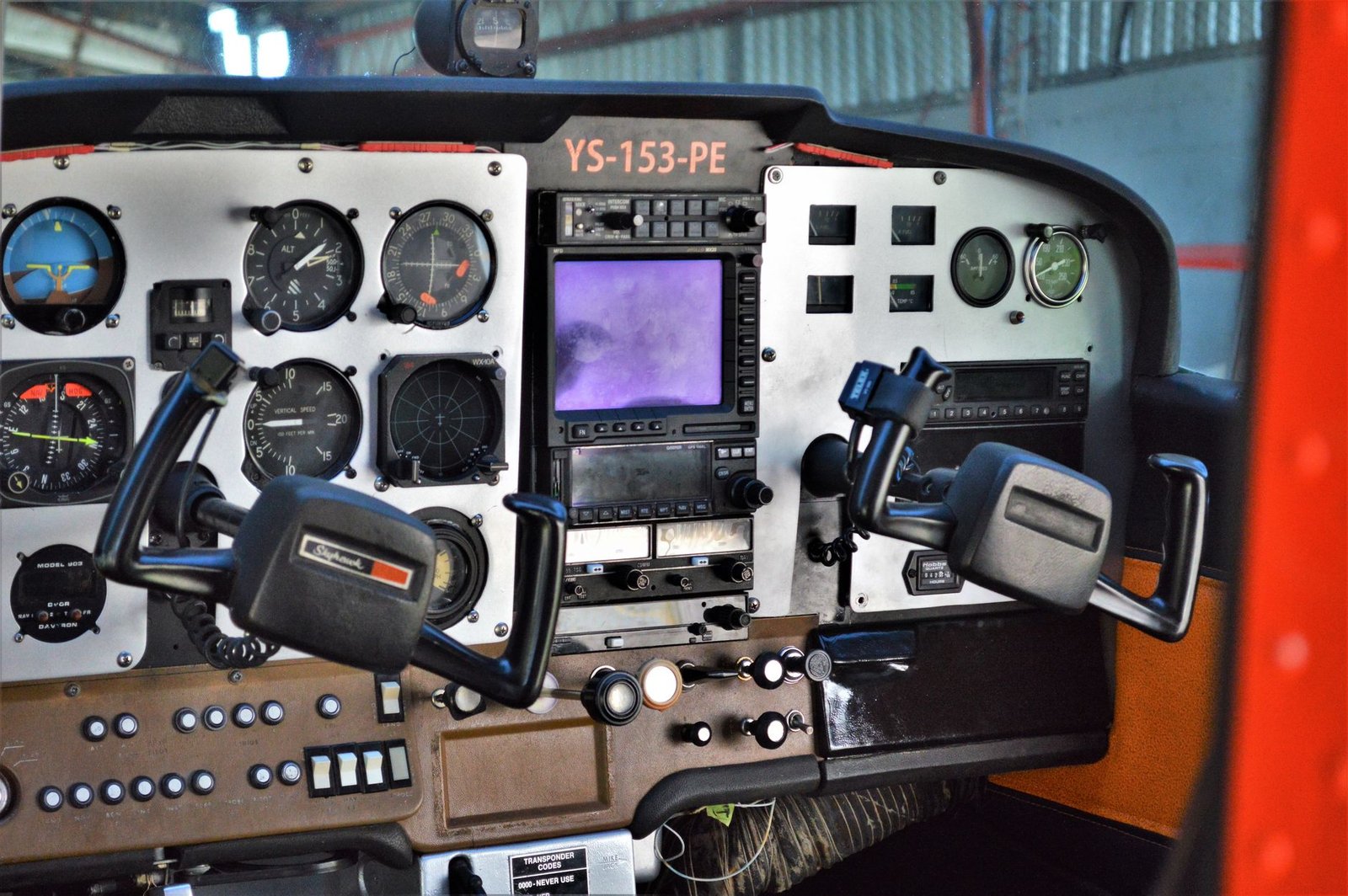
At first glance, a twin-engine aircraft appears inherently safer than a single-engine airplane. The logic seems simple: if one engine fails, the other one should keep the aircraft flying. However, an engine failure on takeoff twin engine aircraft scenario is one of the most demanding and aerodynamically unstable emergencies in multiengine aviation. In fact, during the takeoff phase, losing one engine in a twin can be significantly more dangerous than a total power loss in a single-engine aircraft.
The reason is not simply loss of thrust — it is asymmetric thrust.
Why Engine Failure on Takeoff Twin Engine Is So Critical
Takeoff is the most vulnerable phase of flight. The aircraft is operating at maximum power, relatively low airspeed, increased angle of attack, and minimal altitude margin. When an engine failure on takeoff twin engine occurs, the airplane does not simply lose 50% of its power. Instead, it immediately enters a condition of asymmetric thrust, where one wing continues producing full power while the other side produces little or none.
This imbalance creates a strong yawing moment toward the inoperative engine. Because yaw and roll are aerodynamically coupled, the aircraft also begins rolling toward the failed engine. If the propeller of the failed engine continues windmilling, it produces substantial drag, further reducing climb performance and increasing instability.
Unlike a single-engine airplane that transitions into a glide, a twin engine aircraft must first fight for directional control before it can even think about climb performance. That is what makes engine failure on takeoff twin engine events uniquely dangerous.
Asymmetric Thrust and Loss of Directional Control
During an engine failure on takeoff twin engine aircraft, the operating engine continues producing maximum takeoff power. That power acts at a distance from the center of gravity, creating a powerful yawing force. The rudder must counter this force immediately. At the same time, the pilot must coordinate aileron input to prevent roll toward the inoperative side.
If airspeed is not maintained above VMC, rudder authority becomes insufficient to counter asymmetric thrust. When this happens, the aircraft may enter a VMC roll — a rapid yaw and roll toward the failed engine that can become unrecoverable at low altitude.
This is why maintaining proper airspeed is the first priority in any engine failure on takeoff twin engine situation. Power without control is useless.
Proper Pilot Response During Engine Failure on Takeoff Twin Engine
When one engine fails during takeoff, the pilot must act instantly and decisively. The first objective is to maintain directional control and protect airspeed. This typically means lowering the nose slightly to maintain Vyse, the best single-engine climb speed, usually marked by the blue line.
Maintaining Vyse provides the best available single-engine climb performance and keeps the aircraft safely above VMC. Once control and airspeed are stabilized, the pilot identifies the failed engine using established procedures. Proper identification is critical — shutting down the wrong engine would result in total power loss.
If the failed engine cannot be restored, the propeller must be feathered. Feathering aligns the propeller blades with the relative wind, eliminating windmilling drag and improving single-engine performance. Landing gear should be retracted as soon as a positive rate of climb is established, since extended gear significantly increases drag and may prevent the aircraft from climbing.
After configuration is optimized, the operating engine is set to maximum continuous power. Even then, climb performance may be marginal, especially in light twin aircraft under high-density altitude conditions.
Performance Reality in Light Twin Aircraft
Many pilots assume that having two engines guarantees continued climb after engine failure. In reality, light twin aircraft often lose up to 80% of their climb performance when one engine becomes inoperative. Under certain conditions — high weight, high density altitude, aft CG, or windmilling propeller — the aircraft may not be able to maintain altitude at all.
An engine failure on takeoff twin engine aircraft does not automatically mean the airplane will crash, but it does mean performance margins become extremely thin. The difference between survival and disaster often comes down to airspeed control, configuration management, and immediate rudder response.
Training for Engine Failure on Takeoff Twin Engine Events
Because of the complexity of asymmetric thrust and VMC limitations, multiengine pilots receive extensive training in engine-out procedures. Modern flight simulators allow crews to practice engine failure on takeoff twin engine scenarios in a controlled environment without real-world risk. These simulations emphasize maintaining airspeed, controlling yaw, and executing proper shutdown procedures under pressure.
In real aircraft, instructors are cautious when demonstrating engine failures at low altitude. Training is typically conducted above safe single-engine airspeed and at sufficient altitude to allow recovery. Engines are not repeatedly shut down in flight to avoid mechanical stress and unnecessary risk.
The goal of this training is not simply procedural memory — it is developing instinctive control of asymmetric thrust. When engine failure on takeoff twin engine aircraft occurs in real life, there is no time to think through each step slowly. The response must be immediate, smooth, and precise.
The Twin Engine Safety Misconception
The idea that two engines automatically mean double the safety ignores the physics of asymmetric thrust. A twin engine aircraft is safer only when the pilot understands how to manage VMC, Vyse, rudder authority, and configuration under pressure.
Engine failure on takeoff twin engine aircraft is survivable. But it demands rapid airspeed protection, aggressive directional control, correct identification of the failed engine, and disciplined execution of single-engine procedures.
Safety in a twin engine aircraft is not about redundancy alone. It is about understanding the aerodynamics that come into play when one engine stops producing thrust at the worst possible moment — during takeoff.
One of the most misunderstood aspects of an engine failure on takeoff twin engine aircraft is the psychological factor. The event happens abruptly, often within seconds after liftoff, when workload is already high and the pilot’s attention is divided between maintaining centerline, monitoring airspeed, retracting gear, and establishing climb attitude. When asymmetric thrust suddenly appears, the aircraft does not politely drift — it aggressively yaws and rolls. The startle effect can delay correct rudder input by even a fraction of a second, and that delay may be enough for airspeed to decay below safe margins. In a twin engine aircraft, hesitation is not neutral — it actively erodes controllability.
Another critical element during an engine failure on takeoff twin engine aircraft is runway environment and obstacle clearance. Even if directional control is maintained, performance may not allow continued climb. Many light twin aircraft have marginal single-engine climb capability at sea level, and at higher density altitudes that capability may disappear entirely. In such conditions, maintaining control does not guarantee terrain clearance. This is why performance planning before takeoff in a twin engine aircraft is essential. Pilots must evaluate accelerate-stop distance, accelerate-go performance, obstacle departure procedures, and single-engine climb gradients before committing to departure.
Aerodynamically, the combination of yaw and roll during an engine failure on takeoff twin engine aircraft creates what is known as yaw-roll coupling. As the aircraft yaws toward the failed engine, the advancing wing experiences increased relative airflow while the retreating wing experiences reduced airflow. This difference increases lift on one side and decreases it on the other, reinforcing the roll. If uncorrected, the bank angle increases drag and further reduces climb performance. In extreme cases, the aircraft may enter a descending spiral rather than a conventional stall. This dynamic explains why simply “holding the wings level” without proper rudder coordination is insufficient in a twin engine emergency.
Finally, the decision-making aspect of an engine failure on takeoff twin engine aircraft cannot be overstated. Before reaching decision speed, rejecting the takeoff may be the safest option. After liftoff and positive climb, the commitment changes entirely. The pilot must quickly determine whether sufficient airspeed and climb performance exist to continue. In some scenarios, reducing power on the operating engine to regain control and land straight ahead may be safer than attempting to climb. Twin engine safety depends not only on technical skill but on disciplined, pre-planned decision thresholds established before advancing the throttles.
Conclusion
An engine failure on takeoff twin engine aircraft event is not simply a reduction in available power — it is a sudden transition into asymmetric flight. The aircraft immediately enters a state where directional control, rudder authority, airspeed protection, and configuration management determine the outcome. During the takeoff phase, margins are already thin, and any delay in response can rapidly lead to loss of control.
Unlike a single-engine airplane that transitions into a glide, a twin engine aircraft must first overcome asymmetric thrust before it can even think about performance. Maintaining airspeed above VMC, stabilizing at Vyse, eliminating drag through proper feathering, and making disciplined decisions are what separate a controlled recovery from a catastrophic VMC roll.
The misconception that “two engines mean double the safety” ignores the aerodynamic reality. In a twin engine aircraft, safety depends on knowledge, preparation, and precise control inputs during the most critical seconds of flight. Engine failure on takeoff twin engine aircraft is survivable — but only when the pilot understands the physics behind asymmetric thrust and acts immediately.
If you want to deepen your understanding of how to correctly identify the failed engine during asymmetric flight, read our detailed guide here:
https://melibrary.pro/article/twin-engine-failure-identification/