Twin-Engine Troubles: When Redundancy Becomes a Risk
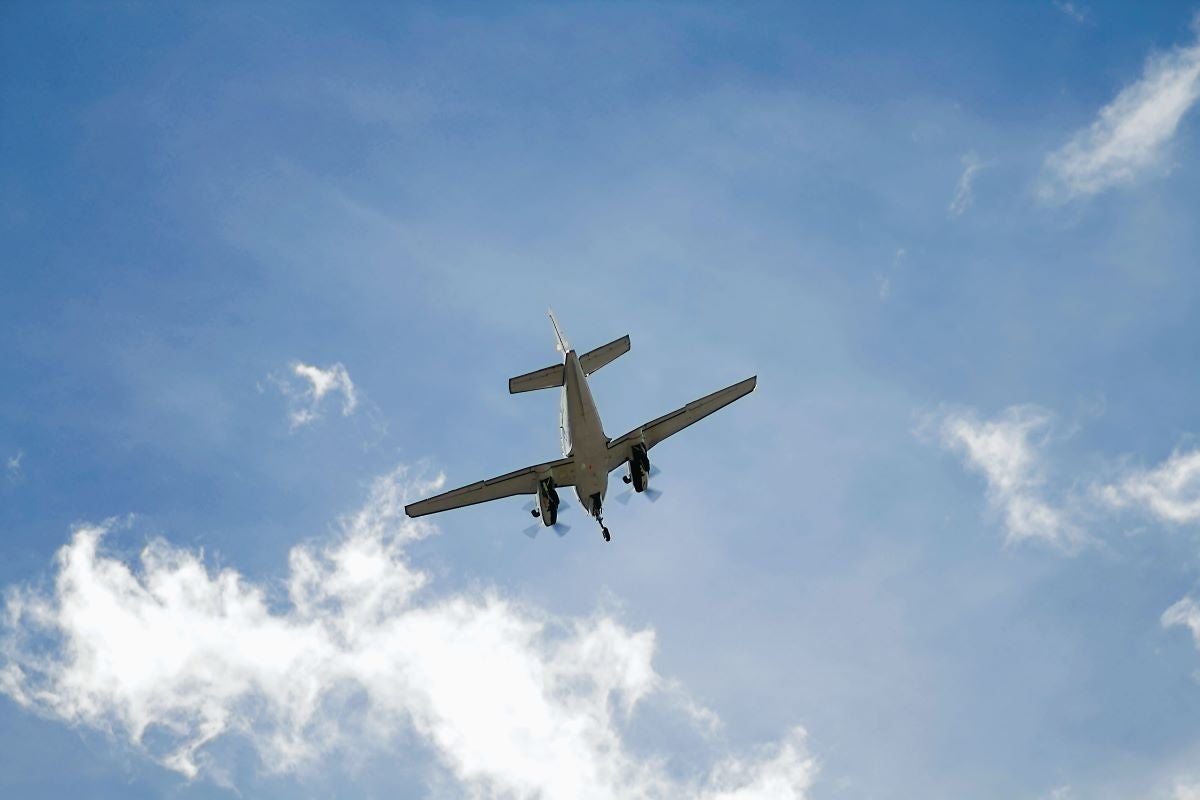
Twin engine aircraft safety has long been a topic of debate among pilots and instructors. Aviation writer Richard Collins once remarked that a single-engine airplane may actually be safer than a twin during an engine failure right after takeoff. The reasoning is simple: the chances of a twin engine aircraft pilot successfully handling a sudden engine-out emergency at low altitude are surprisingly slim.
While the idea sounds paradoxical, it applies mostly to piston twins, whose surplus power is limited. Turbine twins have far more thrust available to climb and maintain control. But for piston pilots, the comparison is stark — and it highlights one of the core challenges of twin engine aircraft safety. The single-engine pilot has one task — find a place to land. The twin pilot, on the other hand, suddenly has both hands and feet full, fighting asymmetric thrust, drag, and decision-making under intense pressure.
The Hidden Challenge of Twin Engine Aircraft Safety
We rarely hear about successful engine-out recoveries in twin engine aircraft, perhaps because they end quietly. But the failures we do hear about remind us how overwhelming such situations can be. Expectations also play a role. Twin pilots often assume that two engines guarantee safety. So when one fails, they aim to save both the airplane and themselves, executing a perfect go-around rather than accepting an off-field landing.
In contrast, a single-engine pilot begins the emergency already in control. Their task is simply to maintain speed and avoid a stall. The twin pilot, however, may not even consider a straight-ahead landing until control is already lost — and by then, it’s often too late.
This misconception lies at the heart of many accidents. True twin engine aircraft safety is not about having more engines — it’s about mastering asymmetric flight, understanding aerodynamic limits, and recognizing when to prioritize control over climb performance. Pilots who train consistently for engine-out scenarios, who know their Vmc and Vyse instinctively, and who practice decision-making under pressure, are the ones who truly benefit from the redundancy a twin provides. Without that preparation, the extra engine becomes more of a distraction than an advantage.
Case Study: A 2004 Piper Twin Comanche Accident
The 2004 crash of a Piper Twin Comanche illustrates how quickly things can go wrong, even when the pilot appears well-prepared. The airplane, built in 1966, had several modifications: tip tanks, 200-hp IO-360 engines instead of the original 160-hp IO-320s, and a STOL kit that increased its gross weight from 3,600 to 3,800 pounds. Despite clear weather and moderate winds, the aircraft crashed within the airport boundary shortly after takeoff.
Witnesses reported that the airplane climbed to about 300 feet before banking left. One described a sputtering sound, as if power were suddenly reduced. The airplane briefly leveled, then banked left again and descended sharply. Engine monitor data later showed a complete and abrupt power loss in the left engine — cause unknown.
When the turn began, the aircraft’s indicated airspeed was roughly 87 knots — well above Vmc, the minimum control speed of 70. In theory, it should have been controllable. The good engine, on the right, was the critical one — the engine whose thrust most strongly destabilizes yaw. But this wasn’t the root of the problem. The pilot failed to feather the left propeller, a mistake that serves as a powerful reminder of how vital twin engine aircraft safety procedures are during takeoff and climb.
This tragic accident underscores a lesson that applies to every twin engine aircraft pilot: technical proficiency alone isn’t enough. The difference between control and catastrophe often comes down to instinctive execution — performing the right steps immediately, without hesitation. Proper training, repetition, and understanding of asymmetric flight behavior are the foundations of true twin engine aircraft safety. It’s not the number of engines that determines survival, but the pilot’s mastery of what to do when one of them quits.
Why Twin Engine Pilots Lose Control
The flight manual for nearly all twin engine aircraft prescribes the same sequence during an engine failure: apply full power on the operating engine, maintain airspeed above Vyse (best single-engine climb), close throttle and mixture on the failed engine, and feather the propeller immediately.
Failure to feather the dead engine’s propeller leaves it windmilling — creating enormous drag and destroying performance. In the Comanche accident, the unfeathered prop likely caused rapid deceleration and yaw, leading to loss of control before recovery was possible.
The lesson is universal for twin engine aircraft safety: in an engine-out situation, the pilot must act quickly and precisely. Identify, verify, and feather — in seconds. At just 200 or 300 feet, hesitation can be fatal.
Human Factors in Twin Engine Aircraft Safety
Why do pilots, even experienced ones, fail to perform such a critical procedure? Sometimes it’s lack of time — there’s simply not enough altitude to troubleshoot. Other times, it’s psychological. The airplane isn’t responding the way it “should,” and panic sets in. The pilot tries to turn toward the good engine, but the airplane keeps rolling the other way. Control inputs become instinctive rather than trained.
This is why twin engine aircraft safety isn’t just about systems or power — it’s about discipline under stress. The irony, as Collins pointed out, is that the complexity of a twin can turn its greatest advantage — redundancy — into its biggest weakness when the pilot isn’t fully prepared.
A Sobering Lesson for All Twin Engine Aircraft Pilots
When a twin engine aircraft loses power and starts yawing uncontrollably, one life-saving option remains: reduce power on the good engine and land straight ahead. It goes against instinct, but regaining control is more valuable than climbing with asymmetry. Power, altitude, and airspeed are good — but nothing is as valuable as control.
The twin navion aircraft and other classic light twins remind us that mastery comes not from redundancy, but from understanding the airplane’s limits and practicing what happens when things go wrong. For every pilot who flies a twin, the real skill lies in knowing when to push — and when to pull back.
In the end, twin engine aircraft safety depends less on technology and more on pilot awareness. Training, discipline, and repetition are what turn complexity into confidence. Every twin pilot must learn to trust procedures over instincts and to act decisively when seconds count. If you’re thinking about moving up to a more capable twin, understanding its strengths and vulnerabilities is the first step toward mastering it.
Interested in comparing different twins? Read also: Moving Up to a Twin? Read This First
