EASA Multi-Engine Training: Requirements, Structure, and Real-World Skills
Multi-engine training under EASA regulations represents a critical step for pilots pursuing professional aviation careers, particularly those aiming for airline operations. Unlike single-engine training, EASA multi-engine qualification is tightly integrated into the regulatory framework governing type ratings, multi-crew operations, and instrument privileges. Understanding how EASA multi-engine training is structured—and what skills it truly develops—is essential for any pilot transitioning into multi-engine aircraft.
Why a Multi-Engine Rating Is Mandatory Under EASA
Under EASA rules, almost all turbojet and turboprop aircraft require a type rating, and nearly all transport-category aircraft are certified for multi-pilot operations. According to Part-FCL, FCL.720.A(d)(2), a multi-engine rating with instrument privileges is a prerequisite for obtaining a type rating for any multi-pilot aircraft. In practical terms, this means that for pilots following a modular training path, a multi-engine rating is not optional—it is mandatory.
There is one alternative route: the integrated MPL (Multi-Crew Pilot Licence) program. However, outside of MPL training, modular candidates must complete multi-engine training before progressing toward airline type ratings. This regulatory structure makes EASA multi-engine training fundamentally different from its FAA counterpart, where instrument privileges are not class-specific.
MEP VFR vs MEP IFR Under EASA
EASA distinguishes clearly between MEP VFR (Multi-Engine Piston – Visual Flight Rules) and MEP IFR (Multi-Engine Piston – Instrument Flight Rules). These are separate privileges, each with its own training and testing requirements.
-
MEP VFR allows a pilot to act as PIC on multi-engine piston aircraft under VFR only.
-
MEP IFR is required to operate multi-engine aircraft under IFR and must be added separately—even if the pilot already holds a single-engine instrument rating.
This is a key difference compared to FAA training. In the United States, a pilot may earn an instrument rating in a single-engine aircraft and then add a multi-engine rating without additional IFR privileges training. Under EASA, this is not permitted. Each class or type requires its own instrument qualification, which significantly increases training time, cost, and complexity.
Minimum Flight Time Requirements
EASA establishes minimum flight time requirements, although real-world training often exceeds these figures:
-
MEP VFR: minimum 6 flight hours
-
MEP IFR (for SEP IR holders): additional 5 flight hours
For pilots without an existing SEP IFR, the total training time increases substantially, making the overall program more expensive. As a result, most modular EASA pilots follow a structured sequence:
-
PPL
-
CPL
-
SEP IFR
-
MEP VFR
-
MEP IFR
Even for experienced pilots, multi-engine training under EASA is rarely a quick add-on—it is a carefully staged process tied directly to regulatory progression.
Aircraft Choice and Training Environment
Most EASA pilots complete multi-engine training on light piston twins, primarily for cost reasons. Even so, multi-engine flight time in Europe is significantly more expensive than in the United States. Hourly rates for piston twins are often two to three times higher than comparable aircraft in FAA training environments.
Common EASA training aircraft include:
-
Piper Seneca (PA-34 series)
-
Beechcraft Duchess (BE-76)
-
Diamond DA-42
While these aircraft differ in performance and systems, they share one defining characteristic: limited single-engine performance. In many configurations, especially at higher weights or density altitudes, these aircraft may be incapable of maintaining altitude with one engine inoperative.
The Real Purpose of Multi-Engine Training
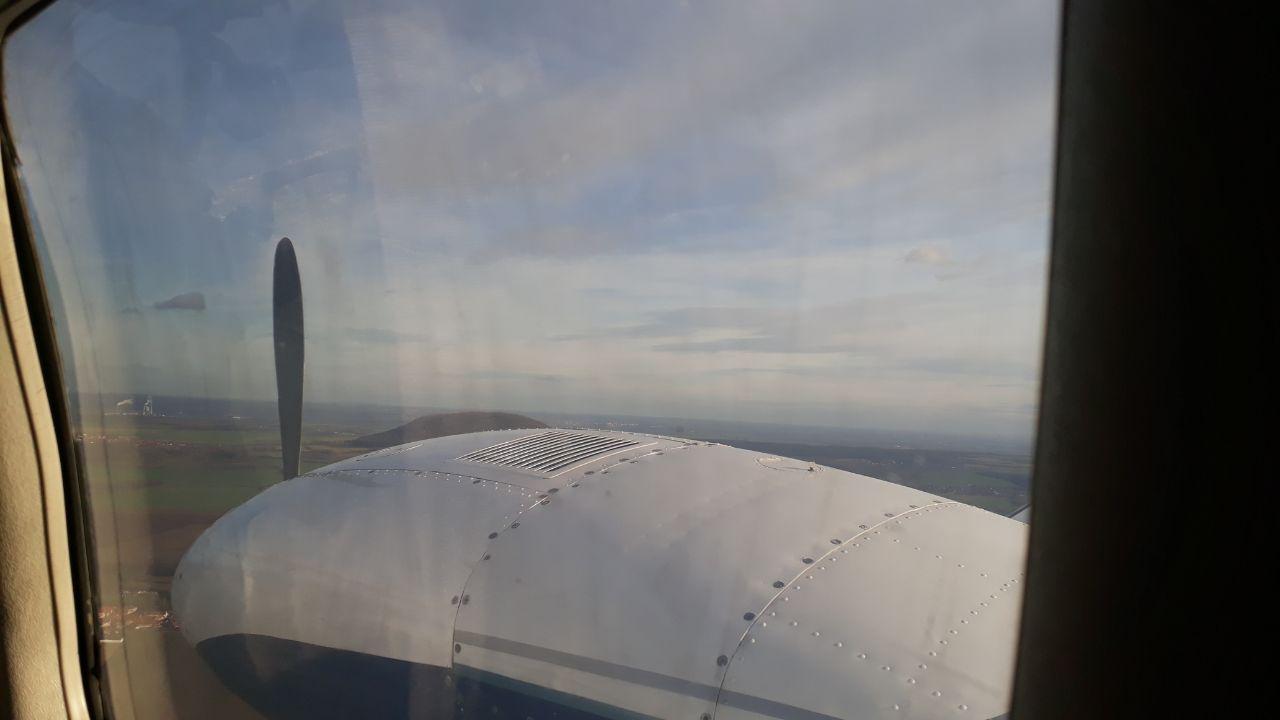
At first glance, a light twin may not feel dramatically different from a single-engine trainer. The aircraft is heavier, faster, and more complex, but normal operations remain familiar. The true distinction—and the core of multi-engine training—emerges during one-engine-inoperative (OEI) flight.
Multi-engine training is not about learning to fly faster airplanes. It is about learning to manage asymmetric thrust, maintain directional control, and make disciplined performance-based decisions under extreme constraints.
Key skills developed during EASA multi-engine training include:
-
Immediate recognition of engine failure
-
Airspeed protection above VMC
-
Precise rudder and bank control
-
Engine identification and verification
-
Propeller feathering and drag reduction
-
Performance assessment and decision-making
A fully secured engine in flight—often the first time a pilot experiences true asymmetric thrust—is a defining moment in multi-engine training. It forces a complete re-evaluation of control priorities and challenges assumptions built during single-engine flying.
Performance Reality of Light Twins
A critical lesson taught during EASA multi-engine training is that continued climb is not guaranteed after an engine failure. Many light piston twins can only maintain altitude—or may even descend—under OEI conditions. This reality shapes the decision-making philosophy taught throughout training: maintaining control always takes priority over attempting to climb.
While a single-engine aircraft experiencing power loss becomes a glider, a twin with one engine inoperative remains controllable—but only within strict aerodynamic and performance limits. Exceeding those limits often leads to loss of control rather than a survivable forced landing.
Why EASA Multi-Engine Training Matters
EASA multi-engine training is not merely a regulatory hurdle. It is a foundational phase that prepares pilots for:
-
airline operations,
-
multi-crew environments,
-
high-workload abnormal and emergency scenarios.
The discipline, systems thinking, and performance awareness developed during multi-engine training directly translate into safer operations at every professional level. For pilots progressing toward airline type ratings, this training forms the bridge between general aviation and commercial multi-engine flight.
Conclusion
EASA multi-engine training represents far more than a regulatory requirement—it is a defining stage in the development of a professional pilot. By design, EASA places strong emphasis on structure, discipline, and performance realism, ensuring that pilots fully understand the aerodynamic, operational, and decision-making challenges associated with multi-engine aircraft.
Through focused training on one-engine-inoperative (OEI) operations, asymmetric thrust management, and strict airspeed and configuration control, pilots learn that safety in multi-engine flight is built on precision rather than optimism. The realities of limited single-engine performance in light twins reinforce a core principle repeated throughout EASA training: maintaining control is always the first priority, even when climb performance is marginal or nonexistent.
For pilots progressing toward airline operations, EASA multi-engine training forms the critical bridge between general aviation and transport-category flying. The skills, discipline, and systems thinking developed during this phase translate directly into safer multi-crew operations and more effective handling of abnormal and emergency situations at every level of professional aviation.
To further explore how aircraft configuration, redundancy, and operational trade-offs differ between single-engine and twin-engine airplanes, read our related article:
👉 https://melibrary.pro/article/pros-and-cons-of-single-and-twin-engines/
