One of the most remarkable events in modern aviation history is the twin engine failure of US Airways Flight 1549, widely known as the Miracle on the Hudson. The incident demonstrated how professional pilot training, quick decision-making, and aircraft performance knowledge can save lives even during extremely dangerous situations.
Aircraft accidents do not always result in fatalities, and the Miracle on the Hudson is one of the most powerful examples of this. On January 15, 2009, US Airways Flight 1549 suffered a dual engine failure shortly after takeoff from New York LaGuardia Airport. Despite losing power on both engines only minutes after departure, all 155 passengers and crew survived.
The event became a global aviation case study and remains one of the most famous examples of successful emergency handling after a twin engine failure in a commercial aircraft.
Background of US Airways Flight 1549
US Airways Flight 1549 was scheduled to operate a routine flight from New York LaGuardia Airport to Charlotte Douglas International Airport, with a continuing service to Seattle.
The aircraft used for the flight was an Airbus A320-214, powered by two CFM56-5B turbofan engines manufactured by GE Aviation and Snecma. On board were 150 passengers and five crew members, including Captain Chesley “Sully” Sullenberger and First Officer Jeffrey Skiles.
The flight departed LaGuardia Airport from Runway 4 and climbed normally after takeoff. Within minutes, the aircraft reached approximately 700 feet and continued climbing.
However, only about two minutes after departure, the aircraft encountered a large flock of Canada geese roughly 4.5 miles northwest of LaGuardia Airport. What followed became one of the most famous aviation incidents involving a twin engine failure.
Bird Strike and Dual Engine Failure
The aircraft collided with the flock of birds in what is known in aviation as a bird strike. Large birds were ingested into both engines almost simultaneously, causing a sudden dual engine failure.
Passengers and crew reported hearing loud bangs and thumps, followed by flames coming from the engines. Moments later, both engines lost thrust.
This created a rare but extremely dangerous situation: a twin engine aircraft experiencing complete power loss on both engines at low altitude, only minutes after departure.
Although the aircraft continued climbing briefly due to its initial momentum, within seconds it began losing altitude. The flight crew immediately began executing emergency procedures while assessing possible landing options after the unexpected twin engine failure caused by the bird strike.

Decision Making During Twin Engine Failure
Following the twin engine failure, Captain Sullenberger declared a Mayday emergency approximately 22 seconds after the bird strike.
Air traffic controllers initially suggested returning to LaGuardia Airport. However, the aircraft had already lost significant altitude and speed. Attempting to turn back to the runway could have resulted in a crash into densely populated areas of New York City.
Controllers also offered Teterboro Airport in New Jersey as an alternative landing option. However, the pilots quickly realized that the aircraft no longer had sufficient altitude or glide capability to safely reach that airport.
Faced with extremely limited options, Captain Sullenberger made a critical decision: ditch the aircraft in the Hudson River.
This decision would later become one of the most studied examples of aeronautical decision making during twin engine failure.
The Ditching in the Hudson River
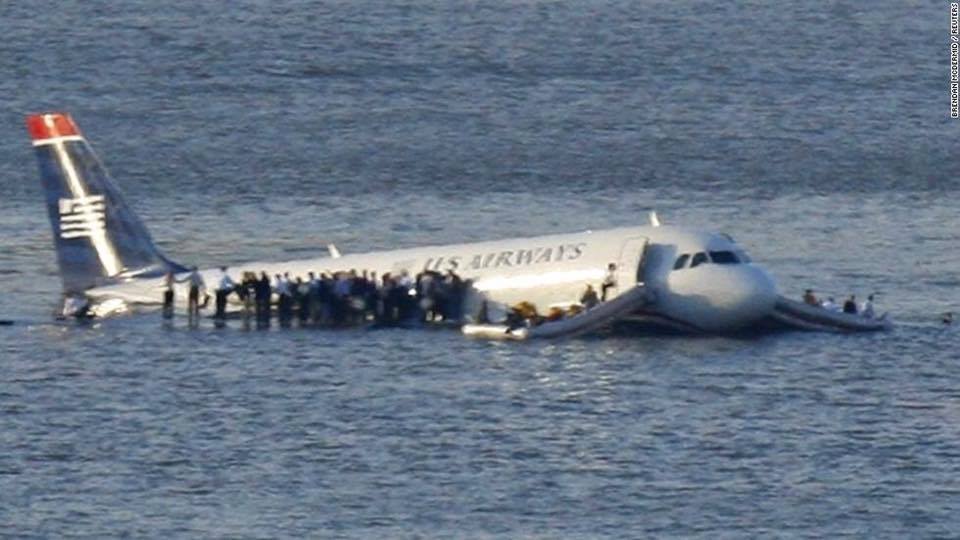
At approximately 3:31 PM, less than five minutes after takeoff, the Airbus A320 descended toward the Hudson River.
The aircraft passed over the George Washington Bridge at approximately 900 feet, narrowly clearing the structure before continuing toward the river.
Captain Sullenberger performed a controlled glide approach and successfully ditched the aircraft on the Hudson River.
Although water landings are extremely rare in commercial aviation, the aircraft impacted the water in a relatively controlled manner. The ditching resulted in a hard landing with a single impact and gradual deceleration, allowing the aircraft to remain intact and afloat.
The emergency landing occurred between Manhattan and New Jersey, turning the Hudson River into an improvised runway.
Passenger Evacuation and Rescue
After the ditching, passengers began evacuating the aircraft through emergency exits. Flight attendants directed passengers onto the wings and deployed emergency slides that functioned as flotation devices.
Despite the freezing winter temperatures and icy water conditions, passengers were able to evacuate safely.
Several New York commuter ferries and rescue boats quickly responded to the emergency. Within minutes, rescue teams arrived and began transporting passengers to safety.
All 155 people on board survived the accident, making the incident one of the most successful emergency landings in aviation history.
Captain Sullenberger reportedly walked through the entire aircraft twice to ensure that no passengers remained on board before exiting the aircraft himself.

Injuries and Aftermath
Although the accident resulted in no fatalities, several passengers sustained injuries.
Some passengers suffered minor injuries and hypothermia due to exposure to freezing water and cold weather conditions. A few individuals sustained more serious injuries, including broken bones.
In total, 95 minor injuries and five serious injuries were reported. Twenty-four passengers and two rescue workers required hospital treatment.
Despite these injuries, the survival of every passenger and crew member made the event widely known as the Miracle on the Hudson.
Investigation by the National Transportation Safety Board
Following the accident, the National Transportation Safety Board (NTSB) conducted an extensive investigation into the causes of the twin engine failure and the decisions made by the flight crew.
Flight simulators were used to determine whether the aircraft could have returned to LaGuardia Airport or landed at Teterboro Airport.
Some simulations suggested that returning to the airport might have been possible. However, those simulations did not include the critical time required for pilots to assess the emergency and make decisions.
After reviewing all available data, the NTSB concluded that Captain Sullenberger’s decision to ditch the aircraft in the Hudson River was correct and likely prevented a catastrophic crash in a populated area.
The investigation determined that the probable cause of the accident was the ingestion of large birds into both engines, which resulted in the dual engine failure.

Aviation Safety Lessons from the Miracle on the Hudson
The Miracle on the Hudson became an important twin engine failure case study in aviation safety and pilot training.
Several key safety improvements and recommendations followed the accident, including:
improved testing of aircraft engines to withstand bird strikes
enhanced pilot training for emergency water landings
new procedures for handling dual engine failure at low altitude
improved bird strike prevention systems near airports
The incident also reinforced the importance of crew resource management, pilot training, and rapid decision-making during emergencies.
Aircraft Recovery and Museum Display
After the aircraft was recovered from the Hudson River, investigators carefully examined the damaged Airbus A320.
Both engines showed evidence of bird ingestion, and organic remains were found inside the engine components.
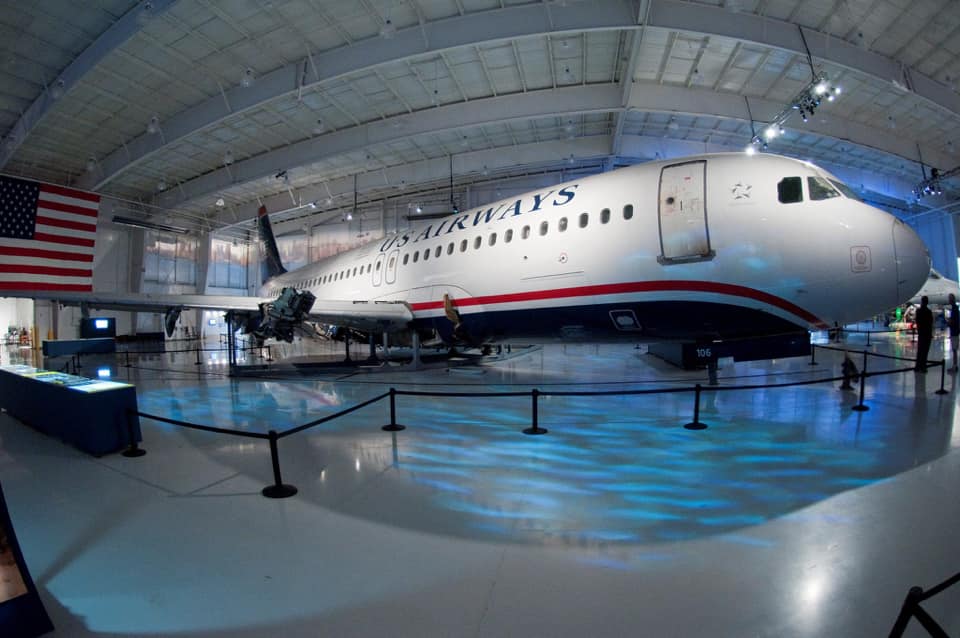
Following the investigation, the aircraft was eventually transferred to the Carolinas Aviation Museum, where it remains on display as part of aviation history.
Visitors can see the aircraft and learn about the extraordinary circumstances that led to one of the most famous twin engine failure survival stories in aviation.
Conclusion
The Miracle on the Hudson remains one of the most remarkable examples of how professional training, calm decision-making, and deep understanding of aircraft performance can turn a potentially catastrophic situation into a survivable event.
The twin engine failure experienced by US Airways Flight 1549 demonstrated that even in the most critical situations, well-trained pilots can successfully manage an aircraft and protect everyone on board. Captain Sullenberger and First Officer Skiles relied on their experience, situational awareness, and knowledge of aircraft behavior to make the right decision within seconds.
Today, the Miracle on the Hudson is widely studied in aviation training programs as an important case study of dual engine failure management, emergency decision-making, and aircraft glide performance.
Understanding how aircraft behave after an engine failure is a key part of multi-engine flight training. To learn more about how pilots evaluate aircraft capability after losing engine power, see our detailed guide on
Engine Failure Performance: Why Losing One Engine Can Destroy Climb
