Surviving an engine failure after takeoff twin requires an immediate, disciplined response and a clear understanding of multi-engine performance limitations. In the critical seconds after liftoff, the pilot is often faced with only two realistic options: continue the climb at the single-engine best rate of climb speed (VYSE) or close both throttles and land straight ahead while sufficient runway or a clear area still exists.
A tragic example of how quickly this situation can deteriorate involved a twin-engine Beech B60 Duke departing from a 4,200-foot runway. After a 1,500-foot takeoff roll, the aircraft lifted off normally and the landing gear was retracted almost immediately. However, at approximately 100 feet AGL, a large puff of black smoke erupted from the left engine, indicating a sudden loss of power. Witnesses reported that the airplane pitched up aggressively and then banked sharply to the left. By around 500 feet AGL, the aircraft had rolled nearly 90 degrees left, entered a nose-down attitude, inverted, and impacted a building, resulting in the loss of the pilot and passengers.

This accident was a classic VMC rollover, caused by the pilot’s failure to maintain an airspeed at or above the airplane’s minimum controllable airspeed during one-engine-inoperative (OEI) flight. During an engine failure after takeoff twin, allowing airspeed to decay below VMC eliminates directional control, regardless of pilot skill or control input. Once this threshold is crossed, recovery may be impossible at low altitude.
Despite the tragic outcome, this accident provides a powerful teaching opportunity for current and aspiring multi-engine pilots. It reinforces a critical lesson: attempting to “salvage” a marginal climb with insufficient airspeed can be far more dangerous than accepting airframe damage by closing the throttles and landing straight ahead. In many engine failure after takeoff scenarios, especially below a safe single-engine maneuvering altitude, choosing to land under control—even if it results in substantial aircraft damage—can be the safer and more survivable option.
The Critical Engine and VMC in an Engine Failure After Takeoff Twin
The FAA’s Airplane Flying Handbook (FAA-H-8083-3A) emphasizes that the fundamental difference between flying a light twin and a single-engine airplane lies in how the pilot manages the loss of one engine. During an engine failure after takeoff twin, safe one-engine-inoperative (OEI) flight depends not only on correct procedures, but also on a solid understanding of multi-engine aerodynamics and disciplined airspeed control.
One of the most important concepts in multi-engine operations is the critical engine—the engine whose failure has the most adverse effect on aircraft performance and controllability. In conventional twins where both propellers rotate clockwise when viewed from the pilot’s seat, the left engine is critical. This occurs because the right engine’s thrust vector is typically farther from the aircraft’s center of gravity, producing a greater yawing moment when the left engine fails. As a result, loss of the left engine demands significantly more rudder input to maintain directional control.
In the case of the Beech B60 Duke, the published minimum controllable airspeed with the critical engine inoperative (VMC) is 77 KIAS. If airspeed decays below VMC during OEI flight, directional control cannot be maintained—regardless of pilot skill or control input. This limitation becomes especially unforgiving during an engine failure after takeoff twin, when altitude and time are extremely limited.
Not all twin-engine aircraft have a critical engine. Twins equipped with counter-rotating propellers, where the left engine rotates clockwise and the right engine rotates counter-clockwise, effectively eliminate the concept of a single critical engine. In these aircraft, both engines are aerodynamically equal. Examples include the Piper Seneca and Seminole, the Cessna T303 Crusader, and the Beech Model 76 Duchess. The Beech B60 Duke involved in this accident, however, was not equipped with counter-rotating propellers.
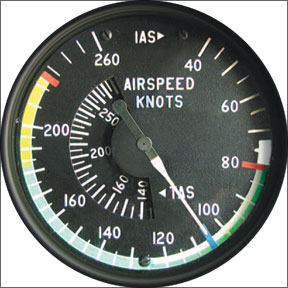
The exact airspeed the Duke pilot attempted to maintain during the OEI climb remains unknown. It is likely that, in the immediate response to the failure, the pilot pitched up excessively in an attempt to climb, causing a rapid decay in airspeed below VMC. While hindsight offers clarity, the correct response would have been to pitch for VYSE, the single-engine best rate of climb speed. For the B60 Duke, VYSE is 110 KIAS, indicated by the blue radial on the airspeed indicator.
Maintaining VYSE is critical during an engine failure after takeoff, as it provides the highest possible climb performance while preserving directional control. Allowing airspeed to fall below this target—even momentarily—can quickly place the aircraft in an unrecoverable condition at low altitude.
VMC: A Moving Number During an Engine Failure After Takeoff Twin
Like stall speed, VMC is not a fixed value—it is a moving number influenced by several aerodynamic and configuration-related factors. While the published VMC is indicated by the red radial on the airspeed indicator, the actual VMC during flight is often higher than the published value. This distinction is critical during an engine failure after takeoff twin, when airspeed margins are small and altitude is limited.
In the Duke accident, the pilot likely attempted to climb at or near the published VMC. Under real-world conditions, however, this would have resulted in a loss of directional control. When actual VMC exceeds the airspeed being flown, maintaining control becomes impossible regardless of pilot input.
To properly control a multi-engine airplane during one-engine-inoperative (OEI) flight, two coordinated control inputs are required. First, appropriate rudder pressure—right rudder in this case—must be applied to counteract the yaw and roll produced by asymmetric thrust. Second, aileron input is used to establish and maintain a 2–3 degree bank toward the operating engine, commonly referred to as “raising the dead engine.” This slight bank allows the horizontal component of lift to counteract the sideslip toward the failed engine.
A sideslip significantly increases drag and degrades climb performance. Witness accounts from the Duke accident described a sharp bank to the left during the climb, indicating that the pilot failed to establish a slight bank toward the operating engine. This improper bank angle would have further increased the airplane’s actual VMC. Flight testing has shown that VMC is highly sensitive to bank angle, increasing by more than three knots per degree of bank toward the operating engine at bank angles less than five degrees.
The FAA recognizes two distinct bank-angle strategies for OEI flight, each serving a different purpose during an engine failure after takeoff twin. The first is used to immediately maintain directional control at low airspeeds following engine failure during climbout. In this phase, the FAA recommends momentarily banking at least five degrees, but no more than ten degrees, toward the operating engine while establishing the correct pitch attitude for VYSE.
The second bank angle is used to achieve best single-engine climb performance with zero sideslip. This condition is achieved by banking 2–3 degrees toward the operating engine, with the inclinometer’s slip/skid ball displaced approximately half a ball width. Increasing bank toward the operating engine increases the horizontal component of lift, which helps counteract yaw caused by asymmetric thrust while minimizing drag.
Another major factor affecting VMC is a windmilling propeller. Examination of the Duke wreckage revealed that the left propeller on the failed engine was not feathered, creating substantial parasitic drag. Because the drag from a windmilling propeller produces a moment opposite the operating engine, it further increases actual VMC. When combined with improper bank angle and excessive pitch attitude, this additional drag can render OEI climb performance nonexistent.
Considering all of these factors—bank angle, sideslip, asymmetric thrust, and a windmilling propeller—the Duke’s actual VMC during the engine failure after takeoff was likely far greater than the published 77 KIAS, leaving the pilot with no margin for recovery.
Configuring for Speed: VYSE During an Engine Failure After Takeoff Twin
In any one-engine-inoperative (OEI) scenario, the most critical performance speed is VYSE—the single-engine best rate of climb speed. During an engine failure after takeoff twin, VYSE provides the greatest possible altitude gain in the shortest amount of time. No other airspeed will produce a higher rate of climb with one engine inoperative. However, simply pitching for VYSE is not enough. To achieve the expected performance, the aircraft must also be properly configured and flown with minimal drag.
This concept is clearly demonstrated through the FAA-mandated drag demonstration, a required maneuver in the Practical Test Standards (PTS) for the multi-engine flight instructor. The purpose of this maneuver is to prove—both theoretically and practically—that VYSE, combined with optimal configuration, is essential during an engine failure after takeoff twin.
The drag demonstration requires the applicant to show how different airspeeds and drag configurations affect climb performance while simulating failure of the critical engine. This exercise is also widely used by multi-engine flight instructors when training private and commercial pilot applicants. Both the private and commercial multi-engine PTS require pilots to demonstrate knowledge of engine-out climb performance in multiple configurations, reinforcing how easily performance can be lost during an engine failure after takeoff.
The demonstration is typically divided into two parts. The first examines climb performance at different airspeeds, while the second evaluates the effect of parasitic drag—including landing gear, flaps, and propeller condition—while maintaining VYSE.
For the VYSE demonstration, zero thrust is set on the simulated inoperative critical engine using appropriate manifold pressure and propeller settings. For example, in a Piper PA-44-180T Turbo Seminole, the inoperative engine may be set to approximately 11.5 inches of manifold pressure and 2000 RPM. At the same time, the operating engine is set to maximum power, and the aircraft is pitched to maintain a stabilized climb at VYSE. The vertical speed indicator (VSI) reading is recorded.
Next, the aircraft is pitched to maintain an airspeed 10 knots below VYSE. This increase in pitch causes the lift vector to tilt rearward, increasing induced drag and reducing climb performance—clearly shown by a lower VSI indication. The aircraft is then pitched to fly 10 knots above VYSE, where the VSI again shows a reduced climb rate. These comparisons demonstrate a critical fact: maximum single-engine climb performance occurs only at VYSE, a key survival principle during an engine failure after takeoff twin.
The second part of the drag demonstration keeps VYSE constant while altering the aircraft’s configuration. With engine power unchanged, various combinations of landing gear and flap extension are introduced, and the propeller on the simulated inoperative engine is alternated between windmilling and feathered positions. The results are often eye-opening. As parasitic drag increases, climb performance rapidly deteriorates. In many configurations—including extended gear, flaps, or a windmilling propeller—the aircraft is unable to maintain a positive rate of climb and instead begins to descend.
The practical implications for the average multi-engine pilot are clear. If an engine failure after takeoff twin occurs and the decision is made to continue the flight, best survivability depends on disciplined execution: fly at VYSE, apply maximum power on the operating engine, eliminate unnecessary drag by retracting landing gear and flaps, feather the inoperative propeller, climb straight ahead without turns, and maintain zero sideslip with a 2–3 degree bank toward the operating engine.
Failure to execute these steps precisely can eliminate any remaining climb capability. In the Duke accident, it is unlikely that all of these actions were taken—or taken correctly. As a result, the aircraft achieved little to no climb performance, lost directional control, and ultimately crashed. This reinforces a fundamental lesson: during an engine failure after takeoff, configuration discipline is just as important as airspeed control.
When to Raise the Gear During an Engine Failure After Takeoff Twin
When an engine failure after takeoff twin occurs, the single most important factor determining the outcome is the aircraft’s actual climb capability at that moment. As with any airplane, climb performance exists only when available power exceeds the power required to maintain level flight. In a twin operating on one engine, this margin is often minimal, making drag management absolutely critical.
To maximize climb performance, drag must be reduced—normally by retracting landing gear and flaps. However, during an engine failure shortly after liftoff, this decision is far from automatic. The pilot must first answer a more fundamental question: Is continued flight even possible or desirable? This becomes even more complex if the failed engine powers the hydraulic system responsible for gear retraction, potentially redefining which engine is effectively “critical” in that moment.
Standard FAA guidance emphasizes that landing gear retraction—whether in a single or multi-engine aircraft—should occur only after a positive rate of climb has been established and when a safe, straight-ahead landing on the remaining runway, overrun, or a clear area is no longer possible. Retracting the gear prematurely can remove the pilot’s last viable option to land under control.
In the Duke accident, the pilot retracted the landing gear immediately after rotation despite having approximately 2,700 feet of runway remaining. This action effectively eliminated the option of landing straight ahead. One conservative technique recommended for both single- and multi-engine aircraft is to leave the landing gear extended until passing the departure end of the runway, preserving the option to abort the climb if an engine failure occurs at low altitude.
The FAA specifically recommends that if an engine failure after takeoff twin occurs with the landing gear still down, the pilot should prioritize maintaining directional control, close both throttles, and land straight ahead on the remaining runway or overrun. While this may result in airframe damage, it significantly improves survivability by keeping the aircraft under control and avoiding loss of directional control at low altitude.
In the Duke accident, failure of the critical engine occurred at approximately 100 feet AGL—well below any meaningful single-engine maneuvering altitude. Had the pilot followed FAA guidance by keeping the gear down, reducing power, and landing straight ahead, the outcome may have been survivable for both the pilot and passengers. This reinforces a hard but essential lesson of multi-engine flying: during an engine failure after takeoff, preserving control is more important than preserving the airplane.
Altitude on Departure
After a normal liftoff with all systems operating—especially in a twin-engine airplane—the primary objective is to gain altitude as quickly as possible. Altitude is more important than pitching to achieve excess airspeed. It provides the pilot with time to think, assess the situation, and safely control the airplane.
When power is fixed, such as during a full-power takeoff, pitch directly controls airspeed. The aircraft must be pitched appropriately to achieve the best all-engine rate of climb speed (VY) with both engines operating, and VYSE in the event of an engine failure after takeoff twin.
Whether VY or VYSE is appropriate for the situation, that speed should be maintained until a safe altitude is reached, taking terrain, obstacles, and departure environment into account. The FAA defines the safe single-engine maneuvering altitude as a minimum of 400 to 500 feet AGL. However, based on the experience of many multi-engine flight instructors, a higher minimum altitude—such as pattern altitude or 1,000 feet AGL—is often a more conservative and practical target.
Responding to Failure During an Engine Failure After Takeoff Twin
Successful handling of an engine failure after takeoff twin depends on a pilot’s understanding of multi-engine aerodynamics and the ability to execute correct control inputs under extreme time pressure. Multi-engine airplanes are inherently unforgiving during an engine failure after takeoff, and the margin for error is extremely small. Without disciplined technique, an engine failure after takeoff twin can rapidly lead to loss of control, as demonstrated by the Duke accident described earlier.
The inherently precarious nature of multi-engine flying means that an engine failure after takeoff twin combines several high-risk elements at once: critical engine failure, full-power asymmetric thrust from the operating engine, rapidly changing airspeed, and pilot workload at its peak. When incorrect control inputs are applied immediately after takeoff, a twin-engine airplane becomes highly susceptible to a VMC rollover during an engine failure after takeoff twin.
When an engine failure after takeoff twin occurs, the first and most critical priority is maintaining directional control of the airplane. Loss of directional control during an engine failure after takeoff twin is almost always unrecoverable at low altitude. No amount of engine power or pitch adjustment can compensate for improper rudder, bank, or airspeed management once control is lost.
Proper response to an engine failure after takeoff twin begins before the airplane ever leaves the ground. Immediately prior to takeoff, while holding short of the runway, pilots should mentally rehearse control inputs for multiple engine-out scenarios, including:
-
engine failure during the takeoff roll,
-
engine failure after takeoff with landing gear down,
-
engine failure after takeoff with landing gear up.
This deliberate mental review prepares the pilot to respond instinctively and correctly during an engine failure after takeoff twin, when reaction time is measured in seconds. By preloading the correct control responses, the pilot reduces hesitation and avoids incorrect pitch, bank, or rudder inputs that can quickly escalate an engine failure after takeoff into a catastrophic loss of control.
Surviving an engine failure after takeoff twin is rarely about exceptional flying skill—it is about correct, immediate, and disciplined execution of OEI procedures. Pilots who thoroughly understand engine failure after takeoff dynamics, rehearse their responses, and prioritize directional control are far more likely to survive an engine failure after takeoff twin and avoid repeating accidents like the one analyzed in this article.
Conclusion
An engine failure after takeoff twin is one of the most demanding and unforgiving emergencies a pilot can face. As this analysis shows, survivability depends far less on improvisation and far more on disciplined execution: maintaining directional control, protecting airspeed above VMC, flying VYSE when appropriate, managing drag, and making timely, conservative decisions when altitude and performance margins are limited.
Accidents like the Beech B60 Duke highlight a hard but essential truth of multi-engine flying: below a safe single-engine maneuvering altitude, preserving control is always more important than preserving the aircraft. Attempting to salvage a marginal climb with insufficient airspeed can quickly lead to loss of control, while accepting airframe damage by landing straight ahead may offer the best chance of survival.
Ultimately, safe outcomes during an engine failure after takeoff twin are built long before the takeoff roll begins—through proper training, procedural discipline, and a deep understanding of multi-engine aerodynamics and systems. Continuous learning, scenario-based training, and attention to engine reliability all play a critical role in reducing risk.
To explore how modern technologies are improving engine reliability and preventive maintenance, read our related article on digital twin applications in aircraft engine maintenance:
👉 https://melibrary.pro/article/aircraft-engine-maintenance-digital-twin/
