The largest twin engine Cessna, the 404 Titan, represents the pinnacle of Cessna’s piston-powered twin aircraft lineup.
The legendary manufacturer of ubiquitous general aviation models Cessna has decades of experience developing reliable and efficient small planes. This particular model, the largest twin engine Cessna, emerged during a period in aviation history when there was an increasing need for twin-engine aircraft that could serve both passenger and cargo operations without incurring excessive operating costs.
The Cessna 404 Titan holds the unique title of the largest twin-engine piston aircraft produced under their brand name. Let’s take a quick look at how the Titan earned a reputation for a multi-role platform that was equally well-suited for regional airline charters as it was for rugged cargo transport and specialized missions like aerial surveys or even military tasking.
History of the Largest Twin Engine Cessna 404 Titan
The development of the Cessna 404 Titan, the largest twin engine Cessna, began in the early 1970s. It was created as a response to the perceived market demand for efficient, light turboprop aircraft that could take on a range of roles in both general and commercial aviation. Demand for short-haul regional flights, remote destinations, and cargo services to austere airfields was growing.
Thus, Cessna set out to engineer a large twin-engine plane that could match these expanding markets. Building on the foundation of earlier twin-engine models in the company’s 400 series, Cessna applied lessons learned to create an airframe with the capacity for heavier payloads and longer ranges.
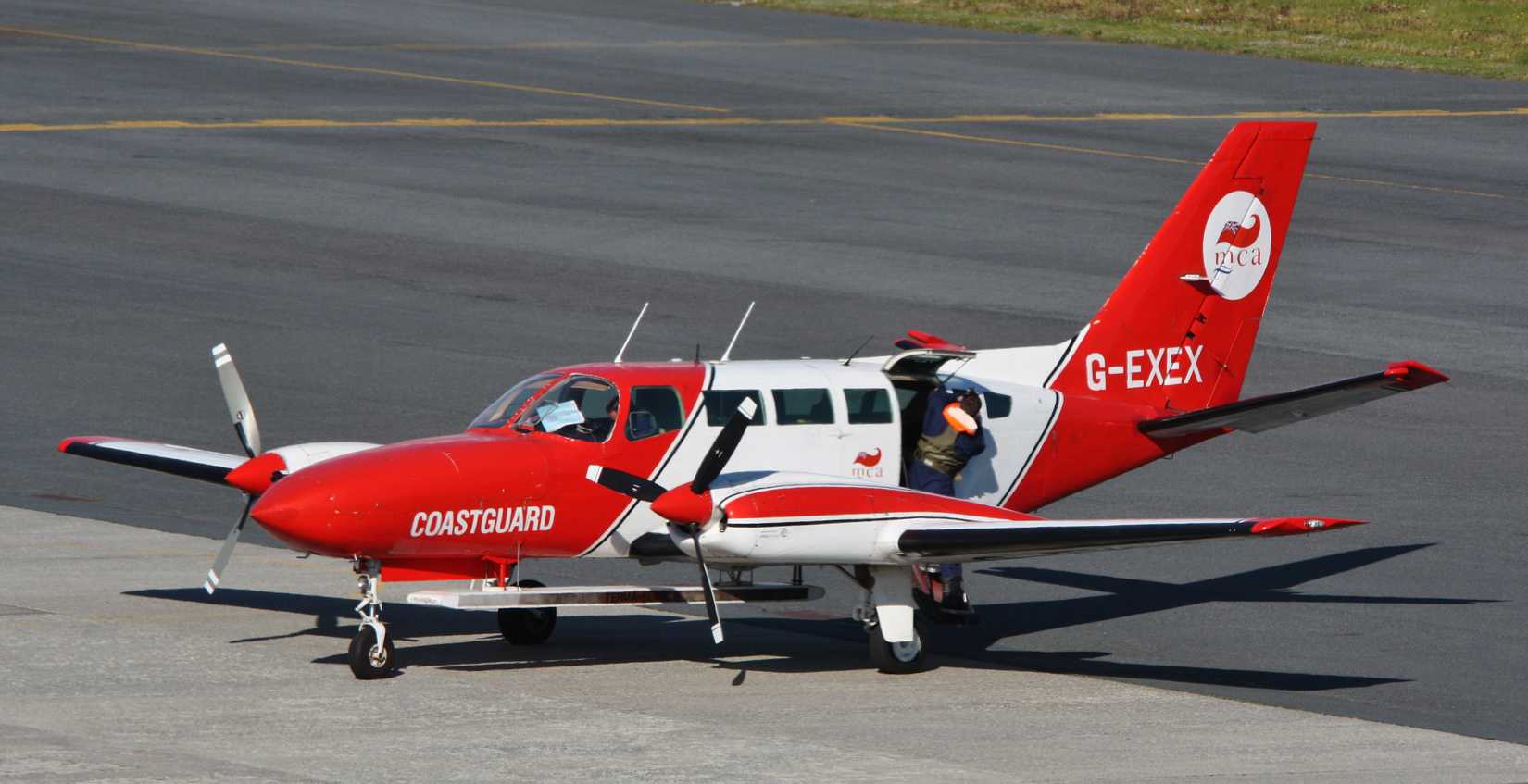
Through a series of test flights, Cessna confirmed that the aircraft possessed high structural integrity to accommodate large cargo weights — an essential design element of the Titan for operators that required the flexibility to switch between passenger charters or cargo hauling. Over time, the largest twin engine Cessna came to occupy a niche space in the general aviation market, offering capacity and range that smaller piston twins could not, without plunging into the higher operating expenses and complex requirements of turboprop or jet aircraft.
Range Performance of the Largest Twin Engine Cessna 404 Titan
As with any endeavor that uses aircraft for its means of transportation, range factors heavily into mission planning. Commercial and private operators are both equally concerned with this crucial performance value, as it dictates route choices, fuel costs, and flight timelines. An aircraft capable of longer legs without refueling offers greater flexibility and expedience, whether that’s for passenger charters connecting to small airfields or for cargo carriers that aim to minimize the ground time on any hauling mission. The 404 Titan’s payload and speed capabilities made it a frequent choice for charter operations after its debut, proving how range complements, and sometimes eclipses, other performance features like cruise speed or payload capacity.
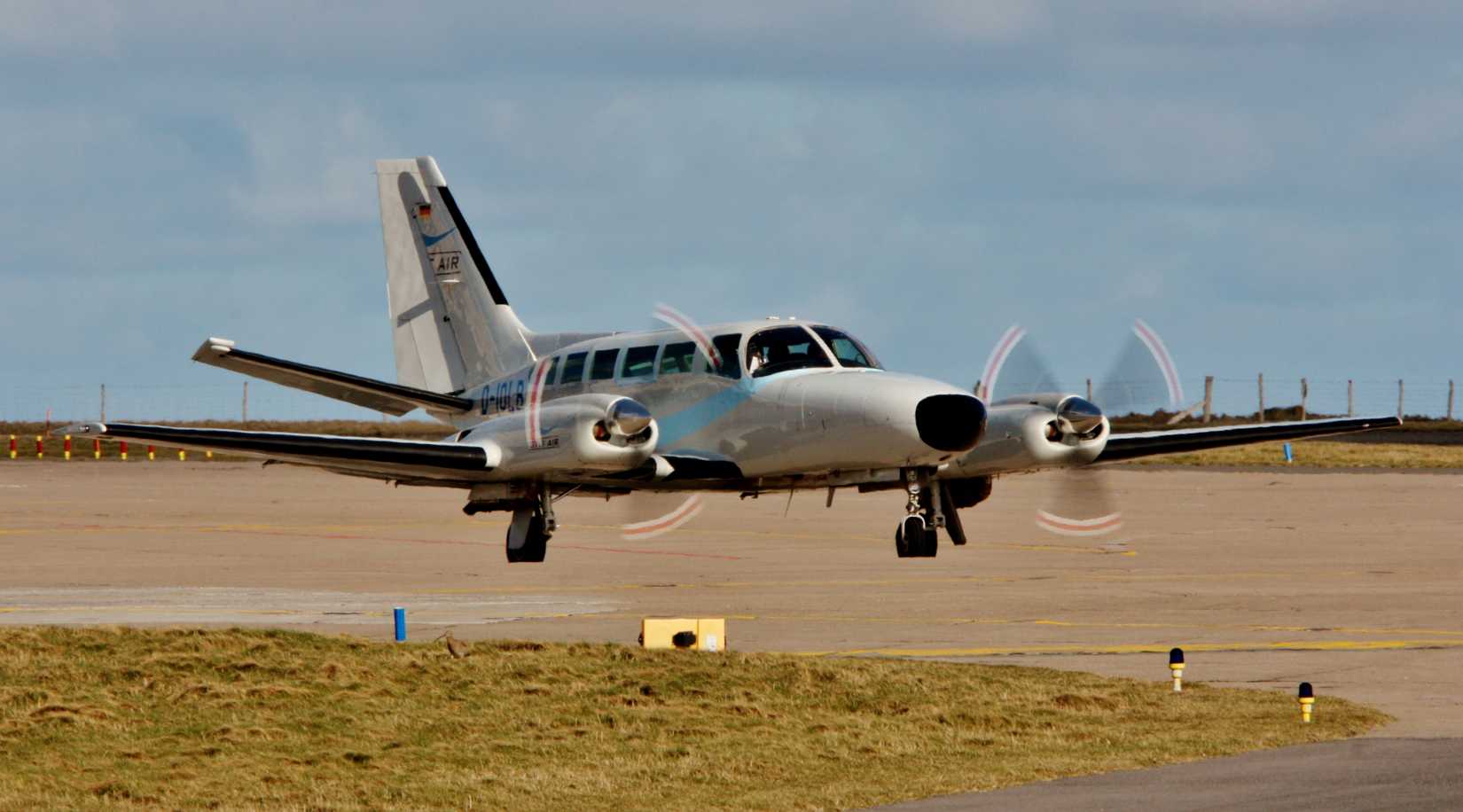
A strong aircraft range reduces the number of stops needed to complete longer flight legs, which can dramatically improve operational efficiency and customer satisfaction. The ability to remain airborne for extended periods of time also made the Titan a great choice for missions such as aerial surveying for industrial or government purposes. Thanks to its high endurance, the largest twin engine Cessna could loiter for prolonged station times which would also see it tasked to maritime patrol, coast guard and medical transport roles — all of which demand flight durations that are difficult to achieve with most comparable aircraft.
The average Cessna 404 Titan can achieve a range of about 1,687 mi (2,717 km) under standard conditions. Specialized configurations and flight profiles can alter real-world performance but this baseline performance value was a major selling point for Cessna’s big bird. This range and endurance puts the Titan in a class to medium-length that punch above the weight of most general aviation types, breaching more markets with fewer compromises. Its relative simplicity, compared to turboprop aircraft of a similar size, added to its appeal through minimal maintenance and operating costs that made sustainment much more manageable.
How the Largest Twin Engine Cessna Compares to Competitors
In the segment of twin-engine piston aircraft, the Cessna 404 Titan is typically compared to models like the Piper PA-31 Navajo, Beechcraft Baron 58, and Piper PA-34 Seneca. The cabin can carry up to ten passengers in certain configurations, giving it an edge in the passenger charter market over smaller twins, while still reaching greater far ranges than its peers without refueling. Among these aircraft, the largest twin engine Cessna stands out for combining passenger capacity, endurance, and cost efficiency in one platform.
For comparison, a smaller model like the Piper PA-34 Seneca typically flies about 5 passengers and offers around a 486 mile range. Even though the Seneca could be more economical in terms of direct operating costs, it cannot match the Titan’s payload capacity or range endurance, which is why the largest twin engine Cessna remains a benchmark in its category.
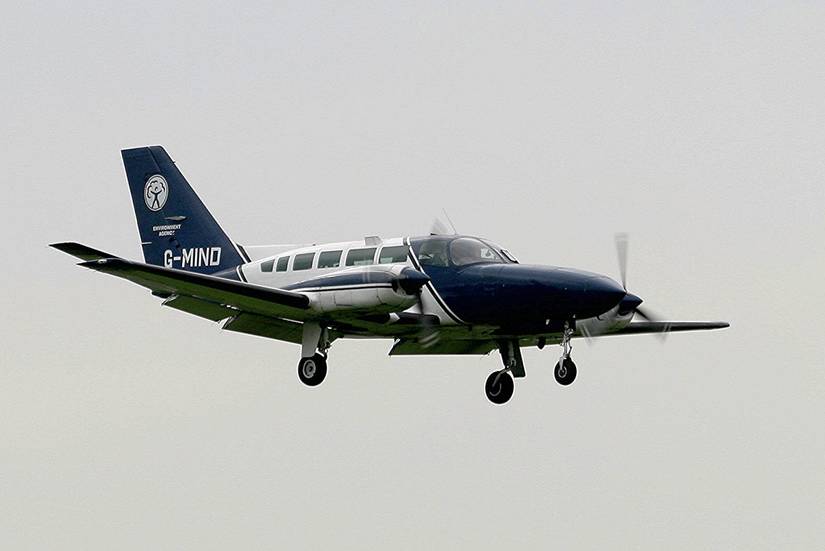
Another comparison could be to older turboprop models, such as models of the Beechcraft King Air, but these planes generally come priced in a higher cost range. Turboprops are faster and often feature pressurized cabins but inevitably come with higher maintenance requirements and fuel costs. In contrast, the Titan remains simple to operate and maintain, with lower fuel costs and flexibility to operate where infrastructure and resources to support turbine maintenance are not available. The Titan’s operational ruggedness and efficiency has helped sustain its popularity with carriers that do not require the speed or altitude performance of turboprops.
“Compared to a C-90 King air, the 404 is one-third the cost to operate—and it’ll haul more. Yes, it’s a little slower—bring lunch and dessert—however, maintenance cost is about half. It’s a good alternative,” said Ron Caruso.
Another highly valuable metric for fleets that operate planes like theTitan is runway length needed for take-off and landing. The Titan’s published takeoff distance of about 2,296 feet (700 meters) and landing distance of 1,968 feet (600 meters), represents a great capability for short take-off rolls or less-developed airfields. Performance by some twin turboprops or large piston twins may be shorter but again those aircraft come with premium costs.
From a long-term perspective, the Titan’s niche role might appear threatened by emerging technologies as more recent aircraft designs promise better fuel efficiency and lower sustainment costs. Aircraft with electric or hybrid propulsion concepts could eventually challenge the qualities of a piston-driven, light plane like the 404. But at least in the near term, the Titan remains a well-rounded, practical and proven solution. Its adaptability to different missions, affordable acquisition and lifetime costs as well as straightforward maintenance help it keep a competitive edge, despite operators increasingly eyeing more modern alternatives.
Why the Largest Twin Engine Cessna Still Matters Today
Range remains one of the most influential metrics in determining an aircraft’s operational value. This is one key area where the Titan can beat out other small twins, those same competitors also lack the carrying capacity to match the Titan’s mission flexibility. Larger turboprops may overshadow it in terms of speed and altitude performance but bring higher operating expenses, with some even having lower cargo capacities. This middle ground – where operating costs are crucial and utility must remain robust – this is the domain where the Titan reigns supreme an the source of its lasting appeal.
The Titan’s piston-powered format continues to be seen as one of the most cost-effective, reliable and simple to sustain configurations. The Titan’s combination of durability and moderate operating expenses has kept it in service around the world, catering to those who need an aircraft that can easily adapt to different roles depending on the customer of the day.
One example of its operational success is the aircraft’s use in regions requiring sturdy, lower-cost solutions to connect remote communities in austere conditions. Some carriers in Africa, South America, and parts of Asia have capitalized on the Titan’s payload and range to support medical missions, humanitarian aid, and even wildlife conservation missions.
The story of the largest twin engine Cessna, the 404 Titan, is more than just a tale of size and specifications. It highlights how careful engineering, practical design, and a clear understanding of operator needs allowed Cessna to build an aircraft that could remain relevant for decades. From regional airline service to rugged cargo operations, the Titan has proven that reliability and cost efficiency can coexist in one piston-powered platform.
For modern pilots and aviation enthusiasts, studying the Titan also provides valuable insight into how twin engine aircraft can bridge the gap between smaller general aviation models and more complex turboprops. The aircraft’s unique balance of payload, range, and affordability makes it a case study in practical aircraft design. This is why many operators still value the Titan as a dependable workhorse even as newer aircraft emerge.
Understanding the strengths of the largest twin engine Cessna also helps pilots prepare for the challenges of flying multi-engine aircraft. While the Titan offers stability and performance, it still requires precise handling and proper training, especially when operating at maximum weights or from shorter airfields.
Together, these resources give you a comprehensive look at both the technical qualities and the operational realities of flying multi-engine airplanes.

What makes the Cessna 404 Titan the largest twin engine Cessna?
The Cessna 404 Titan is the largest piston-powered twin engine aircraft in Cessna’s lineup. It was designed with a heavy-duty airframe, increased payload capacity, and extended range compared to earlier 400 series models, making it suitable for both passenger charters and rugged cargo operations.
How far can the Cessna 404 Titan fly without refueling?
Under standard conditions, the Cessna 404 Titan has a range of approximately 1,687 miles (2,717 km). This endurance allows operators to minimize fuel stops, making it a preferred choice for regional airlines, cargo carriers, and long-duration missions such as maritime patrol or medical transport.
How does the Cessna 404 Titan compare to other twin engine aircraft?
Compared to competitors like the Piper PA-34 Seneca or Beechcraft Baron 58, the Cessna 404 Titan offers more passenger capacity and significantly greater range. While smaller twins may be cheaper to operate, they cannot match the Titan’s combination of payload, endurance, and cost-effectiveness.